
Inquiry Basket
 Loading ......
Aquatic environments around the globe have been facing an escalating crisis in recent years—the proliferation of harmful cyanobacterial blooms, and the accompanying release of potent toxins known as microcystins. These secondary metabolites produced by certain species of cyanobacteria, also referred to as blue-green algae, pose a grave threat to the health and stability of freshwater and marine ecosystems.
Microcystins are cyclic heptapeptides, composed of seven amino acids arranged in a unique cyclic structure. This molecular architecture endows them with remarkable stability and resistance to degradation, allowing them to persist in the environment long after the cyanobacterial blooms have subsided. The World Health Organization (WHO) has classified microcystins as potential carcinogens, with demonstrated hepatotoxicity and nephrotoxicity in both human and animal studies.
Browse all Microcystin products
Microcystins are the most abundant class of cyanotoxins, with over 80 different structural analogs. They share a common cyclic heptapeptide structure of D-Ala1-X2-D-Masp3-Z4-Adda5-D-γ-Glu6-Mdha7, where X and Z are variable amino acids. The systematic name for a microcystin is based on the one-letter codes of the amino acids at the variable X and Z positions, such as:
Surrounding the variable X and Z positions are five conserved amino acids, including the unique and highly hydrophobic amino acid known as Adda (3-amino-9-methoxy-2,6,8-trimethyl-10-phenyldeca-4,6-dienoic acid). This Adda moiety is crucial for the toxicity of microcystins, as it facilitates their binding to cellular protein phosphatases.
The combination of the cyclic structure and the presence of the Adda group confers remarkable stability to microcystins, making them resistant to hydrolysis, oxidation, and even high temperatures. This chemical resilience contributes to their persistence in the environment, posing significant challenges for their detection, quantification, and remediation.
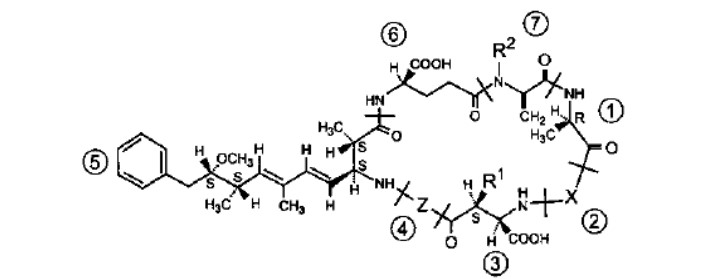 Figure 1. General structure of microcystins.
(Source: Butler, N. et al., 2009)
The mechanism of action of microcystins involves their ability to inhibit protein phosphatases, specifically protein phosphatase 1 (PP1) and protein phosphatase 2A (PP2A). Protein phosphatases are enzymes that play a crucial role in regulating cellular processes by dephosphorylating proteins and modulating their activity.
Microcystins bind covalently to the active sites of protein phosphatases, forming a stable complex. This interaction prevents the phosphatase enzymes from carrying out their normal function of removing phosphate groups from proteins. As a result, the phosphorylation state of proteins within the cell is altered, leading to disrupted signaling pathways and cellular dysfunction.
By inhibiting protein phosphatases, microcystins cause an accumulation of phosphorylated proteins within cells. This accumulation can have various downstream effects on cellular processes, including gene expression, cell cycle regulation, and metabolism. The disruption of these essential cellular functions contributes to the toxic effects associated with microcystin exposure.
Reference
| Target | Cat. No. | Product Name | Size | Species Reactivity | Application | Detection Sample | |
| Microcystin | DEIA6442 | Microcystins (Adda specific) ELISA Kit | 96T | Quantitative | Water Samples | Inquiry | |
| DEIA-NS2306-3 | Microcystin ELISA Kit | 96T | N/A | Quantitative | Water Samples | Inquiry |
Loading ......
