
Inquiry Basket
 Loading ......
HBV is a partially retroviral DNA virus in the family Hepadnaviridae. There are three morphological forms of the viral particles: 20 nm spherical particles, filamentous particles 22 nm in diameter and of variable length, and the infectious 42-nm double-layered spherical Dane particles. Dane particles have a lipid envelope enclosing an inner nucleocapsid. The envelope and the inner core contain hepatitis B surface antigen (HBsAg) and core antigen (HBcAg), respectively. HBeAg is the e antigen (HBeAg) complex. The viral polymerase and 3.2 kb of partially double-stranded circular DNA genome are also found in the core. The genome of HBV is the template for viral RNA production, including pregenomic RNA. HBV infection has a strong link to hepatocellular carcinoma. A study demonstrated that there are altered expressions of 17 proteins, 10 of which are upregulated and the other 7 are downregulated, in liver cancer tissues derived from HBV. HBV may lead to carcinogenesis by modulating expression of host cell genes, such as downregulating apoptosis-inducing molecules such as caspase-3 and BAX.
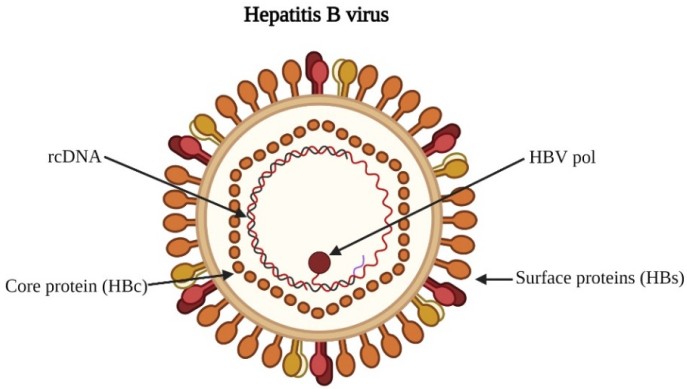 Figure 1. Basic structure of HBV virion. (Source: Mahmood F, et al. 2023)
The HBV genome consists of approximately 3.2 kb relaxed circular DNA (rcDNA) containing one complete negative strand and one incomplete positive strand.
The genome contains four overlapping open reading frames (ORFs):
Serum biomarkers that have been adopted in clinical practice to define chronic hepatitis B and disease staging include quantitative HBsAg, HBeAg, HBV DNA and ALT levels. These biomarkers have limitations and include suboptimal reflection of the complexity of the disease and lack of universal availability in the resource-limited setting.
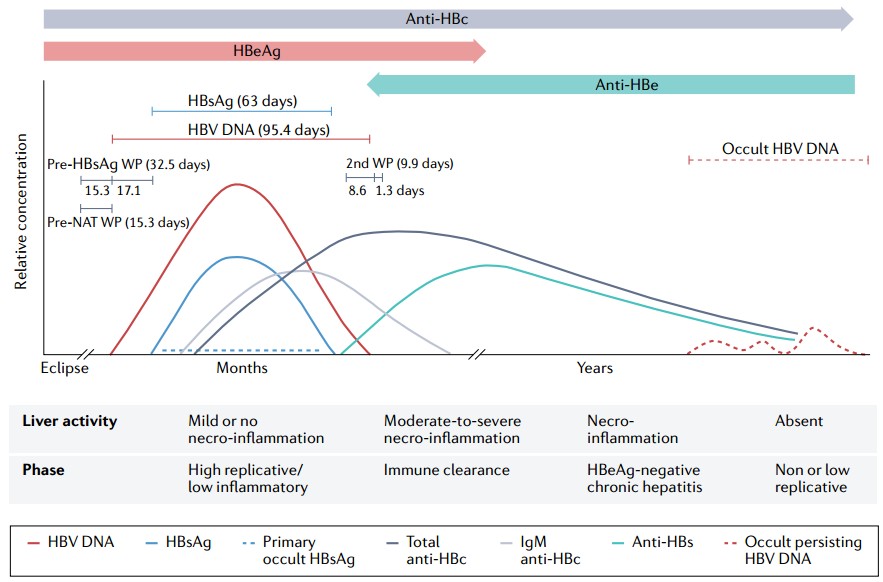 Figure 2. Course of serum markers in acute resolving hepatitis B virus infection. (Source: Kramvis A, et al. 2022)
Ideal HBV biomarkers should have the following characteristics:
Strong predictive power, high specificity, and high sensitivity
Not affected by HBV (sub)genotypes
Reflect disease activity, severity, and durable treatment effects
Reproducible results
Non-invasive and easily accessible
Fast, simple, and low-cost
HBsAg is an established biomarker of HBV infection, and is often used as a clinical diagnostic indicator for qualitative analysis. In the natural history of chronic hepatitis B, the majority of serum HBV DNA is derived from mature infectious viral particles, and its quantity is a reflection of the viral replication activity. Hence, a reduction of HBV DNA signifies a decrease in viral replication. HBsAg is derived not only from cccDNA transcription but also from defective subviral particles. Therefore, serum HBsAg levels are determined by both cccDNA transcription or mRNA translation, and host immune control of HBV infection. Simultaneous serum HBsAg and HBV DNA levels can be used to predict the inactive carrier state and HBsAg loss after HBeAg seroconversion.
HBeAg is a non-structural protein that is translated from precore mRNA, processed and secreted from the endoplasmic reticulum into the extracellular space. It is detected in the blood circulation. Since its discovery, HBeAg was simply considered as an accessory protein of HBV and, as such, is used as a marker of active viral replication in clinical practice. Clinically, it is important to make a distinction between HBeAg-negative infection and HBeAg-negative CHB, since the former is defined by persistently low level of viral replication without any HBV related liver disease and shows an overall survival similar to uninfected individuals. HBeAg-negative CHB is generally associated with median serum HBV DNA levels greater than 20,000 IU/mL, but the transient nature of viremia makes a single HBV DNA test insufficient for the early and accurate distinction between the two clinical entities.
In serological events, HBV infection was followed by appearance of anti-immunoglobulin against HBcAg as the first serological markers, IgM anti-HBc as the first antibodies, and IgG anti-HBc as the following. In natural history of chronic HBV infection, total anti-HBc levels in immune clearance phase and viral reactivation phase were significantly higher than those in immune tolerance phase and inactive carrier phase. On the contrary, total anti-HBc levels in patients with immune tolerance phase, despite extremely high HBV DNA levels, were not significantly different from those in inactive carriers. Furthermore, the baseline total anti-HBc levels could also be used to predict HBeAg seroconversion in HBeAg-positive chronic hepatitis B patients treated with antiviral therapy, in which patients with higher baseline total anti-HBc levels were more likely to have HBeAg seroconversion. For the above reasons, it has been suggested that total anti-HBc levels may be associated with host immune response against HBV, and could be used as a complementary marker to the currently used quantitative viral markers (HBsAg and HBV DNA levels) to more accurately determine infection status and treatment response.
Table 1. Interpretation of Serologic Test Results for Hepatitis B. (Source: Pattyn J, et al. 2021)
| Acute HBV | Chronic HBV | Cleared HBV | Vaccination | |
| HBcAb IgM | + | - | - | - |
| HBcAb IgG | + | + | + | - |
| HBsAg | + | + | - | - |
| Anti-HBs | - | - | + | + |
| HBeAg | + | +/- | - | - |
| Anti-HBe | - | +/- | +/- | - |
| HBV DNA | High/low | Low/high | - | - |
Abbreviations: HBcAb IgG, hepatitis B core antibody immunoglobulin G; HBcAb IgM, hepatitis B core antibody immunoglobulin M; HBeAg, hepatitis B e antigen; HBsAg, hepatitis B surface antigen; HBV, hepatitis B virus.
HBcrAg consists of three components: HBcAg, HBeAg, and precore protein (p22cr), all encoded by the precore/core region. HBcAg is the inner nucleocapsid surrounding viral DNA, while HBeAg is a circulating peptide derived from the core gene that is modified and secreted from liver cells. HBcAg and HBeAg share the same 149 amino acid sequence and are both targets of cytotoxic T cells, enabling HBcrAg to induce host cellular immune responses. Researchers following HBeAg-positive patients found that declining HBcrAg levels were significantly associated with spontaneous HBeAg seroconversion. Previous studies have shown that serum HBcrAg concentration closely correlates with serum HBV DNA levels and intrahepatic cccDNA levels, making HBcrAg helpful for determining different phases of HBV infection.
Since current emerging curative treatment strategies for HBV must inactivate or at least lead to permanent suppression of the intrahepatic cccDNA reservoir, the amount of cccDNA and its transcriptional capacity to produce HBV RNA changes in different phases of chronic hepatitis B as well as during NUC treatment. Measurement of serum biomarkers that indicate cccDNA transcriptional activity has therefore become a very useful diagnostic approach. HBV RNA detection mainly identifies transcripts generated from the cccDNA template. It can also help in determining viral replication status, predicting treatment response, and evaluating the safety of drug discontinuation, with different predictive value in patients with HBeAg positive or negative.
Many novel HBV biomarkers have been developed to better understand various aspects of the viral lifecycle and to evaluate the effectiveness of new therapeutic agents.
 Figure 3. Expected class effect of novel agents on various biomarkers. (Source: Feld JJ, et al. 2025)
References
Loading ......
