
Inquiry Basket
 Loading ......
Hepatitis A is an acute inflammation of the liver caused by the Hepatitis A Virus (HAV), which is strongly associated with unsafe water or food, poor sanitation, and poor personal hygiene practices. Hepatitis A is distinctive among viral hepatitis in that it causes an acute infection that does not result in chronic liver disease, and that the result of the infection is a complete return to health for most people, with only a small percentage developing severe hepatitis. The World Health Organization estimates that more than seven thousand people worldwide died from hepatitis A in 2016 (0.5% of viral hepatitis mortality). The World Health Organization conducts annual World Hepatitis Day campaigns to raise awareness and understanding of viral hepatitis and plans to strategically focus its response to achieve the goal of ending viral hepatitis by 2030.
Hepatitis A virus (HAV) is an RNA virus that belongs to the picornavirus family. The HAV genome is a 7.5 kb long positive-stranded RNA with an open reading frame (ORF) encoding a large polyprotein. This polyprotein is processed by viral and host cell proteases to produce structural proteins (VP4, VP2, VP3, and VP1) and nonstructural mature proteins (2B, 2C, 3A, 3B, 3C, and 3D). HAV possesses the same genome organization features as picornaviruses, but it also has features that are independent of other picornaviruses. The HAV internal ribosome entry site (IRES) is unique among picornaviruses, belonging to a type III pattern that is extremely inefficient at directing translation. Second, the HAV cis-acting replication element structure is larger in size and top loop length compared to other picornaviral elements. HAV encodes only the 3C protease, but other picornaviruses encode other proteases that contribute to viral translation. To improve tRNA competition, HAV has evolved a deviant codon usage relative to the host, where codons that are highly abundant in the cellular genome are scarce in the virus, codons that are intermediate abundant in the host are abundant in the HAV genome, and codons that are scarce in the host are scarce in the virus. This unique codon composition of HAV plays a crucial role in regulating the translational dynamics of the capsid coding region and, in turn, controlling resistance capsid folding. CpG occurs at an unusually low frequency in HAV, and the researchers speculate that this may be due to the need to avoid the cellular antiviral response.
 Figure 1. Codon usage-driven capsid folding
(Source: Pintó RM, et al. 2021)
HAV can be spread by uninfected people who ingest food or water contaminated with the feces of an infected person, or by direct contact with an infected person. Infectious HAV virus particles are categorized into naked virions and quasi-enveloped virions. The virus crosses the mucosa of the small intestinal wall and then spreads to the liver via the portal vein. Viral particles are then replicated and secreted into the bile ducts, through which they return to the small intestine and are excreted again in the feces. The enterohepatic circulation of HAV continues until the body makes an appropriate immune response. Human leukocyte antigen restricted, HAV-specific CD8+ T lymphocytes and natural killer cells are involved in the injury and destruction of infected hepatocytes.
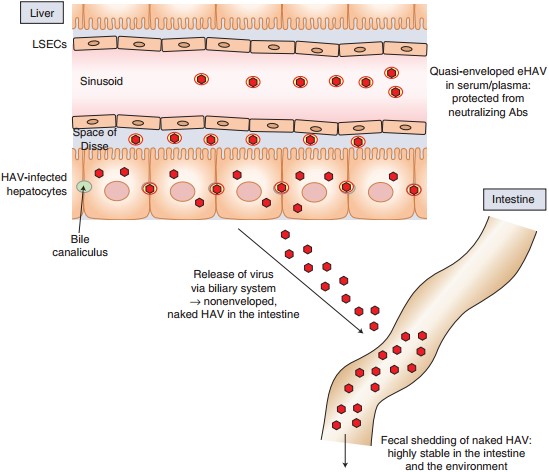 Figure 2. Two different forms of infectious hepatitis A virus (HAV) virions
(Source: Shin EC, et al. 2018)
Hepatitis A is an episodic disease, prevalent worldwide, with a tendency to recur in cycles. Disease epidemics associated with contaminated food or water can erupt suddenly, such as the 1988 hepatitis A epidemic in Shanghai that affected about 300,000 people. The duration of the outbreak may also be prolonged, with epidemics occurring in communities for months through person-to-person transmission. HAV can persist in the environment for long periods of time, and food preparation procedures typically used to sanitize or control bacterial pathogens often fail to kill them.
Low- and middle-income countries are more susceptible to HAV infection due to poor sanitation and hygiene practices, and the majority of children in these countries are asymptomatically infected with HAV by the age of 10 years. In developed countries, human-to-human infections are responsible for most outbreaks, and foodborne infections are usually disseminated cases. Seafood is one of the main sources of infection, but an increasing number of outbreaks now involve imported frozen foods. Blood-borne infections can also occur in transfusion recipients, but the condition is relatively rare, and with improvements in viral inactivation, the use of sterile recombinant clotting factors, and plasma HAV screening, the risk of HAV infection in these patients is no higher than in the general population. In addition, this virus can be transmitted during organ transplants.
A publication based on data from the 2019 Global Burden of Disease (GBD) database found that of the four main types of acute viral hepatitis (A, B, C, and E), hepatitis A ranked first in prevalence. The prevalence of hepatitis A varies considerably between countries, depending on sociodemographic indices, with the highest burden of hepatitis A in low- and middle-income countries in Africa and South Asia. In countries with low standards of hygiene and poor socio-economic conditions, people are exposed to the virus early in life, leading to frequent asymptomatic infections and high proportions of immunized adults, while in countries with high standards of hygiene and good socio-economic conditions, where exposure to the virus is low, large proportions of susceptible populations are more likely to be present, and adults are at higher risk of asymptomatic and severe disease.
The incubation period for hepatitis A usually ranges from 14 to 28 days, with symptoms varying in severity, possible symptoms include fever, malaise, loss of appetite, diarrhea, nausea, abdominal discomfort, dark urine and jaundice. Adults exhibit signs and symptoms of the disease more often than children, and the elderly have a higher incidence of disease severity and death due to impaired liver regeneration and a relatively weakened immune system. Usually there are no visible symptoms in infected children under 6 years of age, and only 10% develop jaundice. Hepatitis A sometimes recurs, and about 10-15% of patients are re-infected with HAV within 6 months of the initial infection, but the symptoms during the recurrence are usually less severe than during the initial infection, and recovery usually follows again.
Clinical biochemical findings show that serum transaminases are usually above 1000 U/dL, total bilirubin is usually ≤ 10 mg/dL, and alkaline phosphatase is usually below 400 U/L. Usually serum alanine aminotransferase (ALT) is higher than aspartate aminotransferase (AST). Advanced age, underlying liver disease and chronic viral hepatitis have been reported as risk factors for acute liver failure. Among patients who developed acute liver failure, those with blood creatinine greater than 2 mg/dL, total bilirubin greater than 9.6 mg/dL, and albumin less than 2.5 g/L had a higher mortality rate.
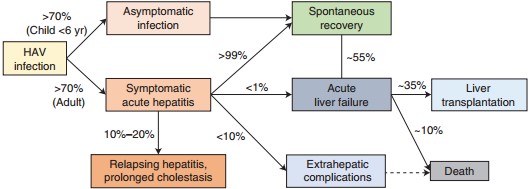 Figure 3. The clinical outcomes of hepatitis A virus (HAV) infection
(Source: Shin EC, et al. 2018)
The Hepatitis A vaccine is the most effective way to protect against the disease and significantly reduces Hepatitis A virus infection. Since 2007, post-exposure prophylaxis with hepatitis A vaccine has been approved for immunocompetent patients without chronic liver disease between the ages of 12 months and 40 years. More than 90% of patients who receive both vaccine series concurrently will experience a long-term immune response for up to 40 years.
Table 1. CDC recommendations for hepatitis A vaccination
| Various groups | Recommendations |
| Children | Children age 12-23 mo Age 2-18 yr who have not received the vaccine (catch up vaccination) |
| High risk population | International travelers Men who have sex with men Illicit drug users People at occupational risk of exposure People anticipating close personal contact with international adoptee People experiencing Homeless |
| Population at high risk of severe hepatitis A | People with chronic liver disease HIV+ people |
| Others | Pregnant women at high risk or at risk of severe hepatitis A Any person requesting the vaccine |
(Source: Castaneda D, et al.)
Hepatitis A vaccines currently in use include inactivated hepatitis A vaccine (HepA-I) and live attenuated hepatitis A vaccine (HepA-L). The first HepA-L was produced using the HAV H2 strain, initially in liquid form and then changed to a lyophilized vaccine that is more stable for transport and storage. Hepatitis A vaccine can be used in combination with Hepatitis B to protect against both Hepatitis A and Hepatitis B. It is highly immunogenic and well tolerated. HepA-I is widely used and administered intramuscularly in a 2-dose regimen, whereas HepA-L is used primarily in China and India and administered as a single subcutaneous dose. The target population for HepA-I is children 1 year of age or older, while the initial age for the HepA-L vaccine is 18 months. Because many adults acquire protective antibodies against HAV through infection in childhood, hepatitis A vaccine is commonly used for routine vaccination of children, but it is also frequently used for post-exposure prophylaxis in adults.
Hepatitis A vaccine is highly effective in pre-exposure prophylaxis against clinically apparent disease of hepatitis A. A randomized controlled trial of HepA-I in subjects aged 1-16 years in Thailand showed 95% efficacy. Evaluation of the efficacy of HepA-I in post-exposure prophylaxis was first carried out in the U.S. The earliest work to evaluate the efficacy of HepA-I for post-exposure prophylaxis was conducted in the United States, where a double-blind, placebo-controlled trial found no hepatitis A and 100% efficacy in the HepA-I-vaccinated group, whereas cases of hepatitis A occurred in the placebo group. A study on the efficacy of HepA-L indicated that in the hepatitis A epidemic, the incidence of hepatitis A was 94.5% lower in children vaccinated with the HepA-L vaccine than in unvaccinated children.
Compared to HepA-I, HepA-L inoculation is less expensive and less expensive in terms of dose, but it is more sensitive to external temperatures and less easy to store and transport. In addition, HepA-L cannot be used in immunosuppressed individuals. Both HepA-l and HepA-L have been shown to be well tolerated. In terms of postvaccination immunogenicity, both resulted in high anti-HAV positivity, but in young adults a single dose of HepA-I resulted in a higher Geometric mean concentration (GMC) of anti-HAV compared to a single dose of HepA-L, and a second dose of HepA-I resulted in higher levels of antibody and longer immune. The second dose of HepA-I resulted in higher antibody levels and longer duration of immunization.
References
| Target | Cat. No. | Product Name | Size | Species | Application | Detection Sample | |
| HAV | DEIA007 | Human Anti-Hepatitis A Virus IgG (HAV-IgG) ELISA kit | 96T | Human | Qualitative | Serum, plasma | Inquiry |
| DEIA008 | Human Anti-Hepatitis A Virus IgM Antibody, Anti-HAV IgM ELISA Kit | 96T | Human | Qualitative | Serum, plasma | Inquiry | |
| DEIASL276 | Human Anti-Hepatitis A Virus IgG ELISA Kit (Quantitative) | 96T | Quantitative | Serum, plasma | Inquiry | ||
| DEIASL276Q | Human Anti-Hepatitis A Virus ELISA kit | 96T | Human | Semi-quantitative | Serum, plasma | Inquiry | |
| DEIA-NS2303-5 | Hepatitis A virus IgG Antibody ELISA Kit | 96T | Human | Quantitative | Serum, plasma | Inquiry | |
| DTS597 | Hepatitis A Antigens Rapid Test | 20T | Human | Qualitative | Stool | Inquiry |
| Target | Cat. No. | Product Name | Expression System | Tag/Conjugate | Application | |
| HAV | DAG-P2692 | HAV (aa 1392 - 1521) | E. coli | Unconjugated | WB, ELISA, SDS-PAGE | Inquiry |
| DAG-P2693 | HAV (aa 1643 - 1743) | E. coli | Unconjugated | WB, ELISA, SDS-PAGE | Inquiry | |
| DAGCF-0177 | Recombinant HAV genotype 1 VP1 Protein [His] | E. coli | His | ELISA, Immunogen | Inquiry | |
| DAGCF-0175 | Recombinant HAV VP1 (FJ01) | E. coli | His | ELISA, Immunogen | Inquiry | |
| DAGCF-0176 | Recombinant HAV VP1 (genotype 3) | E. coli | His | ELISA, Immunogen | Inquiry | |
| HAV VP1 | DAG1443 | Recombinant HAV VP1 (aa 502-605) [His, GST] | E. coli | His, GST | ELISA, WB | Inquiry |
| HAV VP1-P2A | DAG1444 | Recombinant HAV VP1-P2A (a.a. 722-830) | E. coli | Unconjugated | ELISA, WB | Inquiry |
| HAV VP3 | DAG2417 | Recombinant HAV VP3 (a.a. 248-491) [His] | E. coli | His | WB, ELISA | Inquiry |
| HAV VP4 | DAG2418 | Recombinant HAV VP4 (a.a. 6-245) [His] | E. coli | His | WB, ELISA | Inquiry |
| HAV VP1-P2A | DAG1445 | Recombinant HAV VP1-P2A Protein (a.a. 669-782) | E. coli | Unconjugated | ELISA, WB | Inquiry |
| HAV VP2-VP4 | DAG1451 | Recombinant HAV VP4-VP2 Protein (a.a. 55-164) | E. coli | Unconjugated | ELISA, WB | Inquiry |
| HAV VP2-VP4 | DAG530 | Recombinant HAV VP2-VP4 [GST] | E. coli | GST | ELISA, WB | Inquiry |
Loading ......
