
Inquiry Basket
 Loading ......
CD247, which is also known as CD3ζ, CD3H, CD3Q, CD3Z, IMD25, T3Z and TCRZ, encodes CD3ζ protein, which is expressed primarily in natural killer (NK) and T cells, is a 16-kDa molecule which constitutes part of the TCR complex. It is essential for recognition (activation) of the antigenic peptide that is presented by the human leukocyte antigen on antigen presenting cells or tumor cells. Downregulation of CD247 has frequently been found to be accompanied by decreased expression of other T-cell-associated signal-transducing molecules, such as ZAP-70 and p56lck, decreased calcium flux, and T-cell apoptosis. Studies had demonstrated that the presence of tumor-infiltrating lymphocytes (TILs) is associated with improved clinical outcome in ovarian cancer patients. Numerous studies showed that the TME is immunosuppressive that impaired the function of the innate (NK cells) and adaptive (T cells) immune systems. With CD247 downregulation, which is an indispensable molecule in the structure, expression, and function of the TCR and the NK-cell-activating receptors, T-cell responsiveness, and proliferative capacity will be changed. Reduced levels of CD247 in both TILs and peripheral blood lymphocytes was associated with many cancers including the gastric carcinoma, melanoma, cervical, pancreatic, ovarian, breast and head and neck cancer.
CD247 is commonly defectively expressed in autoimmune diseases compared with healthy individuals. The expression of CD247 in rheumatoid arthritis (RA), paediatric primary nephrotic syndrome, systemic sclerosis (SSc), juvenile idiopathic arthritis, osteoarthritis and ankylosing spondylitis patients is decreased compared with healthy people and increased in patients with type 1 diabetes mellitus (T1DM). CD247 was downregulated in peripheral blood mononuclear cells, T cell subsets in synovial fluid and NK cells in RA patients, and CD247 mRNA expression levels were significantly lower in a highly active group compared to inactive RA patients.
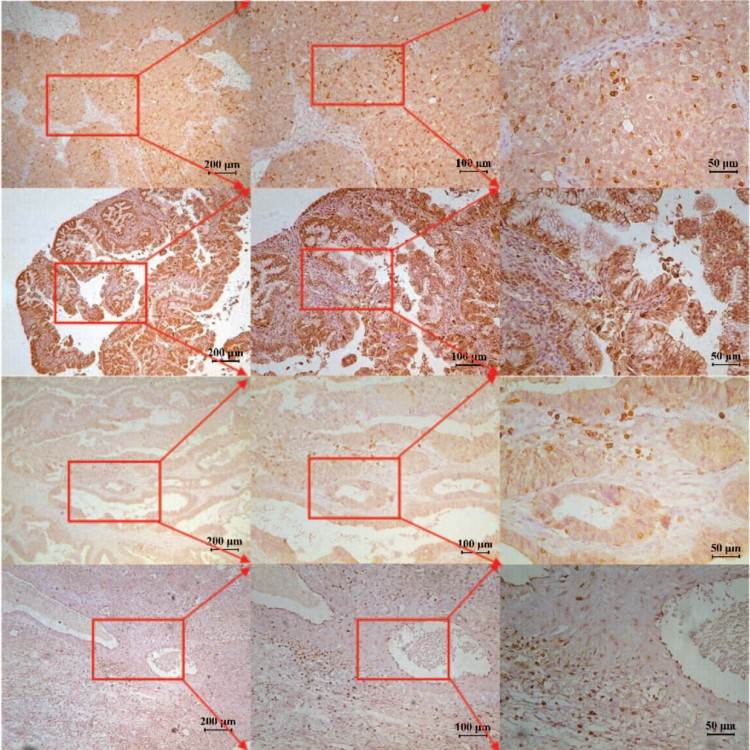 Fig 1. CD247 immunohistochemical staining in different types of ovarian cancer.
(Source: Medicine. 2019, 98:51)
CD247 expression was differentially downregulated in T cells from haematological tumors (lymphoma3 and chronic myeloid leukaemia), gastrointestinal tumors (gastric cancer and oral cancer), gynaecological tumors (precancerous cervical cancer, cervical cancer and ovarian cancer), renal cancer and skin cancer, and expression was elevated in aplastic anaemia. In several types of tumors, including ovarian cancer, the presence of tumor-infiltrating lymphocytes (TILs) is associated with a good prognosis. The presence of TILs within the TME is considered to be an indication of the host immune response to tumor antigens. It was assumed CD247 could be the basis of T-lymphocyte cell functional deficit. In the study of CD247 and cervical cancer the expression of CD247 in peripheral blood lymphocytes from patients with ovarian carcinomas is decreased compared with peripheral blood lymphocytes from ovarian cyst patients and the expression of CD247 in TILs with cancer tissue is decreased compared with adjacent tissues. This also helps to explain, at least in part, why ovarian cancer patients have an impaired T-cell response. The percentage of CD247+TILs were significantly lower in ovarian cancer tissues than in PBMCs, that means the suppressive influences of the TME was obviously in ovarian cancer.
As part of a signaling amplification pathway on T lymphocytes and NK cells, CD247 is closely associated with inflammation. CD3ζ(-/-) mice spontaneously developed significant organ inflammation, which allows T lymphocytes to infiltrate various tissues and trigger inflammation, and the method to restore CD3ζ expression on the surface of T lymphocytes is expected to reduce tissue inflammation. The level of CD3ζ is lower in chronic infectious diseases, such as human immunodeficiency virus (HIV), simian immunodeficiency virus (SIV), leprosy, tuberculosis, HBV, and hepatitis C virus (HCV), than in normal people. The synergistic effect of tyrosine kinase ZAP and CD3 ζ chain is impaired in HIV-infected peripheral blood lymphocytes, and CD4 alone or with TCR leads to the cancellation of the signal ling pathway. During HIV/SIV infection, there is extensive programmed cell death in infected and uninfected cells.
CD247 encodes the CD3ζ protein as a key signaling link in the TCR-CD3 complex, and its orderly phosphorylation is the basis of normal T cell activation. CD247 is aberrantly expressed in immune system diseases, tumors and chronic infectious diseases.
References
| Target | Cat. No. | Product Name | Size | Application | Detection Sample | |
| CD247 | DEIA-XYA362 | CD3 zeta ELISA Kit | 96T | Qualitative | cultured cells | Inquiry |
| DEIA-XYA363 | CD3 zeta (Phospho-Tyr142) ELISA Kit | 2 x 96T | Qualitative | cultured cells | Inquiry |
Loading ......
