

Inquiry Basket
 Loading ......
Dual-target covalent small molecule drugs are created by joining two active molecules or their pharmacophores through a linker which forms one complete molecule to target two separate biological sites at once. The design strategy enhances therapeutic outcomes while minimizing adverse effects and bypasses single-target drug restrictions.
This section explores the fundamental design strategies and essential technological approaches for constructing dual-target covalent small molecule therapeutics.
1. Target identification and selection:
The initial step in target identification requires biophysical and biochemical methods alongside cell methods and DNA-encoded libraries to find potential targets. These methods allow identification of compounds that demonstrate charge-selective activity to identify effective targets. Technologies like X-ray crystallography and mass spectrometry help determine the binding ability of small molecules to target proteins.
2. Selection of covalent warheads:
The design process for covalent drugs involves choosing appropriate covalent warheads which can form bonds with specific amino acid residues like cysteine, lysine, and serine. Virtual screening and rational-based drug design techniques enable the selection of compounds capable of forming strong covalent bonds with targets.
3. Identification of lead compounds:
Docking studies coupled with kinetic simulations enable scientists to screen for compounds which establish stable hydrogen bonds or hydrophobic interactions at multiple key amino acid residues in targets. The small molecule database produced by deep reinforcement learning allows researchers to screen compounds through docking that can covalently attach to the cysteine sites of SARS-CoV-2 Mpro and PLpro.
4. Characterization of binding properties:
Experimental methods confirm the lead compound's binding properties including both non-covalent interaction and covalent bond formation. Kinetic simulation methods confirm the stability of compound binding to its target protein.
5. Optimization of molecular structure:
The molecular structure of the lead compound undergoes further refinement to improve binding kinetics as well as warhead reactivity, residence time and selectivity. The optimization of compound structure allows for better pharmacological effects while minimizing non-target toxicity risks.
6. Multi-target synergy:
Single drugs can achieve better efficacy and selectivity when dual-target inhibitors simultaneously attack multiple targets. The creation of ligands that have the ability to attach to two different targets simultaneously creates multiple interactions. The dual/triple-target antibody drugs produced by Zelgen Pharmaceuticals have reached multi-target synergy by utilizing the precision small molecule drug development platform.
7. Application of technology platform:
The discovery and optimization of covalent drugs can be accelerated through computer-aided drug design (CADD) technologies and virtual screening methods as well as DNA-encoded compound libraries (DEL). Rational drug design pathways benefit from enrichment through structure-based drug design (SBDD) and fragment-based drug design (FBDD) methods.
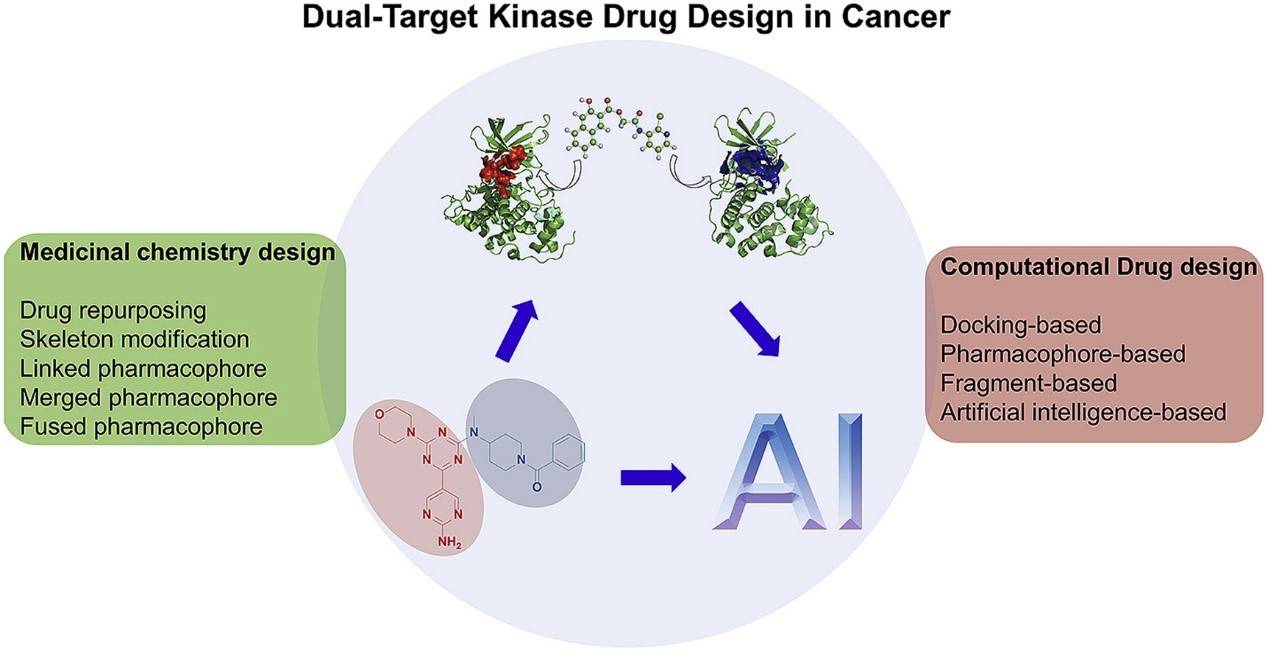 Figure 1. Dual-target kinase drug design. (Sources: Sun D, et al. 2020)
Existing dual-target covalent small molecule drugs demonstrate clinical application cases in the following treatments:
Small-molecule drugs that bind to two different molecules at once offer significant advantages and challenges in contrast to standard pharmaceuticals.
Advantages of Dual-Target Covalent Small-Molecule Drugs:
Challenges of dual-target covalent small molecule drugs:
Although dual-target covalent small molecule drugs show clear benefits such as enhanced efficacy and reduced resistance while lowering required dosages, research and production hurdles alongside toxicity risks remain significant challenges to overcome.
This document presents the current progress and future prospects in research and development of dual-target covalent small molecule drugs.
1. Research and development progress:
Pharmaceutical companies pursue the development of drugs that target multiple points simultaneously through dual/triple-target antibodies and small molecule drugs and have introduced products like GS02 (TIGIT monoclonal antibody) and GS19 (PD-1/SIRPα dual antibody).
The non-covalent LYN/BTK dual-target small molecule inhibitor demonstrates positive advancement in worldwide registration clinical studies.
Other companies: BridGene alongside other firms promotes dual-target covalent small molecule drugs which includes the approved KRAS G12C covalent inhibitor sotorasib.
2. Technological progress:
3. Future trends:
In summary, the research and development of dual-target covalent small molecule drugs is progressing rapidly and is expected to play an important role in a variety of diseases in the future. Technological innovation and capital support will further promote the rapid development of this field.
The drug interacts with two distinct cellular targets through covalent attachment to maximize therapeutic benefits by leveraging synergistic effects. The coordinated blockade of asthma-linked β2-adrenergic receptors and cysteinyl leukotriene receptors stops inflammatory signaling pathway connections and minimizes the issues of targeting a single pathway. Synergistic effects achieve better treatment outcomes by increasing target inhibition effectiveness while extending drug action time and decreasing resistance development.
Its core advantages are:
Enhanced efficacy: inhibiting key pathways of disease development (such as inflammation, tumor growth) through dual effects;
Reduced drug resistance: simultaneous targeting of multiple pathways can reduce failure caused by single-target mutations;
Controllable side effects: precise design can reduce off-target effects on non-target tissues. For example, the research of Zhao Xinfeng's team showed that dual-target ligands showed higher comprehensive efficacy in asthma models.
Challenges include:
Target selection and validation: It is necessary to ensure that the two targets have synergistic effects in the disease and do not interfere with each other;
Covalent binding site design: It is necessary to optimize the efficiency and selectivity of the covalent bond formation of the drug molecule for the two targets;
Pharmacokinetic balance: It is necessary to coordinate the action time and concentration of the drug at the two targets. For example, the covalent fixation technology of β2-adrenergic receptor in the study is one of the breakthrough directions.
Current research focuses on the following areas:
Respiratory diseases (such as asthma): synergistic treatment by blocking inflammatory mediator receptors and bronchial contraction pathways;
Cancer: Targeting proteins related to tumor proliferation and immune escape;
Neurological diseases: such as simultaneous inhibition of amyloid protein and tau protein aggregation in Alzheimer's disease.
Dual-target drugs reduce the risk of drug resistance through the following mechanisms:
Multiple pathway blockade: avoid single pathway activation leading to drug failure (such as redundancy of tumor signaling pathways);
Persistence of covalent binding: covalent bonds prolong the duration of drug action and delay target mutation escape. For example, in the treatment of asthma, simultaneous inhibition of β2 receptors and leukotriene receptors can reduce drug resistance caused by downregulation of a single receptor.
References
| Target | Cat. No. | Product Name | Type | Host | Conjugate | Application | |
| Prednisolone | DAG487S | Prednisolone [HSA-Biotin] | Synthetic | N/A | HSA-Biotin | ELISA | Inquiry |
| Piroxycam | DAG488S | Piroxycam [HSA-Biotin] | Synthetic | N/A | HSA-Biotin | ELISA | Inquiry |
| Piperacillin | DAG489S | Piperacillin [HSA-Biotin] | Synthetic | N/A | HSA-Biotin | ELISA | Inquiry |
| Pipemidic acid | DAG490S | Pipemidic acid [HSA-Biotin] | Synthetic | N/A | HSA-Biotin | ELISA | Inquiry |
| Phenylbutazon | DAG491S | Phenylbutazon [HSA-Biotin] | Synthetic | N/A | HSA-Biotin | ELISA | Inquiry |
| Penicillin V | DAG492S | Penicillin V [HSA-Biotin] | Synthetic | N/A | HSA-Biotin | ELISA | Inquiry |
| Penicillin G | DAG493S | Penicillin G [HSA-Biotin] | Synthetic | N/A | HSA-Biotin | ELISA | Inquiry |
| Penicillamine | DAG494S | Penicillamine [HSA-Biotin] | Synthetic | N/A | HSA-Biotin | ELISA | Inquiry |
| Acetaminophen | DAG495S | Acetaminophen [HSA-Biotin] | Synthetic | N/A | HSA-Biotin | ELISA | Inquiry |
| p-aminobenzoic acid | DAG496S | p-aminobenzoic acid [HSA-Biotin] | Synthetic | N/A | HSA-Biotin | ELISA | Inquiry |
| Oxacillin | DAG497S | Oxacillin [HSA-Biotin] | Synthetic | N/A | HSA-Biotin | ELISA | Inquiry |
| Ofloxacin | DAG498S | Ofloxacin [HSA-Biotin] | Synthetic | N/A | HSA-Biotin | ELISA | Inquiry |
| Nystatine | DAG499S | Nystatine [HSA-Biotin] | Synthetic | N/A | HSA-Biotin | ELISA | Inquiry |
| Neomycin | DAG500S | Neomycin [HSA-Biotin] | Synthetic | N/A | HSA-Biotin | ELISA | Inquiry |
| Norfloxacin | DAG501S | Norfloxacin [HSA-Biotin] | Synthetic | N/A | HSA-Biotin | ELISA | Inquiry |
| Naproxene | DAG502S | Naproxene [HSA-Biotin] | Synthetic | N/A | HSA-Biotin | ELISA | Inquiry |
| n-butyl-p-aminobenzoate | DAG503S | n-butyl-p-aminobenzoate [HSA-Biotin] | Synthetic | N/A | HSA-Biotin | ELISA | Inquiry |
| Minocyclin | DAG504S | Minocyclin [HSA-Biotin] | Synthetic | N/A | HSA-Biotin | ELISA | Inquiry |
| Metronidazole | DAG505S | Metronidazole [HSA-Biotin] | Synthetic | N/A | HSA-Biotin | ELISA | Inquiry |
| Metoprolol | DAG506S | Metoprolol [HSA-Biotin] | Synthetic | N/A | HSA-Biotin | ELISA | Inquiry |
| Metamizole | DAG507S | Metamizole [HSA-Biotin] | Synthetic | N/A | HSA-Biotin | ELISA | Inquiry |
| Meropenem | DAG508S | Meropenem [HSA-Biotin] | Synthetic | N/A | HSA-Biotin | ELISA | Inquiry |
| Meglumine diatrizoate | DAG510S | Meglumine diatrizoate [HSA-Biotin] | Synthetic | N/A | HSA-Biotin | ELISA | Inquiry |
| Marcaine | DAG511S | Marcaine [HSA-Biotin] | Synthetic | N/A | HSA-Biotin | ELISA | Inquiry |
| Lidocaine | DAG512S | Lidocaine [HSA-Biotin] | Synthetic | N/A | HSA-Biotin | ELISA | Inquiry |
| Lamotrigine | DAG513S | Lamotrigine [HSA-Biotin] | Synthetic | N/A | HSA-Biotin | ELISA | Inquiry |
| Ketoprofen | DAG514S | Ketoprofen [HSA-Biotin] | Synthetic | N/A | HSA-Biotin | ELISA | Inquiry |
| Kanamycin | DAG515S | Kanamycin [HSA-Biotin] | Synthetic | N/A | HSA-Biotin | ELISA | Inquiry |
| Isoprenaline | DAG516S | Isoprenaline [HSA-Biotin] | Synthetic | N/A | HSA-Biotin | ELISA | Inquiry |
| Ibuprofen | DAG518S | Ibuprofen [HSA-Biotin] | Synthetic | N/A | HSA-Biotin | ELISA | Inquiry |
| Gentamycin | DAG519S | Gentamycin [HSA-Biotin] | Synthetic | N/A | HSA-Biotin | ELISA | Inquiry |
| Ethoform | DAG521S | Ethoform [HSA-Biotin] | Synthetic | N/A | HSA-Biotin | ELISA | Inquiry |
| Epinephrine | DAG522S | Epinephrine [HSA-Biotin] | Synthetic | N/A | HSA-Biotin | ELISA | Inquiry |
| Enoxazin | DAG523S | Enoxazin [HSA-Biotin] | Synthetic | N/A | HSA-Biotin | ELISA | Inquiry |
| Doxycycline | DAG524S | Doxycycline [HSA-Biotin] | Synthetic | N/A | HSA-Biotin | ELISA | Inquiry |
| Diclofenac | DAG525S | Diclofenac [HSA-Biotin] | Synthetic | N/A | HSA-Biotin | ELISA | Inquiry |
| Diatrizoate | DAG526S | Diatrizoate [HSA-Biotin] | Synthetic | N/A | HSA-Biotin | ELISA | Inquiry |
| Dexamethasone | DAG527S | Dexamethasone [HSA-Biotin] | Synthetic | N/A | HSA-Biotin | ELISA | Inquiry |
| Cotrimoxazol | DAG528S | Cotrimoxazol [HSA-Biotin] | Synthetic | N/A | HSA-Biotin | ELISA | Inquiry |
| Cortisone | DAG529S | Cortisone [HSA-Biotin] | Synthetic | N/A | HSA-Biotin | ELISA | Inquiry |
| Cloxacillin | DAG530S | Cloxacillin [HSA-Biotin] | Synthetic | N/A | HSA-Biotin | ELISA | Inquiry |
| Clindamycin | DAG531S | Clindamycin [HSA-Biotin] | Synthetic | N/A | HSA-Biotin | ELISA | Inquiry |
| Clarithromycin | DAG532S | Clarithromycin [HSA-Biotin] | Synthetic | N/A | HSA-Biotin | ELISA | Inquiry |
| Ciprofloxacin | DAG533S | Ciprofloxacin [HSA-Biotin] | Synthetic | N/A | HSA-Biotin | ELISA | Inquiry |
Loading ......
