
Inquiry Basket
 Loading ......
Antimicrobial susceptibility testing (AST) aims to ensure that suitable antibiotics are prescribed and to monitor the selection and emergence of resistant pathogens in infected individuals. Information on local patterns of antimicrobial susceptibility can be collected using AST, so that policies guiding the empiric choice of therapy can be based on current data on local resistance trends (also known as the local or institutional antibiogram).
AST can also help to identify isolates with defined resistance mechanisms of major interest to infection prevention and control (for example, extended-spectrum β-lactamase producers, carbapenemase-producing Staphylococcus aureus (MRSA) and vancomycin-resistant enterococci).
Several different technical means are available for identifying the causative agents of microbial infections and deciding on a suitable course of treatment at different stages of the diagnostic pipeline.
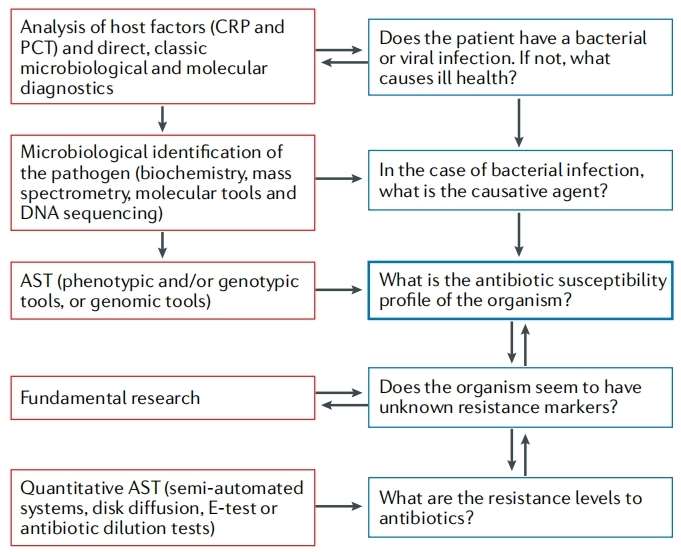 Fig. 1 Triaging infections using diagnostic testing. (van Belkum A, et al., 2019)
To address the spread of antimicrobial resistance in humans, animals and the environment, prudent use of antibiotics will be promoted and efforts will be made to limit therapeutic use. Promote access to affordable, high-quality antimicrobials, vaccines, and diagnostics. Promote the importance of research and development, particularly for priority pathogens identified by the World Health Organization. Establish a new international collaborative R&D center to maximize the impact of existing and new antimicrobial basic and clinical research programs and product development.
The existing AMR profile is spreading globally, with resistance to newly licensed antimicrobials or new resistance mechanisms to older agents emerging. Many high-quality and up-to-date scientific, economic, public health-oriented, and educational reports have been published. Although these reports cover a variety of topics related to AST, in the case of AST there are two basic diagnostic needs. First, physicians are needed to rapidly identify antibiotics that can be used to successfully treat patients infected with bacterial pathogens. Second, there is a need for epidemiologic evaluation, i.e., detection of phenotypic resistance mechanisms and monitoring of their transmission. Thus, ASTs generate surveillance data and help design strategic actions to control the spread of AMR. These needs are complemented by the requirement to overcome barriers to the implementation of diagnostic devices. Although many of the newly proposed technologies show promising application areas and good data, their current state of development still prohibits direct clinical use.
Antimicrobial susceptibility testing and new antibiotics. AST and AMR surveillance are important parts of the development of new antibiotics, as infection prevention and infectious disease practitioners will not generally introduce a new antibiotic into health care until they understand its use. Furthermore, AST data and proposed breakpoints for new antibiotics have to be submitted as part of regulatory approval procedures. Investing in AST during antibiotic development could help reduce the costs of clinical trials. Co-development of new antimicrobials together with specific AST for target microorganisms may help to better position an antibiotic in the clinical market.
The institutional antibiogram. An institutional antibiogram may be integrated in machine learning-based software. Machine learning is used for the development of explicit algorithms with predictive power and is closely related to computational statistics. Within the field of data analytics, machine learning is a method used to design complex models that lend themselves to prediction. Adoption of these models will enable AST researchers to suggest reliable decisions and uncover new insights through learning from historical antibiotic resistance data trends. Such decision-support software programmes may provide guidance for optimal empirical antimicrobial treatment on the basis of available clinical and laboratory information in the electronic patient record and information on local microbial flora and AMR profiles.
The 'smart antibiogram'. Although the institutional antibiogram is a powerful tool, it will never eliminate the need for new and improved AST systems. The current frequency at which these antibiograms are updated may mean that they are not quickly adaptable to rapidly changing or emerging antibiotic resistance mechanisms that occur within a particular health-care institution. If we consider recent and future technological advances in the rapid identification of the causative agent, for example, the use of molecular assays or MALDI-TOF-MS to detect microorganisms directly from positive blood culture bottles, then a more refined system for susceptibility (or resistance) could be generated via a 'smart antibiogram'.
| Bacteria | Cat. No | Product Name | Inquiry |
| E. coli | DMABT-Z60640 | Mouse Anti-E. coli LPS Mab, Clone 4F9/3 | Inquiry |
| CABT-CS527 | Mouse Anti-E. coli LPS Mab, Clone 2D7 | Inquiry | |
| CABT-CS528 | Mouse Anti-E. coli LPS Mab, Clone 2F2G21 | Inquiry | |
| CABT-CS529 | Mouse Anti-E. coli LPS Mab, Clone 3I21 | Inquiry | |
| CABT-CS530 | Mouse Anti-E. coli LPS Mab, Clone 3B6 | Inquiry | |
| CABT-CS531 | Mouse Anti-E. coli Mab, Clone 4I22 | Inquiry | |
| P. gingivalis | CABT-CS532 | Mouse Anti-P. gingivalis LPS Mab, Clone 3-4B22 | Inquiry |
| CABT-CS533 | Mouse Anti-P. gingivalis LPS Mab, Clone 3-4H2 | Inquiry | |
| Staphylococcus | CABT-L7854 | Mouse anti Staphylococcus aureus SEA Mab, clone Mab302 | Inquiry |
| CABT-L7855 | Mouse anti Staphylococcus aureus SEA Mab, clone Mab275 | Inquiry | |
| CABT-L7856 | Mouse anti Staphylococcus aureus SEB Mab, clone Mab85 | Inquiry | |
| CABT-L7857 | Mouse anti Staphylococcus aureus SEB Mab, clone Mab20 | Inquiry |
| Cat. No | Product Name | Compatible Samples | Inquiry |
| DEIA048 | Kanamycin ELISA Kit | Vaccine, Cell Culture | Inquiry |
| DEIA-WZ048V | High Sensitivity Kanamycin ELISA Test Kit | Cell lysate, Urine, Serum, Recombinant protein, Fermentation liquid | Inquiry |
| DEIA047 | Gentamicin ELISA Kit | Vaccine, Cell Culture | Inquiry |
| DEIA-WZ6884 | High Sensitivity Gentamicin ELISA Test Kit | Cell lysate, Urine, Serum, Recombinant protein, Fermentation liquid | Inquiry |
| DEIA040 | Ampicillin ELISA Kit | Vaccine | Inquiry |
| DEIA-WZ020 | High Sensitivity Streptomycin ELISA Test Kit | Serum, Urine, Recombinant protein | Inquiry |
| DEIA6881V2 | Chloramphenicol ELISA Kit | Vaccine | Inquiry |
Loading ......
