
Inquiry Basket
 Loading ......
Glyphosate, a non-selective systemic fungicide with broad-spectrum activity, has gained considerable attention due to its extensive use in agriculture, forestry, and home gardening. However, the persistent nature of glyphosate in the environment, spanning days to months, has raised significant environmental and health concerns. As the prevalence of glyphosate application continues to grow, it becomes increasingly important to address the potential toxic effects associated with its widespread use.
Glyphosate, with the chemical formula C3H8NO5P, is a broad-spectrum herbicide commonly used to control the growth of weeds and unwanted vegetation. It was first introduced by the agricultural company Monsanto (now part of Bayer) in the 1970s and is marketed under various trade names, including Roundup®. The global use of glyphosate has significantly increased in recent years, driven by the adoption of glyphosate-resistant crops and the economic benefits they offer in agriculture. This has resulted in glyphosate-based herbicides becoming dominant in the pesticide market, with an estimated annual usage of 600,000 to 750,000 tons. Projections suggest that glyphosate usage will continue to rise, reaching approximately 740,000 to 920,000 tons by 2025.
Glyphosate disrupts the shikimate pathway, which produces aromatic amino acids in plants and microorganisms but not in animals, including humans. It achieves this by inhibiting the enzyme 5-enolpyruvylshikimate-3-phosphate synthase (EPSPS), which is responsible for catalyzing the conversion of shikimate-3-phosphate (S3P) and phosphoenolpyruvate into 5-enolpyruvyl-shikimate-3-phosphate (EPSP). By inhibiting the shikimate pathway, glyphosate reduces the production of aromatic amino acids like tyrosine, phenylalanine, and tryptophan, as well as protein synthesis. This blockage of the metabolic pathway ultimately leads to the death of the target organism within a few days.
When glyphosate is applied, it is primarily absorbed through the foliage and has minimal uptake through the roots. As a result, it only affects actively growing plants and does not impede seed germination. The herbicide is transported within the plant, reaching both the growing roots and leaves. Glyphosate may also chelate with Co2+ ions, further contributing to its mode of action.
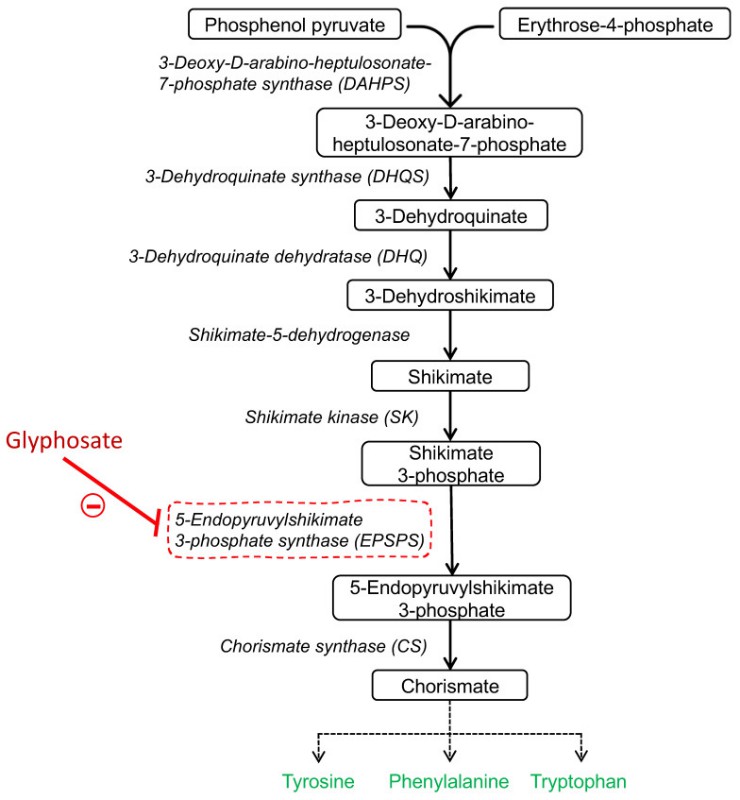 Figure 1. The mechanism of action of glyphosate.
(Source: Costas-Ferreira, C. et al., 2022)
Reference
| Target | Cat. No. | Product Name | Expression System | Tag/Conjugate | Application | |
| Tyrosine | DAG3418 | L-Tyrosine [G-BSA] | N/A | G-BSA | N/A | Inquiry |
| Phenylalanine | DAG3391 | L-Phenylalanine [G-BSA] | N/A | G-BSA | IHC, ICC | Inquiry |
| Tryptophan | DAG155S | Tryptophan [HSA] | N/A | HSA | ELISA | Inquiry |
| DAG299S | Tryptophan [BSA] | N/A | BSA | ELISA | Inquiry | |
| DAG3415 | L-Tryptophan [G-BSA] | N/A | G-BSA | N/A | Inquiry |
| Target | Cat. No. | Product Name | Size | Species Reactivity | Application | Detection Sample | |
| Glyphosate | DEIANS007 | Glyphosate ELISA Kit | 96T | N/A | Quantitative | honey | Inquiry |
| Tyrosine | DEIANS071 | Nitrotyrosine ELISA Kit | 96T | N/A | Quantitative | cell lysates, serum, plasma and purified proteins | Inquiry |
| DEIA3981 | Nitrotyrosine ELISA Kit | 96T | Human | Quantitative | Cell Lysate, Other biological fluids, Plasma, Serum, Urine | Inquiry | |
| DEIA087J | Nitrotyrosine ELISA Kit | 96T | Human | Quantitative | EDTA plasma, serum | Inquiry | |
| DEIA088J | Nitrotyrosine ELISA Kit | 96T | Human | Quantitative | stool, serum, EDTA plasma | Inquiry | |
| DEIA100J | Tyrosine ELISA Kit | 96T | Human | Quantitative | EDTA plasma, serum | Inquiry | |
| DEIA-PYR064 | Tyrosine Colorimetric Assay Kit | 100T | Quantitative | serum, plasma, urine, other body fluids | Inquiry | ||
| Phenylalanine | DEIA-XY8 | Phenylalanine neonate (with Membrane Plate) ELISA kit | 192T | Quantitative | blood | Inquiry | |
| DEIA-XY11 | Phenylalanine neonate (without Membrane Plate) ELISA kit | 192T | Quantitative | blood | Inquiry | ||
| DEIA098J | Human Phenylalanine ELISA Kit | 96T | Human | Quantitative | EDTA plasma and serum | Inquiry | |
| Tryptophan | DEIA05750 | Tryptophan ELISA Kit | 96T | Quantitative | urine, plasma, serum | Inquiry | |
| DEIA074J | Tryptophan ELISA Kit | 96T | Quantitative | cell culture media | Inquiry |
Loading ......
