
Inquiry Basket
 Loading ......
Serology, broadly defined, refers primarily to the study of serum reactions to body fluids and, more narrowly, to the study of serum immune reactions. The earliest serologic tests examined the activity of serum against infectious agents such as bacteria, from which the immunoglobulin (antibody) and complement systems were discovered. With the development of serum immunology, there has been a gradual understanding of more detailed molecular and related reactions, such as antigen-antibody reactions, the concept of antisera, and the development of a wide range of immunological assays for the analysis of antigens or antibodies. Currently, quantitative enzyme immunoassays are the most widely used tests for the diagnosis of infections, characterization of alloantibody responses, autoimmunity, and allergy diagnosis.
Serologic testing not only assists in clinical diagnosis, but also allows surveillance of historical cases and measurement of historical pathogen exposure. Unlike case-based surveillance, serologic methods do not miss subclinical cases and patients who do not seek medical attention, providing a comprehensive picture of the disease burden. When an individual is infected with a pathogen, the organism generally produces IgM, which has a shorter survival time, followed by IgG, which has a longer survival time, and IgA, which generally functions at mucosal sites. Antibody levels decline over time and rise again upon exposure to the same pathogen, with IgM declining faster than IgG. Therefore, time to infection is assessed by measuring the ratio of IgM to IgG and at the individual level.
Many types of specimens can be tested serologically. Although serologic antibody testing is primarily performed in serum, eluted dried-blood spots (DBS), saliva or nasal swabs, and cerebrospinal fluid (CSF) can also be tested for the appropriate antibodies. Serologic testing requires a small sample volume and can be performed on frozen samples, making sample collection, storage and testing easy.
Various binding or functional antibody assays specifically assess pathogen exposure, including measures of viral neutralization, inhibition of viral binding to host receptors, and antibody-dependent complement killing of bacteria. In some cases, functional antibody analysis can distinguish viral serotypes or variants. A number of live virus assays, such as the plaque reduction neutralization test (PRNT), the viral neutralization test (VNT), and the focused reduction neutralization test (FRNT), can be used to evaluate the functional properties of viruses. In addition, a number of assays that inhibit viral binding to host receptors can also evaluate the antibody neutralization profile of viruses, including the substitution neutralization test (sVNT) and the pseudovirus neutralization test. Antibody-dependent bactericidal function is more commonly measured in bacteria using bactericidal complement assays and bacterial phagocytosis assays. However, functional assays are time consuming, expensive, have low throughput and are not commonly used for surveillance purposes.
The serological assay application of the broader method is to measure pathogen-specific antibodies by binding to pathogen-specific antigens, and many experimental platforms based on this method have been established and commercialized in serosurveillance of infectious diseases and seroepidemiological studies, such as enzyme-linked immunosorbent assay (ELISA), chemiluminescent immunoassay (CLIA), and lateral flow rapid diagnostic test (RDT). can be used for the rapid diagnosis of clinical infectious diseases. ELISA assays include indirect ELISA, sandwich ELISA and capture ELISA. The first two are used to detect pathogen-specific IgA or IgG during the recovery period (i.e., after infection and disease remission), and the latter is primarily used to assess pathogen-specific IgM during acute infection and disease. On this basis, various modified versions of ELISA with non-enzymatic assays, such as time-resolved immunofluorescence assays, have been developed.
Emerging serological assay technologies favor the simultaneous measurement of antibodies to multiple pathogens, and the most widely used multiplex assays are fluorescent microbead-based assays and microarray-based assays. These technologies require only a small number of samples to perform and are capable of multiplexing tens to hundreds of pathogens. They are expensive compared to ELISA techniques and are difficult to use in resource-poor areas.
Phage-immunoprecipitation (PhIP-Seq) promises to revolutionize the status quo of serosurveillance for infectious diseases by enabling the detection of up to one million different pathogen proteins. It has been successfully applied to a variety of antibody-containing biological samples and used to study the seroprevalence of viruses and bacteria. When combined with next-generation sequencing (NGS), it can be used for antibody detection. However, the method is too costly and operator demanding. The integration of multiple serological techniques in serosurveillance allows the simultaneous tracking of multiple pathogens and has the potential to detect new pathogens before an outbreak occurs.
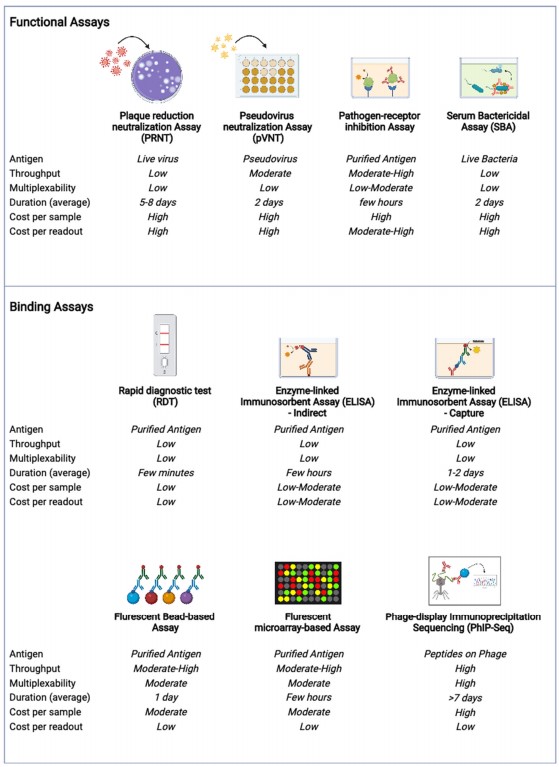 Figure 1. Summary of some of the current serological methods and their technical characteristics
(Source: Haselbeck AH, et al. 2022)
Due to the complexity of humoral immunity, researchers have developed the concepts of systematic serology and seromics based on serology, which use high-throughput computational analysis of experimental data to delve deeper into humoral immunity and characterize functionally relevant antibodies in detail. Systematic quantitative analysis can determine the relationship between biophysical properties of antibodies and important functional outcomes, vaccine regimens, or protection/control of infection, helping researchers to design new vaccine regimens that specifically target enhancement or inhibition of key parts of the system, thereby altering the overall humoral immune state. Systematic serology can be used as a hypothesis-generating tool to investigate systemic, mechanistic problems involving multiple antibody signatures. It can help researchers deepen their understanding of the humoral immune system through the development of quantitative numerical models, an approach that has been applied in vaccinology and can help identify genetic and transcriptional signatures associated with vaccine responses. Systematic serology is preferable to traditional research approaches that focus on the genetic and transcriptional correlates of cellular immunity and vaccine protection to gain insight into functional humoral immunity.
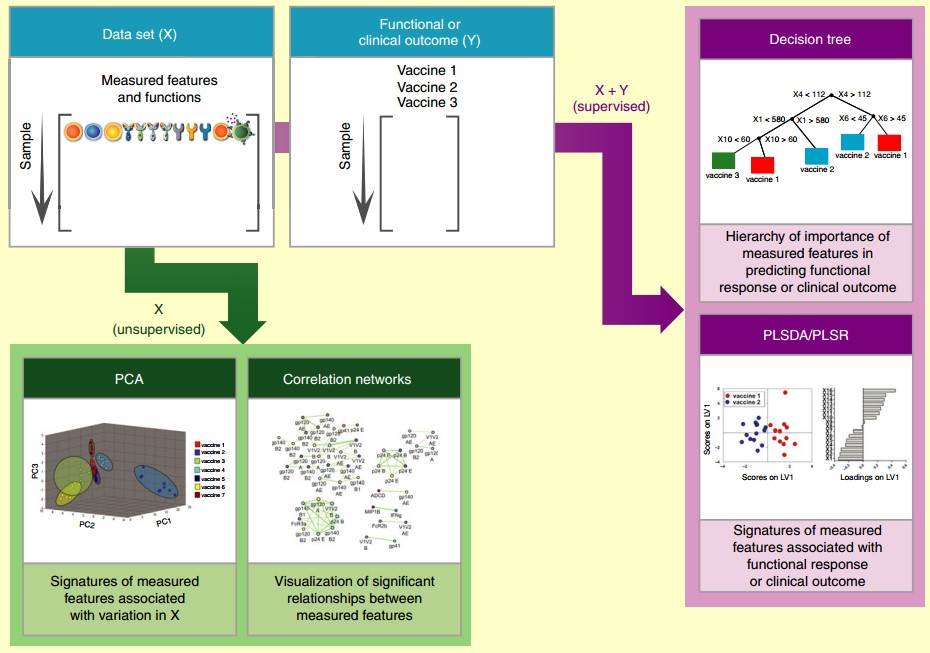 Figure 2. Systems serology data-driven modeling approaches
(Source: Arnold KB, et al. 2018)
The large data set was first analyzed, including antibody biophysical characteristics such as antibody Fab recognition, antibody isotyping, glycosylation, and Fc receptor, to provide reliable data support for researchers to design specific protocols. Principal component analysis and correlation network analysis are performed on this large data set to search for multivariate relationships and characteristics of each variable. A systematic, unbiased examination of a broad antibody profile can provide researchers with a more complete understanding of the mechanisms behind specific functions, potentially revealing new associations between antibody properties and functions.
The systematic model can also perform Partial Least Squares Discriminant Analysis (PLSDA), Partial Least Squares Regression (PLSR), and Decision Tree analysis, a class of analyses that focus on separately identifying key factors in large data sets that correlate with important clinical outcomes or functions and are useful for gaining insight into the mechanisms of immune parameter networks. Depending on the investigator's purpose, systematic serology can provide different analytical methods and results, and has the advantage of integrating disparate data into a whole that can link quantitative relationships between biophysical features associated with clinical or functional outcomes across experimental methods, tissue regions, and time.
Serology can guide child health policy and vaccine promotion. As serology is particularly suitable for multiple testing, this method can be used for the detection of antibodies to multiple pathogens in children of different ages. The health sector can use age-stratified serum prevalence data to understand the relative burden of different infectious diseases in the population and to estimate exposure risks based on age. Such information can guide preventive measures in the first year of life and help public health authorities optimize vaccination schedules and immunization strategies.
Serology can complement clinical case reporting. While outbreak information has traditionally been reported in the form of clinical patient presentations of illness that are not supported by laboratory test results, serology can help monitor infectious disease infections, including a history of previous infections. Some researchers have developed a model based on antibodies to Vibrio cholerae that correctly identifies people who have been infected with cholera in the past year. The model helps to better determine the timing and geographic spread of infection, regardless of patients' health-seeking behavior or whether reporting systems are faulty. Especially in resource-poor settings, serology can be effective in monitoring the extent of infection.
Serology can be used to assess the effectiveness of public health interventions. Serology has been used less frequently to measure the impact of public health interventions because of the long duration of most antibody responses and the fact that the presence of the antibody itself does not correlate accurately with the duration of infection. Despite these limitations, serology has been used to assess the impact of long-term distribution of insecticide-treated nets on the incidence of malaria and filariasis in Mozambique, relying largely on the fact that the rate of malaria seropositivity correlates with the intensity of malaria transmission. The results of the study showed that bed net use was associated with a decrease in seropositivity for only two malaria antigens. Overall, serology can be used to monitor the impact of certain interventions, but is best used in conjunction with other, more direct indicators of disease burden.
References
Loading ......
