
Inquiry Basket
 Loading ......
The non-protein amino acid hydroxyproline (Hyp) has a molecular weight of 131.13 g/mol. It is a byproduct of proline hydroxylation after post-translational protein modification, most commonly detected in collagen. Prolyl hydroxylase hydroxylates proline residues during collagen manufacture, resulting in two isomeric forms: trans-4-hydroxy-L-proline (4-Hyp) and trans-3-hydroxy-L-proline (3-Hyp), with 4-Hyp being more common in collagen.
Proline is a precursor for the synthesis of hydroxyproline, and the two are very closely related. In the endoplasmic reticulum, prolyl hydroxylase converts proline to hydroxyproline. Cofactors required for this activity include 2-oxoglutarate, molecular oxygen, ascorbic acid, and Fe2+. The hydroxyproline produced is critical to collagen's structural stability and function.
 Figure 1. Chemical structures of proline and hydroxyproline.
(Source: Gabr SA, et al. 2016)
Collagen is the most prevalent protein in the body, comprising approximately one-third of all proteins. Collagen's distinctive features, including as thermal and mechanical stability, stem from its triple helix structure, which is made up of repeating Gly-X-Y motifs, with Pro and 4-Hyp occupying the X and Y positions, respectively. 4-Hyp contributes significantly to collagen's mechanical and thermal stability. Collagen's melting point is inversely correlated with its 4-Hyp content, which preserves the structural integrity of the collagen by creating a web of hydrogen bonds between collagen strands. The large content of 4-Hyp in collagen, which accounts for almost one-third of all proteins in humans and other animals, demonstrates its relevance. Although the body normally has a low amount of Hyp, alterations in this level can be indicative of pathological changes in specific disorders as well as the metabolic condition of tissues. Changes in Hyp concentration can be a significant signal of the metabolic condition of tissues like skin, bones, and muscles because collagen is widely distributed in these tissues.
The liver and kidneys are where hydroxyproline is primarily metabolized. 4-hydroxy-L-proline oxidase converts 4-Hyp to glyoxylate, which is subsequently broken down into glycine. In contrast, the 3-hydroxy-L-proline dehydratase pathway breaks down 3-Hyp to produce glutamate and ornithine. To prevent cellular damage, the intermediate hydroxyproline metabolites, such as hydrogen peroxide and glyoxylate, must be transformed quickly.
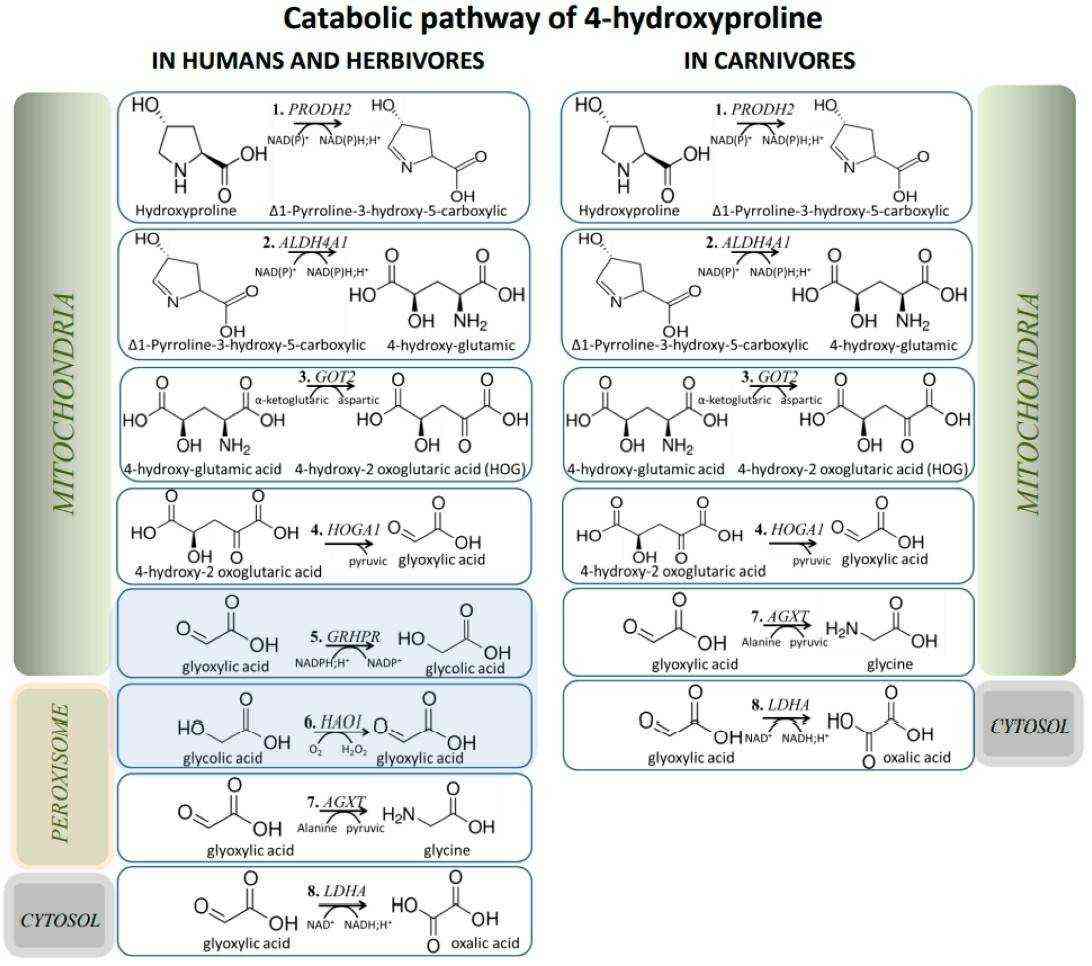 Figure 2. The metabolic pathway of 4-hydroxyproline in different vertebrate species.
(Source: Belostotsky R, et al. 2022)
Hyp serves a variety of vital functions in organisms. To begin with, as a collagen component, it is critical for tissue structural stability and mechanical strength. Second, Hyp plays important functions in physiological processes such as cell signaling, hypoxia response, and antioxidant reactions. Hyp, for example, phosphorylates protein kinase B and DYRK1A to modulate cell signaling. Additionally, the metabolism of Hyp is related with antioxidant reactions, which assist to remove reactive oxygen species in the body.
Hyp has the potential to function as a biomarker for numerous disorders because of its high collagen concentration and vital involvement in collagen metabolism. For instance, structural or functional abnormalities of collagen are linked to a number of conditions, including rheumatoid arthritis, atherosclerosis, aortic aneurysms, and illnesses of the vitreous eye. As a result, determining the body's Hyp levels can be used to evaluate the effectiveness of various diseases' diagnoses and treatments.
Numerous disorders have a direct correlation with abnormal hip levels and their progression. Hyp levels are markedly raised in a certain condition, including keloids, vitiligo, and graft-versus-host disease. Hyp levels are low in instances of inadequate wound healing, on the other hand. various anomalies suggest that Hyp is important for the development and pathophysiology of various illnesses.
Because hydroxyproline is crucial for the diagnosis and treatment of diseases, it is frequently employed in fundamental research as well as the creation of treatment plans. For instance, determining the levels of Hyp in the blood or urine can be used to evaluate changes in bone density and the impact of treatment on individuals with osteoporosis. Monitoring Hyp levels in rheumatoid arthritis patients' joint fluid can help determine the severity of joint destruction. Serum Hyp levels in individuals with atherosclerosis and aortic aneurysms can be key indications of vascular damage and healing. Developing innovative therapeutic strategies may include manipulating Hyp metabolic pathways in the development of protocols. For example, blocking prolyl hydroxylase activity to limit Hyp production in collagen can reduce collagen degradation, giving protection against certain disorders. Additionally, supplementing Hyp or its precursors can promote collagen synthesis and tissue repair, having potential applications in improving tissue damage and accelerating wound healing.
Hyp has important implications in regenerative medicine, particularly in maintaining protein structure and function. Hyp is a fundamental component of collagen, which is commonly employed as a biomaterial in tissue engineering and regenerative medicine. Because the high concentration of Hyp in collagen improves its structural stability and mechanical strength, it is widely used in the production of artificial tissue scaffolds for tissue repair.
Collagen is utilized as a scaffold material in tissue engineering to produce a variety of tissues. Hyp's presence in collagen contributes to the structural stability and function of these scaffolds. For example, Hyp can increase the mechanical strength of scaffolds, allowing them to better support cell development and tissue regeneration following implantation in the body. Hyp is also utilized to create polymers that restore injured tissues. Hyp, which contains collagen, can aid in wound healing and skin renewal. Hyp may also improve the mechanical strength of freshly produced tissue, bringing it closer to genuine tissue. In addition to being utilized as scaffold and repair materials, Hyp is actively being explored for its applications in bone regeneration and cartilage repair, where it provides the mechanical strength and biocompatibility required to support tissue regeneration and repair.
Due to its part in preserving the structure and function of collagen, Hyp is extremely important in the nutrition and cosmetics sectors. Hyp is commonly utilized in skincare products since it aids in the structural function of collagen in the skin. Hyp slows skin aging by increasing collagen stability, promoting suppleness, and firmness. Patients with disorders such as systemic lupus erythematosus report improved skin health after using Hyp.
Hyp is also commonly utilized in a variety of cosmetic products, including lotions, serums, and masks, due to its particular action on collagen. Hypnosis can boost the anti-aging effects of these products, improving skin texture and luminosity. Hyp is used in nutritional supplements to help the body produce and maintain collagen. Supplementing with Hyp promotes skin, bone, and joint health while reducing tissue deterioration caused with aging. Hyp is also utilized in some functional foods and beverages to boost their health effects.
In agriculture and animal husbandry, Hyp can significantly improve the health and production efficiency of poultry and livestock as a feed additive. Adding Hyp to animal feed can enhance the health of skin, bones, and joints in poultry and livestock, reducing tissue degeneration caused by disease or aging. For example, supplementing Hyp can increase the growth rate and feed efficiency of pigs and enhance the maximum growth performance of chickens. Hyp can also protect the intestinal health of animals, reduce intestinal inflammation, promote nutrient absorption, and improve overall health. For example, fishmeal containing Hyp can improve the texture of shrimp, fish, and shellfish, making them firmer and tastier.
It is worth noting that the effects of Hyp supplementation on growth performance and health state vary significantly between animals. Supplementing Hyp in mammals (such as pigs) and poultry (such as chickens) can boost growth rate and feed efficiency. For example, adding a specific amount of Hyp to pigs' diets can enhance daily growth rate while decreasing plasma urea content. Supplementing with Hyp can help aquatic animals (like as salmon) gain weight and improve their growth. The use of Hyp in aquatic animals broadens its role as a functional amino acid, contributing to improved production efficiency and animal health.
Furthermore, plants' growth and health are positively impacted by the glycosylation of Hyp. Plant growth, stress tolerance, and drought resistance can all be improved by using Hyp. As a soil supplement, hyphae can enhance soil fertility, water retention, and structure, all of which will accelerate and boost plant production. Hyp supports healthy plant growth by contributing to the structural stability of plant cell walls through its function in cell wall proteins. Additionally, it can strengthen plants' resilience to oxidative stress, shielding them from outside pressures.
In summary, hydroxyproline is an important compound with significant roles not only in disease diagnosis and treatment but also in regenerative medicine, beauty, and agriculture. We are pleased to see you and your team's further exploration and expansion of Hyp's potential applications. Creative Diagnostics provides a range of high-quality Hyp experimental products, including antigens, antibodies, and ELISA kits, to support your experiments. Please visit our website to add them to your cart, and they will be safely and quickly delivered to your laboratory desk.
References
| Target | Cat. No. | Product Name | Size | Species Reactivity | Application | Detection Sample | |
| Hydroxyproline | DEIA-XY2132 | Hydroxyproline Assay Kit | 96T | Quantitative | tissue specimens, tissue homogenates | Inquiry | |
| DEIA3605 | Hydroxyproline ELISA Kit | 96T | Human | Quantitative | Serum, plasma, tissue homogenates, cell culture supernatants, other biological fluids | Inquiry |
| Target | Cat. No. | Product Name | Host | Isotype | Application | |
| Hydroxyproline | DPATB-H81730 | Anti-Hydroxyproline (full length) polyclonal antibody | Rabbit | IgG | IHC, IA | Inquiry |
| Target | Cat. No. | Product Name | Expression System | Tag/Conjugate | Application | |
| Hydroxyproline | DAG-P2062 | Hydroxyproline (full length) | N/A | KLH | ELISA | Inquiry |
| Target | Cat. No. | Product Name | Expression System | Tag/Conjugate | Application | |
| Trans-4-Hydroxyproline | DAG3413 | Trans-4-Hydroxyproline [BSA] | N/A | BSA | N/A | Inquiry |
| Target | Cat. No. | Product Name | Host | Isotype | Application | |
| Trans-Hydroxyproline | DPAB1804 | Anti-Trans-Hydroxyproline polyclonal antibody | Rabbit | IgG | Inquiry | |
| DPAB-DC4835 | Anti-Trans-hydroxyproline polyclonal antibody | Rabbit | IgG | IHC, ELISA | Inquiry |
Loading ......
