
Inquiry Basket
 Loading ......
Lyme disease (LD) is a tick-borne disease caused by Borrelia burgdorferi, which manifests itself as chronic erythema migrans (EM) of the skin, and can cause multi-system and multi-organ damage to the human body, and in severe cases can leave disability or death. The disease is named Lyme disease because it was first discovered in the town of Lyme, Connecticut, United States.
Borrelia burgdorferi (B. Burgdorferi), an intermediate between bacteria and protozoa, belongs to the class Spirochaetales, order Spirochaetales, family Splrochaetaceaceace, and genus Borrelia. Borrelia burgdorferi is the main cause of Lyme disease, and there are three pathogenic genotypes: Borrelia burgdorferi sensu stricto, Borrelia garinii, and Borrelia afzelii, which vary greatly in their pathogenicity and in the clinical manifestations of the infection.
B. burgdorferi is a microaerobic bacterium consisting of single cells loosely coiled, generally with 3~10 sparse and irregular spirals, wavy, slightly pointed at both ends. Its movement is active, with twisting, tumbling, shaking and other kinds of movement. In addition to having a typical bacterial plasma membrane, it has an outer membrane known as the outer membrane sheath. The protoplasmic cylinder consisting of the nuclear region and cytoplasm and the outer membrane sheath is known as the periplasm and contains flagella. The outer membrane of B. burgdorferi consists of outer membrane proteins and phospholipids and lacks lipopolysaccharides, whereas outer membrane proteins mainly consist of abundant outer surface lipoproteins and intact transmembrane proteins, which are capable of eliciting inflammatory responses in human host cells.
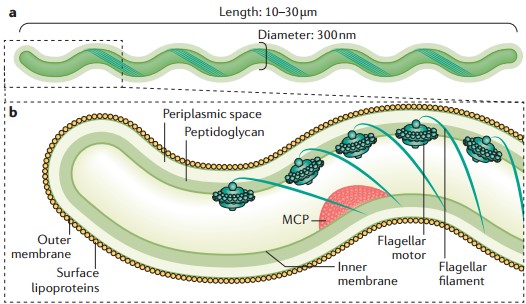 Figure 1. Borrelia burgdorferi morphology and cellular architecture
(Source: Steere AC, et al. 2016)
The genome of B. burgdorferi is relatively small, about 1.5 Mb, and it contains a linear chromosome 950 Kb in length with at least 21 additional chromosomal DNA elements or plasmids. B. burgdorferi possesses the largest known number of plasmid-associated genes for pathogenicity, including the outer surface protein gene (Osp). Its virulence determinants are present both on linear chromosomes and on linear and circular plasmids. Virulence genes on chromosomes include p66, bgp, plzA, rpoN, rpoS, or bosR, whereas virulence-related genes present on plasmids encode proteins such as DbpA/B, BBK32, OspC, PncA, and VlsE.
Lyme disease is transmitted primarily by hard ticks between animal hosts and between host animals and humans, and birds can serve as hosts for ticks and as bacteriophage-retaining hosts for B. burgdorferi, but its importance lies in its ability to spread and transmit B. burgdorferi over long distances. Lyme disease among animals can also be transmitted through feces and even to people in close contact, but it is not currently thought to be transmitted from person to person. There is also vertical transmission of Lyme disease. When a woman is infected with B. burgdorferi during the first trimester of pregnancy, the pathogen can be transmitted to the infant via the placenta. The population is universally susceptible to B. burgdorferi without differences in race, sex, or age. However, the main population of infection is closely related to chronically tick-exposed populations.
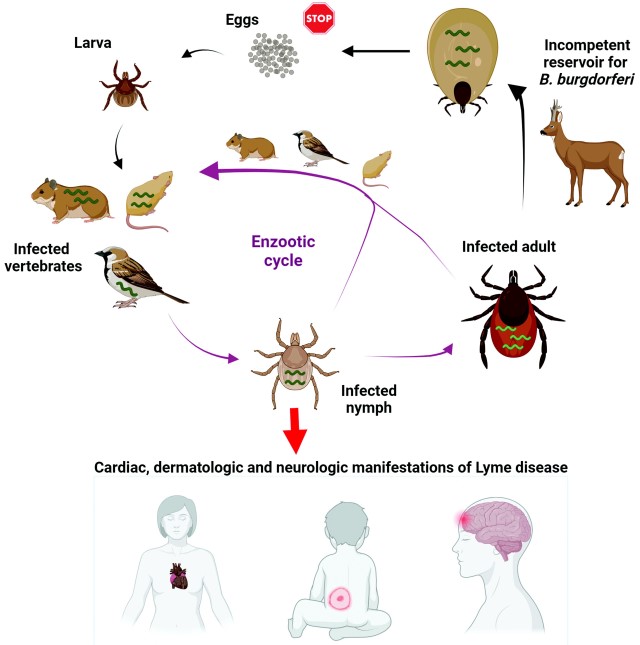 Figure 2. Enzootic cycle responsible for maintaining B. burgdorferi in tick populations
(Source: Strnad M, et al. 2023)
The epidemiological characteristics of Lyme disease are, firstly, wide distribution, with a global geographical distribution; secondly, seasonal distribution, as Lyme disease is mainly transmitted by tick bites, the onset of the disease season is basically the same as the season of tick activity, so it has a clear seasonal nature; and thirdly, population distribution, the onset of the disease is related to the occupation, with a relatively large number of cases among foresters, pastoralists, hunters and border guards.
Lyme disease is a systemic infection with clinical manifestations often involving the skin, joints, nervous system, and heart that enter the clinical phase after a period of incubation. Patients with untreated Lyme disease are categorized into three stages based on their clinical presentation: localized skin lesions (stage I), spread of infection (stage II), and persistence of infection (stage III). Symptoms of each stage are often seen separately, but there are cases in which all three stages occur together.
EM is often the first symptom of Lyme disease and is a unique clinical feature of the disease. EM is most commonly characterized by circumscribed erythema with a pale, scarlet or pale hard center in typical cases, and blistering or necrosis in the center in atypical cases. In the localized lesion stage patients are often accompanied by non-specific symptoms such as fever and chills. The lesions usually last about 3 weeks and improve or dissipate on their own without treatment. Within days or weeks of the bite, B. burgdorferi can spread to other organs throughout the body via the bloodstream or lymph. It has been reported in the literature that 2% to 3% of patients with Lyme disease skip the localized lesion stage and progress directly to the spread of infection, with facial nerve palsy and cranial neuropathy as the first symptoms. Persistent infection is defined as a chronic infection that has persisted or recurred for at least 6 months and manifests itself primarily as rheumatic symptoms. Early rheumatic symptoms occur when the pathogen spreads to the joints, bones and muscles. Late rheumatic symptoms are mainly characterized by arthritis, intermittent joint swelling and pain. The infection mainly affects the large joints, especially the knee joint. The disease is recurrent and prolonged, and eventually develops into joint deformity, limiting movement.
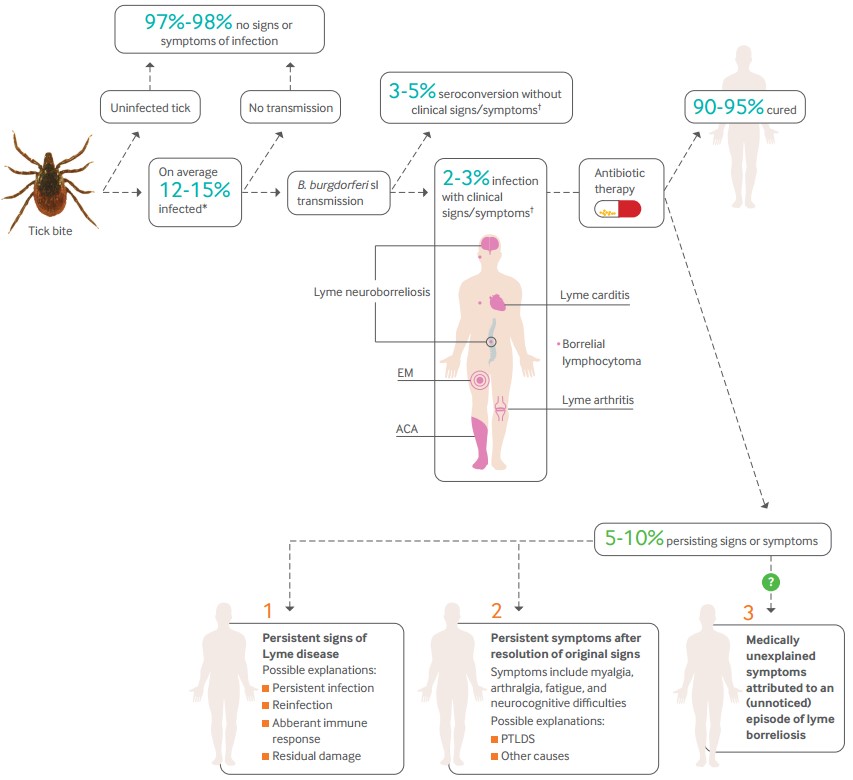 Figure 3. Possible disease progression after a tick bite
(Source: Kullberg BJ, et al. 2020)
The first step in differentiating LD from other diseases is to examine all signs and symptoms and collect subjective and objective data from the patient. LD should be suspected immediately if there is a likelihood of exposure to ticks in a tick-endemic area and the patient presents with the cutaneous manifestations of EM. Recognizing EM can be challenging because it can appear in different forms, unlike the typical "bull's eye".
The current reference method to assist physicians in diagnosing LD is serologic testing. The standardized two-tier test (STTT) uses an enzyme-linked immunosorbent assay (ELISA) as the primary test, followed by an IgM or IgG immunoblotting assay. The STTT is generally considered to have limited sensitivity in detecting early localized infections and very high sensitivity in detecting advanced infections. The modified two-tier test (MTTT) confirms infection with an ELISA, and several studies have shown that the MTTT improves the sensitivity of the test without compromising specificity compared to the STTT. Interpretation of serologic results can be complex. It usually takes the immune system a few days to a few weeks to generate a specific IgM response, while it may take up to two months to generate a specific IgG response. Methods for detecting IgM antibodies are useful mainly in the early stages of the disease, because in the later stages of the infection they tend to produce false-positive signals due to cross-reactivity with other infections. Furthermore, in Lyme disease, antibody production does not always follow the typical immune response of initially secreting IgM and then IgG.
Although a great deal of knowledge has been acquired about the pathogens of the disease, an effective strategy to reliably overcome LD has yet to be found. There is currently no vaccine available for human use. Multiple genes shared by B. burgdorferi show high sequence variability among LD spirochete species, with genes required for optimal infectivity often differing significantly at the nucleotide and amino acid levels. This variability complicates the design of effective immunization strategies, including vaccines, because immune responses do not protect all infected species to the same degree. Therefore, current vaccine development focuses on multivalent protein vaccine development against all common serotypes of B. burgdorferi. VLA15, the only LD vaccine candidate in late clinical development, targets OspA and provides protection against the six prevalent OspA serotypes expressed by B. burgdorferi common in North America and Europe.
To address the protein variability observed in different strains and species of B. burgdorferi, researchers have been working to create a multivalent chimeric vaccine that provides protection against different species of LD, aiming to address the inherent heterogeneity of the pathogen. OspA-based multivalent formulations are a common target in current vaccine development. To fabricate self-assembling nanoparticles, OspA is combined with bacterial ferritin. These OspA-ferritin nanoparticles induce potent, long-lasting antibody responses against major serotypes in mice and non-human primates. In addition, to achieve broad protection against a single recombinant antigen, a strategy known as grafting or epitope remodeling has been successfully used to produce neutralizing antibodies against six of the most clinically relevant OspA serotypes.
In addition to vaccines based on recombinant protein technology, DNA tattoos and lipid nanoparticle-encapsulated DNA vaccines are a promising LD prevention strategy. DNA vaccines offer a number of potential advantages over traditional strategies, such as the ability to activate both B-cell and T-cell responses, enhanced vaccine stability, the absence of any infectious agents, and the immediacy of mass production.
Table 1. Examples of promising types of Lyme disease vaccine development
| Type of vaccine | Issues to consider | |
| Positive | Negative | |
| Monovalent antigens such as OspA | Minimal side effects Interferes with transmission | Multiple boosters needed; May not be effective against other Borrelia strains; May interfere with serodiagnosis |
| Whole killed organisms | Proven success in dogs; Multiple antigens are targeted | Interferes with serodiagnosis; Possible side effects unknown; Boosters may be needed |
| Live, attenuated Borrelia | Multiple antigens are targeted T-cell immunity will be activated; Possible side effects unknown; Boosters probably not needed | Possibly reverts to virulence; Interferes with serodiagnosis |
| mRNA | Directs the expression of the chosen antigen(s) without the threat of infection or need to integrate into the host DNA; Success with Covid | Delivery into host cells could be difficult; Boosters probably needed similar to the Covid vaccine experience |
(Source: Pavia CS, et al. 2024)
References
| Target | Cat. No. | Product Name | Size | Species Reactivity | Application | Detection Sample | |
| Borrelia | DEIA2214 | Borrelia burgdorferi IgM ELISA Kit | 20T | Human | Qualitative | Serum | Inquiry |
| B. burgdorferi | DEIA1717 | Human Borrelia burgdorferi IgG/IgM ELISA Kit | 96T | Human | Qualitative | Serum | Inquiry |
| DEIA1718 | Borrelia burgdorferi IgG ELISA Kit | 96T | Human | Quantitative | Serum, plasma or cerebrospinal fluid | Inquiry | |
| DEIA1975 | Borrelia burgdorferi IgM ELISA Kit | 96T | Human | Quantitative | Serum, plasma or cerebrospinal fluid | Inquiry | |
| DEIA587 | Human B. Burgdorferi ELISA Kit | 96T | Human | Qualitative, Quantitative | Plasma, serum, cerebrospinal fluid | Inquiry |
Loading ......
