

Inquiry Basket
 Loading ......
Polyethylene glycol (PEG) is now indispensable in biotherapeutic design because of its profound influence. Drug development has experienced transformative progress over many years because of covalent PEG chain attachments to therapeutic molecules which enhance solubility and circulation half-life while minimizing immune response. PEG functions as a vital defense mechanism to avoid immune detection which makes it essential for various medical applications including both PEGylated enzymes like asparaginase and lipid nanoparticles used to deliver mRNA vaccines. Yet, a growing challenge threatens to undermine this success: the emergence of anti-PEG antibodies. Next-generation biotherapeutic research approaches are being transformed by immune molecules that specifically bind PEG.
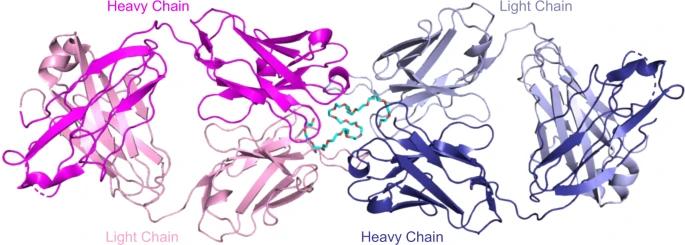 Figure 1. Anti-PEG Fabs form dimer complex with single PEG chain antigen.(Sources: Huckaby JT, et al. 2020)
PEG's versatility spans diverse therapeutic realms. PEGylated liposomal doxorubicin in oncology treatment decreases cardiac toxicity while enhancing tumor targeting effectiveness. PEG-coated nanoparticles penetrate the blood-brain barrier to administer Alzheimer's disease treatments in neurological applications. siRNA and mRNA based gene therapies function through PEG-stabilized LNPs to achieve efficient cellular uptake. PEG's "stealth" effect and extended circulation time make it effective but these same features cause it to trigger immune responses. IgG and IgM antibodies attack PEG's terminal methoxy groups which then start chains of events that damage both the drug's performance and patient safety.
A substantial proportion of healthy people between 20% and 70% show pre-existing anti-PEG antibodies because of exposure from cosmetics, processed foods and pharmaceutical products. Once formed, these antibodies act as saboteurs. The presence of anti-PEG antibodies leads to accelerated blood clearance known as the ABC phenomenon which results in PEGylated drugs disappearing from circulation rapidly. In acute lymphoblastic leukemia patients anti-PEG antibodies decrease PEG-asparaginase effectiveness by accelerating its removal from the body. Antibody-PEG complexes trigger the activation of complement proteins C3a and C5a which leads to serious hypersensitivity reactions (HSRs). Following life-threatening anaphylactic reactions in three patients who had pre-existing anti-PEG antibodies the Phase III trial of pegnivacogin for coronary syndromes was terminated. Such incidents underscore a critical dilemma: PEG improves drug efficiency but presents unforeseen risks due to its immunogenic nature.
Understanding how anti-PEG antibodies disrupt therapies has catalyzed novel strategies. The ABC phenomenon arises when antibodies opsonize PEGylated drugs, marking them for rapid uptake by liver macrophages. Concurrently, complement activation destabilizes drug carriers—anti-PEG IgM induces membrane attack complexes that rupture LNPs, triggering premature drug release. Even subclinical antibody levels matter: studies show that 25% of healthy donors exhibit anti-PEG IgM sufficient to alter LNP pharmacokinetics.
To combat these issues, researchers are reimagining PEG chemistry. Hydroxyl-terminated PEG (OH-PEG) demonstrates promise, as its reduced immunogenicity evades antibody recognition while maintaining stealth properties. In murine models, OH-PEG-modified LNPs evade ABC effects and resist complement activation, achieving 3-fold longer circulation than methoxy-PEG counterparts. Structural innovations, such as branched PEG architectures and zwitterionic polymer blends, further minimize antibody binding. Beyond material science, advanced detection tools are reshaping clinical practice. The combination of magnetic bead-based assays and enhanced ELISA kits allows doctors to accurately measure anti-PEG antibodies for screening high-risk patients ahead of PEGylated treatment.
Modern biotherapeutics development occurs where immunology meets nanotechnology. The development of dual-specificity antibodies which attack both PEG and disease-specific markers demonstrates this innovative shift in biotherapeutics. Smart molecules which redirect anti-PEG antibodies toward therapeutic targets turn a liability into a precise targeting benefit. Other substances like polyglutamic acid (PGA) and polysarcosine are becoming more popular as PEG alternatives. Though less established, these polymers mimic PEG's beneficial traits without its immunological baggage.
Yet, abandoning PEG entirely may be premature. Emerging data suggest that optimizing PEGylation protocols—such as controlling polymer molecular weight or grafting density—can mitigate immune recognition. For instance, low-density PEG coatings on liposomes reduce antibody binding while retaining prolonged circulation. Combinatorial approaches, like coupling PEG with immunosuppressive agents, offer another avenue. In preclinical trials, co-administering PEGylated drugs with complement inhibitors (e.g., C5 monoclonal antibodies) blunts HSR severity without compromising efficacy.
The anti-PEG antibody crisis has exposed a broader truth: no material is universally benign in the complex landscape of human immunology. The development of biotherapeutic pipelines that depend on nanocarriers and gene-editing platforms makes it essential to address the limitations of PEG. Achieving future success requires three key approaches which include improving biomaterial biocompatibility, enhancing patient stratification through antibody profiling techniques and building effective collaborations between immunologists and drug developers.
For developers, the takeaway is clear. PEG continues to be a critical tool yet requires ongoing adaptation in its application. The future of biotherapeutics will reach optimal safety and effectiveness if developers integrate anti-PEG antibody diagnostics into early trials while focusing on low-immunogenicity PEG variants and selecting alternative polymers. The narrative about anti-PEG antibodies demonstrates science's ability to transform obstacles into drivers for innovative solutions. As one researcher aptly noted, "PEG taught us how to hide drugs from the immune system. Now, anti-PEG antibodies are teaching us how to hide PEG itself."In this dynamic interplay lies the future of precision medicine.
Anti-PEG antibodies develop through humans' continuous contact with PEG which exists widely in everyday products such as cosmetics and food additives and is also used in pharmaceuticals. Between 20% and 70% of healthy people carry existing anti-PEG antibodies before any medical treatment and these antibodies appear more frequently in middle-aged individuals and women. The methoxy (-OCH3) terminus of PEG stands as a major target for these antibodies and it represents a shared structural characteristic in commercially available PEGylated drugs. The immune system detects PEG as a foreign molecule which starts by producing IgM antibodies but later shifts to IgG antibody production with ongoing exposure. Exposure to tiny amounts of PEG through everyday products such as toothpaste or shampoo initiates antibody responses which complicates the administration of PEGylated therapies. Recent research shows that genetic elements including HLA haplotypes play a role in determining how susceptible individuals are.
Anti-PEG antibodies disrupt PEGylated therapies via three primary mechanisms.
Accelerated Blood Clearance (ABC): Anti-PEG antibodies mark PEGylated nanoparticles like mRNA-LNPs for quick ingestion by liver macrophages through the process of opsonization. The presence of anti-PEG IgG antibodies decreases the circulation time of PEGylated liposomal doxorubicin by 50%, which leads to reduced drug accumulation in tumors.
Complement Activation: Anti-PEG IgM attaches to PEG surfaces which activates the complement system. The activation of the complement cascade releases anaphylatoxins (C3a and C5a) which trigger hypersensitivity reactions as demonstrated in the pegnivacogin trial when pre-existing antibodies led to dangerous anaphylaxis.
Drug Carrier Destabilization: Antibodies attach to PEGylated carriers producing structural damage. The premature release of the payload in mRNA-LNPs occurs which results in diminished transfection efficiency. Antibody attachment to PEG-EPO (erythropoietin) prevents the protein from binding to its receptor thereby eliminating its biological function.
Innovations focus on PEG alternatives, structural redesign, and immune modulation:
Hydroxyl-PEG (OH-PEG): Unlike methoxy-PEG, OH-PEG's terminal hydroxyl group reduces antibody recognition. Preclinical studies show OH-PEG-coated LNPs evade ABC effects and resist complement activation, achieving 3× longer circulation.
Branched and Zwitterionic PEG: Multi-arm PEG architectures mask antibody-binding sites, while zwitterionic polymers (e.g., phosphorylcholine-grafted PEG) mimic cell membrane chemistry to avoid immune detection.
Dual-Targeting Bispecific Antibodies: These molecules redirect anti-PEG antibodies toward disease-specific markers. For example, a bispecific antibody binding both PEG and HER2 could concentrate PEGylated drugs at HER2+ tumor sites.
Complement Inhibitors: Co-administering drugs like eculizumab (anti-C5 monoclonal antibody) blunts HSRs by blocking terminal complement activation.
Cutting-edge diagnostics and personalized approaches are transforming clinical practice:
Magnetic Bead-Based Assays: Platforms like the "PEG Detect" system isolate anti-PEG antibodies from serum with 99% specificity, quantifying IgM/IgG levels via fluorescence. This enables pre-treatment screening for high-risk patients.
Preemptive Desensitization: For antibody-positive patients, protocols using gradual dose escalation and antihistamines (e.g., cetirizine) reduce HSR severity. In trials for PEGylated uricase (pegloticase), this approach cut infusion reactions by 70%.
Alternative Dosing Regimens: Intermittent dosing (e.g., biweekly vs. weekly) minimizes antibody boosting. For PEG-asparaginase, extending intervals from 2 to 4 weeks maintained efficacy while lowering antibody titers.
PEG remains indispensable but is evolving:
Next-Gen PEG Derivatives: "Stealth PEG" variants with phosphorylcholine or poly(2-ethyl-2-oxazoline) coatings retain PEG's benefits while reducing immunogenicity. Early data show these polymers evade antibody binding in primate models.
Hybrid Nanocarriers: Combining PEG with immune-evasive polymers (e.g., polyglutamic acid) creates "chameleon" carriers that adapt to biological environments. For example, pH-responsive PEG-PGA hybrids shed PEG in acidic tumors to enhance penetration.
Gene Editing Solutions: CRISPR-based silencing of B-cell receptors specific to PEG is being explored. In mice, knockout of PEG-reactive B cells abolished ABC effects without compromising overall immunity.
Global Regulatory Shifts: Agencies like the FDA now recommend anti-PEG antibody testing in early-phase trials. Post-2024 guidelines mandate immunogenicity risk assessments for all PEGylated drugs, accelerating industry adoption of safer alternatives.
Polyethylene glycol (PEG) has revolutionized biotherapeutics by enhancing drug stability and stealth capabilities, yet its immunogenic risks—fueled by anti-PEG antibodies in up to 70% of the population—demand urgent innovation. As researchers reimagine PEG chemistry with hydroxyl-terminated variants, zwitterionic blends, and bispecific antibodies to evade immune detection, Creative Diagnostics stands at the forefront of this transformative era. Our cutting-edge tools and reagents empower scientists to dissect antibody interactions, and optimize PEG alternatives like polysarcosine. Explore our comprehensive portfolio to navigate the complexities of PEGylated drug development.
References
| Target | Cat. No. | Product Name | Host | Application | |
| PEG | DMABT-Z59900 | Rabbit Anti-Human PEG (methoxy group) monoclonal antibody, clone SN206 | Rabbit | ELISA, IHC, WB | Inquiry |
| Polyethylene Glycol (PEG) | CABT-L2307 | Mouse Anti-Polyethylene Glycol (PEG) Monoclonal antibody, clone H12347N | Mouse | ELISA | Inquiry |
| PEG10 | DPATB-H81886 | Anti-PEG10 polyclonal antibody | Rabbit | WB, ELISA | Inquiry |
| Target | Cat. No. | Product Name | Type | Host | Conjugate | Application | |
| Peg12 / Frat3 (mouse) | CDBP2245 | Mouse PEG12 blocking peptide | Synthetic | N/A | Unconjugated | Apuri, BL, ELISA | Inquiry |
| Target | Cat. No. | Product Name | Size | Species Reactivity | Application | |
| Anti-PEG IgM | DEIA6160 | Mouse anti-PEG IgM ELISA Kit | 96T | Mouse | Quantitative | Inquiry |
| PEG | DEIASL085 | Rat anti-PEG IgG ELISA Kit | 96T | Rat | Quantitative | Inquiry |
| PEG | DEIASL086 | Rat anti-PEG IgM ELISA Kit | 96T | Rat | Quantitative | Inquiry |
| PEG | DEIASL087 | Monkey Anti-PEG IgG ELISA | 96T | Monkey | Quantitative | Inquiry |
| PEG | DEIASL088 | Monkey anti-PEG IgM ELISA Kit | 96T | Monkey | Quantitative | Inquiry |
| PEG | DEIASL243 | Human Anti-PEG IgG ELISA Kit | 96T | Human | Quantitative | Inquiry |
| PEG | DEIASL244 | Human Anti-PEG lgM ELISA Kit | 96T | Human | Quantitative | Inquiry |
| PEG | DEIA6159 | Mouse Anti-PEG IgG ELISA Kit | 96T | Mouse | Quantitative and qualitative | Inquiry |
| PEG | DEIA6158 | High Sensitivity Polyethylene Glycol (PEG) ELISA Kit | 96T | N/A | Quantitative | Inquiry |
| PEG | DEIA-NS2408-1 | Monkey anti-PEG(Polyethylene glycol) IgM ELISA Kit | 96T | Monkey | Quantitative | Inquiry |
| PEG | DEIABL237 | Polyetheylene Glycol ELISA Kit | 2 x 96T | human | Quantitative | Inquiry |
Loading ......
