
Inquiry Basket
 Loading ......
Haemophilus influenzae (H. influenzae) is a Gram-negative human-specific pathogen that commonly infects the upper respiratory tract of children through the transfer of nasal secretions. It can be divided into encapsulated strains and non-encapsulated strains according to the presence of a polysaccharide capsule. The capsule is the primary factor associated with virulence. To date six encapsulated H. influenzae serogroups a-f with distinct polysaccharides are recognized. Among them, type b (Hib) is more virulent in nature and responsible for more than 90% of systemic infections. This organism mainly affects infants and children, causing potentially life-threatening conditions such as meningitis, epiglottitis, and severe sepsis. And it is a significant public health concern in many parts of the world, with as many as 3 million cases of serious disease occurring every year. The increasing resistance of Hib to antibiotic agents has been reported from many parts of the world, and vaccination is the only public health tool that can rapidly reduce the incidence of Hib disease globally. The epidemiology of invasive H. influenzae disease in the United States has shifted since the introduction of the Hib vaccine. The United States began using the Hib vaccine for children in 1987 and for infants in 1990. Since then, the annual incidence of invasive Hib disease in children aged younger than 5 years old has decreased by 99%. In contrast, rates of nontypeable and H. influenzae types a and f are increasing.
Disease caused by H. influenzae has the potential to affect various organ systems. Hib can lead to serious infections in both the brain and spinal cord lining (known as meningitis) as well as in the bloodstream. Some of the most frequently encountered types of disease caused by Hib include:
Some of the most frequently encountered symptoms of disease caused by Hib include:
The diagnosis of Hib infection typically involves a combination of clinical evaluation, laboratory testing, and imaging studies. The most common laboratory testing methods use a sample of blood or cerebrospinal fluid (CSF).
Hib is a pleomorphic gram-negative coccobacillus. The main virulence factor of Hib is the polysaccharide capsule that affects phagocytosis. Its key component is the linear capsular polysaccharide PRP (poly-3-β-D-ribosyl-(1→1)-D-ribitol-5-phosphate). In the human body, PRP induces a specific immune response known as the T-independent type II immune response (TI-2). This response is similar to the immune response triggered by capsular polysaccharides (CPSs) of other pathogens like Neisseria meningitidis or Streptococcus pneumoniae. Notably, the TI-2 response does not involve the presentation of peptides by major histocompatibility complex (MHC-II) proteins and instead stimulates the production of protective antibodies without the involvement of T helper cells. Regarding the serological markers for protection against invasive Hib, a PRP antibody concentration of > 0.15 µg/ml is considered a serological marker for short-term protection. On the other hand, concentrations ≥ 1.0 µg/ml 1 month after completing primary immunization are considered markers of long-term protective immunity against invasive Hib. These antibody concentrations indicate the effectiveness of the immune response in providing protection against Hib-related infections.
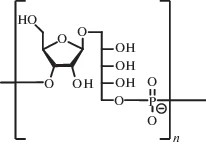 Fig. 1 Capsular polysaccharide of Haemophilus influenzae type b (PRP) (Khatuntseva E.A, et al. 2021)
Vaccination plays a significant role in preventing Hib disease. Integration of Hib vaccines into the routine vaccination schedule allowed almost complete elimination of the diseases caused by these bacteria from the statistics on death and disability. In the United States, the implementation of the immunization schedule since 2002 has led to a remarkable 99% reduction in the incidence of invasive Hib diseases among children under 5 years old. Currently, Hib vaccines are available as monovalent preparations as well as in combination vaccines. Commercial Hib conjugate vaccines differ in various aspects such as the size of the poly- or oligomeric PRP chains, the protein carrier used, the conjugation method employed, and the presence and structure of spacers. When it comes to protein carriers, the following are recommended for use: diphtheria toxoid (DT), tetanus toxoid (TT), non-toxic mutant diphtheria toxin CRM197, and outer membrane protein complex (OMPC). Among these, TT, CRM197, and OMPC are the most commonly utilized proteins in commercial vaccines.
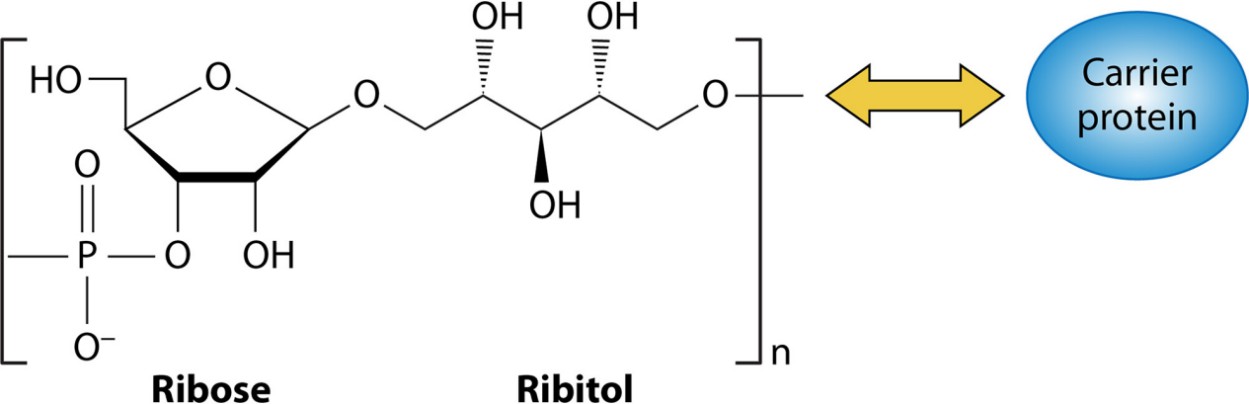 Fig. 2 Hib conjugate vaccine (Slack MPE, et al. 2021)
Typically, conjugate Hib vaccines are liquid or lyophilized preparations of the purified PRP, which is chemically linked to a carrier protein. Sanofi Pasteur used the technology developed by John Robbins to couple the Hib polysaccharide to DT and TT, respectively. Merck developed a different chemistry based on the derivatization of both PRP and the outer membrane protein complex of serogroup B meningococcus as a carrier. Pfizer used periodate chemistry to develop its Hib conjugate vaccine using CRM197. The Hib vaccines currently available for immunizing infants are based on purified or synthetic PRP conjugated either to CRM197 (HibTiter® by Pfizer and Vaxem-Hib® by Novartis), TT (ActHib® by Sanofi Pasteur and Hiberix® by GSK), or OMPC (Pedax-Hib® by Merck). The demand for multivalent vaccines for mass vaccination has spurred ongoing research to develop safer ingredients, convenient formulations, and more efficient methods of administration. Consequently, the completely liquid pentavalent vaccine Pediacel® (DTaP–IPV–PRP-TT, Sanofi), EasyFour® (DTaP–PRP-TT, Panacea Biotec), EasyFive-TT® (DTaP–IPV–PRP-TT, Panacea Biotec), Quinvaxem® (DTaP–HBV–PRP–CRM197, GSK), and Hexaxim® hexavalent vaccine (DTaP–IPV–HBV–PRP-TT, GSK) have been developed to offer added convenience for mass vaccination initiatives.
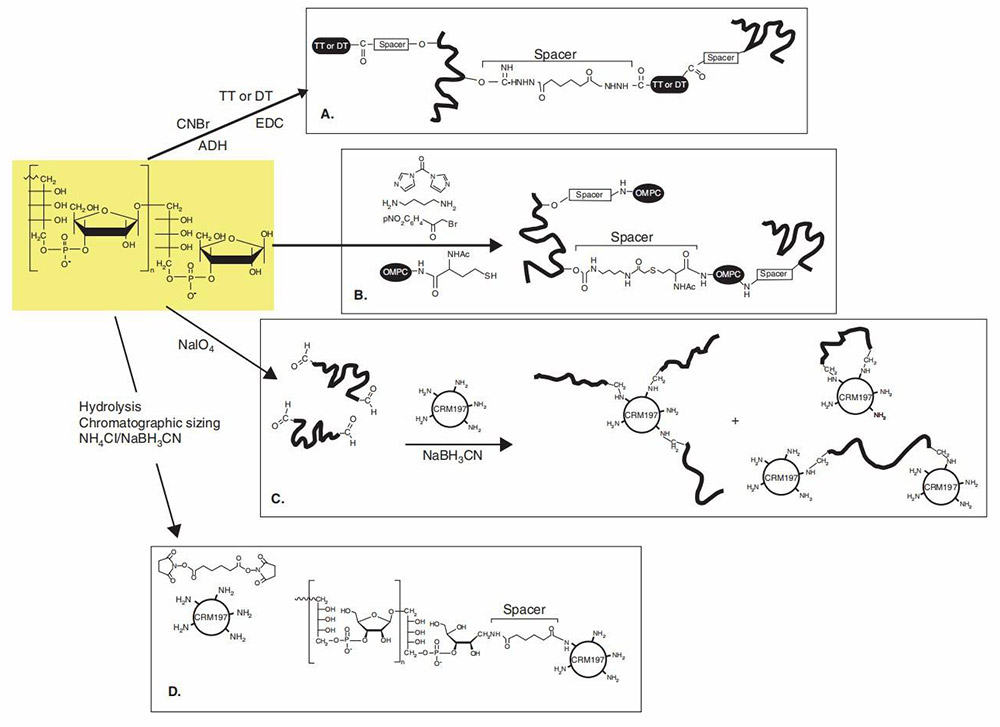 Fig. 3 Preparation processes of licensed Hib conjugate vaccines (Costantino P, et al. 2011)
References
| Type | Cat. No | Product Name | |
| Antigen | DAGHIB002 | Inactived Haemophilus influenzae type b (Hib) | Inquiry |
| Antigen | DAGL0481 | Polyribosyl Ribitol Phosphate (PRP) | Inquiry |
| Antigen | DADP110501G | Polyribosyl Ribitol Phosphate [GST] | Inquiry |
| Antibody | DCABY-072 | Mouse Anti-Hib Mab, Clone 2080/94 | Inquiry |
| Antibody | DCABY-073 | Mouse Anti-Hib Mab, Clone 2080/568 | Inquiry |
| Antibody | DPAB-DC4302 | Rabbit Anti-Hib Pab | Inquiry |
| Antibody | CABT-L3223 | Rabbit Anti-Hib PRP Pab | Inquiry |
| ELISA kit | DEIA599 | HiB IgG ELISA Kit | Inquiry |
| ELISA kit | DEIASL260 | Mouse Anti-Haemophilus Influenzae B (HIB) IgG ELISA Kit | Inquiry |
| ELISA kit | DEIASL268 | Rabbit Anti-Haemophilus Influenzae B (HIB) IgG ELISA Kit | Inquiry |
| ELISA kit | DEIA1650 | Human Haemophilus Influenza B IgG ELISA Kit | Inquiry |
Loading ......
