

 Reagents for VZV Assay Development and Vaccine Research
Inquiry Basket
 Loading ......
Varicella zoster virus (VZV) is the etiological agent of varicella, a highly infectious, self-limiting disease with serious complications. The decline in cell-mediated immunity (CMI) that occurs with aging or immunodepression causes a reactivation of the latent VZV as herpes zoster (HZ). Prevention of VZV through varicella vaccination strategies allows to avoid the primary infection in newborns and susceptible subjects. Available monovalent and combined VZV vaccines are effective, safe and generally well tolerated. Universal varicella vaccination has significantly impacted on incidence, complications and deaths related to this disease. Prevention of HZ through vaccination is a priority to avoid the significant burden of its incidence and complications[1].
VZV particles are ~80-120 nm in diameter (see the figure 1). The VZV genome is a linear double-stranded DNA molecule of ~125,000 bp packaged into an icosahedral nucleocapsid core.that encodes at least 71 unique ORFs and related promoter sequences. About two-thirds of VZV ORFs are necessary for replication in vitro, most of which are among the ~40 genes that are conserved in all herpesviruses[2], including ten glycoproteins [ORFS/L (ORF0), gK (ORF5), gN (ORF9a), gC (ORF14), gB (ORF31), gH (ORF37), gM (ORF50), gL (ORF60), gI (ORF67) and gE (ORF68)], proteins that are involved in DNA replication and other functions, such as DNA cleavage and packaging, nucleic acid metabolism and capsid assembly[3]. Glycoprotein gB (gp II), gE (gp I), gH (gp III) can induce the body to produce neutralizing antibodies. gE is the main protein distributed on the surface of the envelope and has the associated epitopes with the virus. The content of gB and gH is less than gE but they can also be used to produce subunit vaccine[2].
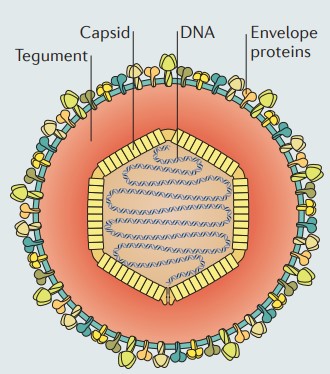 Fig. 1 Varicella Zoster Virus virion structure[2]
Similar to all herpesviruses, VZV has a lipid-rich envelope, which is acquired from cellular membranes and into which viral glycoproteins are inserted. Within the envelope, a tegument layer that is predominantly composed of viral regulatory proteins surrounds an icosahedral nucleocapsid core that contains the linear double-stranded DNA genome. The viral life cycle begins with VZV entry, which is a poorly understood process. After entry, the virions undergo uncoating, and tegument proteins, including the immediate-early protein 62 (IE62) which is the major viral protein that functions as a transcription factor (that is, as a viral transactivator). IE62 forms regulatory complexes with cellular factors, such as transcription factor specificity protein 1 (Sp1), which has binding sites in many viral promoters, to transactivate VZV genes. Similarly to other herpesviruses, nucleocapsids undergo primary envelopment, fusion with nuclear membranes and de-envelopment during transfer to the cytoplasm. Secondary envelopment occurs in the cisternae of the trans-Golgi network (TGN), where the capsids acquire tegument proteins and glycoprotein-containing membranes. Nascent virus particles then move to the cell surface in post-Golgi compartment vesicles; the first enveloped progeny virions are detected 9 hours after infection and many are present on cell surfaces within hours of infection[2].
 Fig. 2 Varicella Zoster Virus life cycle and replication[2]
A hallmark of VZV pathology is the formation of multinucleated cells termed polykaryocytes in skin lesions. This cell-cell fusion (abbreviated as cell fusion) is mediated by the VZV glycoproteins gB, gH and gL, which constitute the fusion complex of VZV, also needed for virion entry. Expression of gB, gH and gL during VZV infection and trafficking to the cell surface enables cell fusion. Evidence supports the concept that cellular processes are required for regulating cell fusion induced by gB/gH-gL. Mutations within the carboxyl domains of either gB or gH have profound effects on fusion regulation and dramatically restrict the ability of VZV to replicate in human skin. This loss of regulation modifies the transcriptome of VZV infected cells. Furthermore, cellular proteins have significant effects on the regulation of gB/gH-gL-mediated cell fusion and the replication of VZV, exemplified by the cellular phosphatase, calcineurin[3].
Vaccines are available for the prevention of both varicella and zoster that have been implemented as a universal routine childhood vaccine in the U.S.A., Canada, Australia, Japan and some countries in Europe and the Middle East. These attenuated vaccines have reduced the incidence of varicella by >90%, its associated complications by 57-90%, and hospitalizations by 75-88%. However, these vaccines are not safe for individuals with immunodeficiencies (e.g. HIV infection, malignancy, immunosuppression after transplantation), and the vaccine virus can reactivate to cause zoste[4].
There are two different zoster vaccines approved by the FDA, an attenuated vaccine derived from the same Oka strain used for varicella vaccines (U.S.A.) and a vaccine comprised of the recombinant form of VZV glycoprotein gE and the ASO3 adjuvant (U.K.)[1].
The development of a live attenuated varicella vaccine opened the way for an HZ vaccine. A high dose of live attenuated vaccine (OKA strain; >19,400 PFU; ZVL) allows the reactivation of the VZV cellular immunity (VZV-CMI) and reduces the frequency and severity of HZ. ZVL is similar to the varicella vaccine but has a higher antigen content (>14 times greater). Each dose contains a minimum of 19,400 PFU (4.29 log10) of VZV/OKA strain, when reconstituted[5].
Preliminary studies have been conducted to establish the safety and immunogenicity of higher doses of OKA vaccine, to select a dose able to increase VZV-CMI with minimal side effects and to verify its safety and efficacy in elderly subjects with common co-morbidities. The pre-licensure RCT showed that ZVL is effective in preventing HZ and PHN[6]. Several studies have shown the safety and efficacy of ZVL in immunocompetent adults. Serious adverse events have rarely been reported and mainly in individuals who had contraindications for this vaccine.
While providing 70% protection against zoster and 67% against PHN in adults aged 50-59 years old, the efficacy of the attenuated zoster vaccine decreases significantly as age increases, with only 38% protection in adults aged 70 and older. In contrast, the gE subunit zoster vaccine has proven to be extremely efficacious in an age-independent fashion, reducing the incidence of zoster by 97% in individuals aged 50-69 years old, and 90% in individuals aged 70 and older[7].
RZV contains the glycoprotein E (gE) of VZV, essential for the replication and intercellular viral diffusion and target of the specific immune response, and the AS01B adjuvant that stimulates the innate immune response activation[7].
Preclinical trials have shown that the AS01B adjuvant also enhances the specific antibody and cell-mediated response. Phase I/II trials showed that, in comparison to ZVL, RZV induces a greater and more lasting immune response, both cell-mediated and humoral, in subject of all ages. RZV also provides the opportunity to evaluate the vaccination of subjects with impaired immune status, at greater risk of contracting HZ and unable to get vaccinated with ZVL. The data currently available suggest that RZV is safe and immunogenic in HIV+ immunocompromised patients and in autologous hematopoietic stem cell transplant recipients[8].
From a clinical perspective, VZV remains a medically important human herpesvirus despite major advances in vaccines and antiviral drugs to prevent or mitigate VZV infection. Live attenuated VZV vaccines are effective in healthy individuals but are not safe for immunocompromised patients, in whom they cause viraemia, and they can establish latency and reactivate in healthy and in immunodeficient individuals. The noninfectious nature of the gE subunit vaccine makes it safe for preventing zoster in immunocompromised adults when their immune system is sufficiently capable of responding to immunization. However, it is not clear whether this subunit vaccine will have the same level of efficacy to prevent varicella. Despite these successes, the current vaccines still leave behind vulnerable populations, which need new drugs to reduce pathogenesis or prevent disease.
References
| Cat.No | Product Name | Expression System | Application | |
| DAG3245 | Native VZV Infected Cell Extract Antigen | N/A | ELISA, WB | Inquiry |
| DAG3110 | Native VZV (Strain Ellen) Antigen | N/A | ELISA, WB | Inquiry |
| DAG219 | Native VZV (Strain VZ-10) Antigen | N/A | ELISA | Inquiry |
| DAG529 | Recombinant VZV ORF26 [GST] | E. coli | ELISA, WB | Inquiry |
| DAG521 | Recombinant VZV ORF9 [GST] | E. coli | ELISA, WB | Inquiry |
| DAGC774 | Recombinant VZV ORF11 [His] | E. coli | SDS-PAGE | Inquiry |
| DAG518 | Recombinant VZV gE [GST] | E. coli | ELISA, WB | Inquiry |
| DAGC767 | Recombinant VZV gE/gI Heterodimer [His] | HEK293 | SDS-PAGE | Inquiry |
| DAGC768 | Recombinant VZV (Strain Dumas) gE [His] | E. coli | SDS-PAGE | Inquiry |
| DAGC769 | Recombinant VZV (Strain Oka vaccine) gE [His] | E. coli | SDS-PAGE | Inquiry |
| DAGC770 | Recombinant VZV (Strain Dumas) gH [His] | E. coli | SDS-PAGE | Inquiry |
| DAGC771 | Recombinant VZV (Strain Oka vaccine) gH [His] | E. coli | SDS-PAGE | Inquiry |
| DAGC772 | Recombinant VZV (Strain Dumas) gL [His] | E. coli | SDS-PAGE | Inquiry |
| DAGC773 | Recombinant VZV (Strain Oka vaccine) gL [His] | E. coli | SDS-PAGE | Inquiry |
 Fig. 1 Details of VZV gE antibodies
Loading ......
