
Inquiry Basket
 Loading ......
Cefazolin, a cephalosporin antibiotic, is a versatile medication prescribed for the treatment of a wide range of bacterial infections and diseases. It is also utilized as a preventive measure before and during certain surgical procedures to minimize the risk of bacterial infections. Cefazolin is considered a safe medication that does not interfere with the efficacy of other drugs. Due to its reliability and effectiveness, cefazolin is highly regarded by medical professionals as a preferred treatment option for infections caused by both bacteria and protozoa.
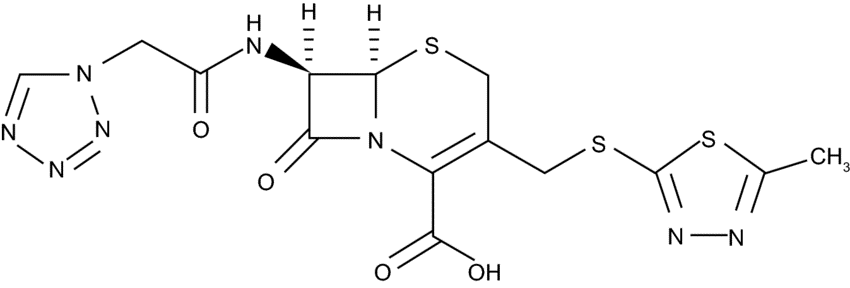 Figure 1. Chemical structure of cefazolin.
(Source: Kusaba, T. et al., 2009)
Cefazolin is a versatile antibiotic used to treat various infections caused by susceptible bacteria. It is effective in respiratory tract, urinary tract, skin, biliary tract, bone and joint, genital, blood, and endocarditis infections. It is also commonly used before surgery to prevent post-surgical infections and is a preferred choice for surgical prophylaxis.
However, cefazolin does not penetrate the central nervous system, so it is not suitable for treating meningitis. It is effective against methicillin-susceptible Staphylococcus aureus (MSSA), but not against methicillin-resistant Staphylococcus aureus (MRSA). In cases of staphylococcal infections, cefazolin can be an alternative to penicillin for patients allergic to penicillin, although there is still potential for allergic reactions in penicillin-allergic patients.
Cefazolin, as a first-generation cephalosporin antibiotic, exhibits strong activity against a wide range of gram-positive bacteria and some gram-negative bacteria. Its effectiveness is attributed to its improved stability against bacterial beta-lactamases compared to penicillins.
Gram-positive aerobes susceptible to cefazolin include Staphylococcus aureus (including beta-lactamase producing strains), Staphylococcus epidermidis, and various strains of streptococci such as Streptococcus pyogenes, Streptococcus agalactiae, and Streptococcus pneumoniae. Among gram-negative aerobes, cefazolin is active against Escherichia coli, Proteus mirabilis, and Klebsiella pneumoniae.
However, cefazolin is not effective against MRSA, Enterococcus, most strains of indole positive Proteus (Proteus vulgaris), Enterobacter spp., Morganella morganii, Providencia rettgeri, Serratia spp., Pseudomonas spp., and Listeria.
Cefazolin, like other cephalosporin antibiotics, exerts its bactericidal effects by targeting and interfering with bacterial cell wall synthesis. The mechanism of action of cefazolin involves binding to penicillin-binding proteins (PBPs), which are bacterial proteins involved in the final stages of peptidoglycan synthesis, essential for cell wall maintenance.
Cefazolin, as a beta-lactam antibiotic, contains a beta-lactam ring in its structure. This ring is structurally similar to the D-alanyl-D-alanine portion of the peptidoglycan precursor. When cefazolin enters the bacterial cell, it binds to and inhibits the PBPs, specifically the transpeptidases. By doing so, cefazolin prevents the cross-linking of the peptidoglycan strands, leading to the weakening and disruption of the bacterial cell wall.
As a result, the bacterial cell wall becomes structurally compromised and loses its ability to withstand osmotic pressure. This leads to cell lysis and the death of bacteria. The bactericidal activity of cefazolin is most effective during the active growth and division of bacteria, as cell wall synthesis is a vital process during these stages.
Reference
| Target | Cat. No. | Product Name | Expression System | Tag/Conjugate | Application | |
| Cefazolin | DAG-WT1160 | Cefazolin [BSA] | N/A | BSA | LF, ELISA | Inquiry |
| SEA | DAG-WT619 | S. aureus Enterotoxin Type A Toxoid | S. aureus | N/A | ELISA | Inquiry |
| DAG-WT626 | Recombinant Staphylococcus aureus Enterotoxin A (SEA) | E. coli | His | ELISA | Inquiry | |
| S. epidermidis | DAG-WT1979 | Inactivated S. epidermidis Culture Fluid | N/A | N/A | Control | Inquiry |
| S. aureus PBP | DAG-WT1002 | Recombinant S. aureus Penicillin Binding Protein 1 [His] | E. coli | His | Immunoassays | Inquiry |
| DAG-WT1003 | Recombinant S. aureus Penicillin Binding Protein 2 [His] | E. coli | His | Immunoassays | Inquiry | |
| DAG-WT1004 | Recombinant S. aureus Penicillin Binding Protein 3 [His] | E. coli | His | Immunoassays | Inquiry | |
| DAG-WT1005 | Recombinant S. aureus Penicillin Binding Protein 4 [His] | E. coli | His | Immunoassays | Inquiry | |
| PBP2a | DAG2742 | Recombinant S. aureus Penicillin Binding Protein 2a [His] | E. coli | His | N/A | Inquiry |
| Target | Cat. No. | Product Name | Size | Species | Application | Detection Sample | |
| E. coli | DEIA2348 | E. Coli Verotoxin (Fecal) ELISA Kit | 96T | Qualitative | stool supernatant | Inquiry | |
| DEIA2562 | E.coli Antigen In Food ELISA Kit | 96T | Quantitative | food | Inquiry | ||
| DEIA2437 | E.Coli O157 (Fecal) ELISA Kit | 96T | Qualitative | feces | Inquiry |
Loading ......
