
Inquiry Basket
 Loading ......
Cannabinoids are molecules that are chemically related to tetrahydrocannabinol (THC), the euphoric ingredient found in marijuana. These are pharmacological and physiological drugs that interact with body receptors. There are three types of cannabinoids: synthetic, endogenous, and plant. Chemical manufacture produces synthetic cannabinoids, while the body produces endogenous cannabinoids, and plant cannabinoids are biological—mostly plant-derived. They can also be applied therapeutically to pain, anxiety, and seizure conditions. In more recent times, the medical uses of cannabinoids have come into greater plain sight. But addiction is still a huge issue with their clinical use – especially misuse of THC with all manner of side-effects.
They are made up of a polycyclic aromatic hydrocarbon molecule with oxygen functional groups. Cannabinoids – THC, CBD, etc. – are plant constituents, plant ingredients. It's not like there's much between THC and CBD (21 carbon, 30 hydrogen, 2 oxygen). But they are different in the location of chemical bonds, which is how they latch onto receptors and get hitched on to drugs. It's the most potent psychoactive compound in marijuana, and interacts with CB1 receptors to create psychoactive effects in the central nervous system like euphoria and perception. Rather CBD is anxiolytic, painkiller, anti-inflammatory and contains less THC.
The endogenous cannabinoids are chemicals your body produces in the same manner as the plant cannabinoids. Anandamide (AEA) and 2-arachidonoylglycerol (2-AG) are natural cannabinoids that govern the neurological system, immunological system, and other metabolic pathways in the body via physiological mechanisms.
They even mimic the effects or behavior of chemically manufactured cannabinoids derived from plants. HU-210 and JWH-018, the two most widely used synthetic cannabinoids, are mostly utilized in laboratory clinical studies and drug discovery. Synthetic cannabinoids are more frequently employed in neurotherapeutic applications when they are more physiologically powerful and receptor-driven.
The ECS is one of dozens of that drives most of our bodies. It consists of enzymes, receptors, and naturally occurring cannabinoids. The ECS regulates appetite, pain, immunity, neurotransmission, and other activities. The most frequent endogenous cannabinoids are AEA and 2-AG.
Most CB1 receptors – those involved in the regulation of neurotransmitter flow, learning and memory, movement and mood – reside in the brain and central nervous system. It's usually only the peripheral tissues (the immune system in particular) that harbor CB2 receptors, and they also control immunity and inflammation. Through interactions with these receptors, the ECS controls appetite, pain, immunity, sleep, stress and thought.
Further, ECS has been attributed to an almost limitless number of states. It's the engine, for instance, of neurodegenerative disorders, autoimmune diseases and metabolic illness. They think that ECS control might be the medical route to relief from these conditions' symptoms.
 Figure 1. Endocannabinoid Signaling System Overview
(Source: Vemuri VK, Makriyannis A, 2015)
The science of pharmacokinetics is concerned with how molecules are taken up, scattered, metabolized and removed. Two of the most commonly found plant cannabinoids – THC and CBD – have pharmacologically divergent functions, whether inhaled or smoked, bursts through the bloodstream and out into the brain and beyond. In smoking or vaping marijuana, the more that THC is dissolving, the quicker the effects will kick in. When swallowed, THC is less bioavailable due to digestion, but it stays in the body longer. THC has a rather short half-life – its effects tend to begin within two hours.
CBD differs from THC in its pharmacokinetics. The half-life of CBD is generally longer in the body and its metabolism is more complicated. It's mainly metabolized in the liver via the cytochrome P450 enzyme complex, and its metabolites typically carry multiple drug effects. Although CBD takes longer to take effect, it remains in the body for longer.
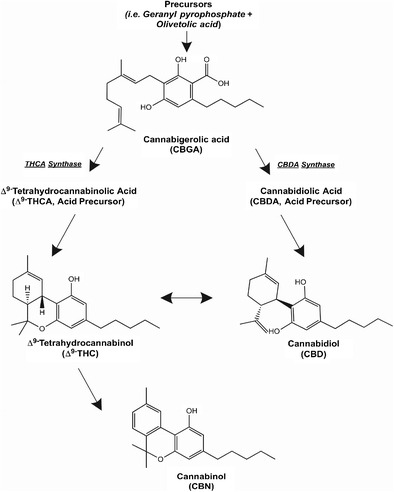 Figure 2. Biosynthetic Pathway of Plant-derived Cannabinoids
(Source: Rosenberg EC, et al. 2015)
As ECS research progressed, clinical applications of cannabinoids mushroomed. Pain, anxiety, depression and seizure-reduction are the main drug uses for cannabinoids. Our most popular psychoactive compound, THC, is sometimes given to cancer patients to reduce pain and hunger – particularly during chemotherapy – and nausea and vomiting. THC and CBD combined have been used to treat neurological conditions from epilepsy to multiple sclerosis. CBD's anticonvulsants are popular, and a few CBD products are currently approved for the treatment of drug resistant epilepsy including Epidiolex.
CBD also has the ability to treat anxiety and depression and is not psychoactive, making it a very safe drug. In addition, after its anti-inflammatory and immune-modulating qualities were identified, CBD has been used to treat a variety of immune conditions including inflammatory bowel disease and rheumatoid arthritis.
Yet the clinical applications of cannabinoids remain elusive, especially in terms of how each person responds differently, at what dose, and for how long.
 Figure 3. Therapeutic Effects of Cannabinoids in Various Diseases
(Source: Pagano C, et al. 2022)
The misuse of cannabinoids, specifically THC misuse, is a huge problem in the clinical context. THC Activates the brain reward system via CB1 receptors and produces pleasure and euphoria. Consequently, long-term consumption can result in dependence and addiction, which could affect memory, cognition and learning. THC can develop cannabis dependence when used long term, with studies revealing its effects on memory, learning, and attention.
Despite its lack of potent psychoactive effects and non-drug dependency, misuse of cannabinoids remains problematic, especially as it involves the tension between therapeutic value and abuse potential. Therefore, it is important to be diligent and administer them properly to gain therapeutic benefits from cannabinoids and avoid abuse and addiction.
These multiple pharmacological effects make cannabinoids potentially promising for clinical applications in neurological disorders, cancers and pain. But addiction and abuse are a potentially huge concern that needs to be addressed. We'll need more research and regulation to ensure cannabinoids are properly and safely utilized in clinical settings.
References
| Target | Cat. No. | Product Name | Size | Species Reactivity | Application | Detection Sample | |
| THC | DEIA-XYZ230 | THC ELISA Kit | 96T | Human, Research Animal | Qualitative | Urine, Blood, Oral Fluid, Breast Milk | Inquiry |
| Target | Cat. No. | Product Name | Host | Isotype | Application | |
| THC | DPATB-H83231 | Anti-THC polyclonal antibody | Sheep | IgG | ELISA | Inquiry |
| DPAB-JXL23149 | Rabbit Anti-THC polyclonal antibody | Rabbit | IgG | IA | Inquiry | |
| DPAB-JXL23150 | Goat Anti-THC polyclonal antibody | Goat | IgG | IA | Inquiry | |
| DMAB-JXL2338 | Mouse Anti-THC Monoclonal Antibody, Clone D8 | Mouse | IgG1 | ELISA, LFIA | Inquiry | |
| DMAB-JXL2339 | Mouse Anti-THC Monoclonal Antibody, Clone IN2173 | Mouse | IgG1 | ELISA, LFIA | Inquiry | |
| DPAB-DC4817 | Anti-THC polyclonal antibody | Sheep | EIA | Inquiry | ||
| DPABY-992 | Anti-THC polyclonal antibody | Sheep | Dot, ELISA, Pr*, IHC, WB | Inquiry | ||
| DPABY-993 | Anti-THC polyclonal antibody | Sheep | Dot, ELISA, Pr*, IHC, WB | Inquiry | ||
| DCABY-4822 | Anti-THC monoclonal antibody, clone N2800UID3 | Mouse | IgG1 | ELISA, LFIA | Inquiry |
| Target | Cat. No. | Product Name | Expression System | Tag/Conjugate | Application | |
| THC | DAG2980 | Delta 9 THC [BSA] | N/A | BSA | N/A | Inquiry |
| DAG406 | THC [BSA] | N/A | BSA | N/A | Inquiry | |
| DAG414 | THC Delta 8 [HRP] | N/A | HRP | N/A | Inquiry | |
| DAG423 | THC Delta 8 [BSA] | N/A | BSA | N/A | Inquiry | |
| DAGF-159 | Tetrahydrocannabinol (THC) [BSA] | Synthetic | BSA | ELISA, LF | Inquiry |
| Target | Cat. No. | Product Name | Expression System | Tag/Conjugate | Application | |
| Cannabinoids | DAG038S | Cannabinoid [HRP] | N/A | HRP | N/A | Inquiry |
Loading ......
