
Inquiry Basket
 Loading ......
Whooping cough, caused by Bordetella pertussis, remains a major global health problem. The genus Bordetella contains many species, most of which have been isolated from severely immunocompromised individuals. Only a few of them, including Bordetella petrii, have so far only been isolated from natural milieus. Whooping cough is highly contagious and transmitted by aerosol droplets. This makes B. pertussis one of the most contagious pathogens. Two of the most important virulence factors of B. pertussis are the secreted toxins pertussis toxin (PT) and adenylate cyclase toxin (ACT). These toxins play a major role in suppression and modulation of host immune and inflammatory responses. PT is a major virulence factor of B. pertussis and is also a major protective antigen in all currently available vaccines.
Creative Diagnostics now offers a full range of Bordetella pertussis antigens including B. pertussis toxin, B. pertussis Fimbriae 2/3, B. pertussis FHA, B. pertussis LPS, B. pertussis ACT, and B. pertussis PRN for immunoassays development and research needs.
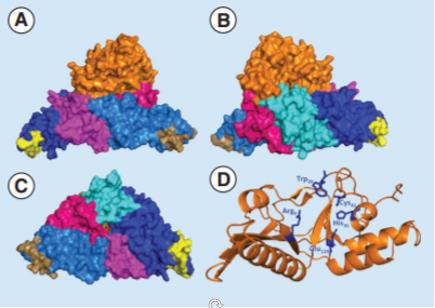 Fig.1 Crystal structure of the pertussis (Coutte L, Locht C. Future Microbiol. 2015)
PT is one of the most complex bacterial protein toxins and is a 105 kDa multimeric protein. It is a typical A-B bacterial protein toxin in that it is composed of an enzymatically active A component and a binding B component. However, unlike the simple monomeric structure of a number of A-B toxins, PT is multimeric, composed of the catalytically active S1 subunit and five subunits (one copy each of subunits S2, S3, and S5 as well as two copies of subunit S4) that make up the B oligomer which is the receptor binding component of the toxin.
B. pertussis Adenylate Cyclase Toxin, CyaA is secreted by virulent bacteria and is able to invade eukaryotic cells where it is activated by endogenous calmodulin to catalyze a massive production of cyclic AMP (cAMP) that results in profound alteration of cellular physiology. CyaA is a bi-functional protein with an adenylate cyclase enzymatic activity and a hemolytic activity: the catalytic domain (responsible for the conversion of ATP to cAMP) is located in the 380 amino-terminal residues whereas the 1300 carboxy-terminal residues are responsible for the hemolytic activity, both activities being functionally separable.
Pertussis vaccination with whole-cell vaccines (wPV) was initiated during the 1940s. The pertussis component consisted of heat-or formalin-inactivated whole bacteria, and these vaccines were extremely heterogeneous in composition. Attempts to separate the reactogenic components of wPV from its protective components led to the concept of acellular vaccines (aPV).
Clinical trials undertaken in Sweden have shown that a monocomponent pertussis toxoid vaccine is protective in children. However, the efficacy monocomponent PTX vaccines remains controversial and most commercially available acellular pertussis vaccines currently contain at least FHA in addition to detoxified PTX. Given the importance of PTX as a protective antigen, many studies were undertaken attempting to optimize its production and purification.
In addition to its important role in vaccines, PT has also been highly instrumental in deciphering a variety of signaling pathways. The binding of the B-oligomer to glycoproteins, such as haptoglobin, suggested that the PT receptors might be glycoproteins. Specific modifications in the genes coding for S2 and S3 have identified Asn-105 in S2 and Lys-105 in S3 as critical residues for PT binding to haptoglobin and CHO cells, respectively, and the combination of the two mutations resulted in a PT analog that lacked mitogenic activity, which is one of the well-known biological activities of PT. Compared to other bacterial ADP-ribosylating toxins, for which the receptors and substrates are usually unique, PT binds to a variety of different receptors and ADP-ribosylates many different acceptor substrates of the Gi/o family of signal-transducing proteins. Although it does usually not cause cell death, it can profoundly perturb the physiology of many cell types.
References
| Target | Cat. No | Product Name | |
| PT | DAGB122 | Native B. pertussis Toxin (Mutant) | Inquiry |
| DAGB123 | Native B. pertussis Toxin (Salt-free) | Inquiry | |
| DAGH046 | Native B. pertussis toxin (Glycerol) | Inquiry | |
| DAGH045 | Native B. pertussis toxin (Frozen) | Inquiry | |
| Fim 2/3 | DAGB126 | Native B. pertussis Fimbriae 2/3 | Inquiry |
| FHA | DAGH043 | Native B. pertussis FHA | Inquiry |
| LPS | DAGC099 | Native B. pertussis Lipopolysaccharide | Inquiry |
| ACT | DAGB119 | Native B. pertussis Adenylate Cyclase Toxin | Inquiry |
| DAGB120 | Recombinant B. pertussis Adenylate Cyclase Toxin | Inquiry | |
| PRN | DAGB124 | Native B. pertussis Pertactin | Inquiry |
| DAGA-3037 | Recombinant B. pertussis Pertactin (aa 632-910) [His] | Inquiry | |
| DAGF-019 | Recombinant B. pertussis Pertactin (aa 1-910) [His] | Inquiry |
Loading ......
