
Inquiry Basket
 Loading ......
It is widely acknowledged that anti-drug antibodies (ADAs) formation substantially influences both treatment safety and effectiveness. The growing use of biopharmaceutical treatments including monoclonal antibodies and protein drugs has led to an increasing interest in the immunogenicity of ADAs.
ADA stands for antibodies developed by the immune system in response to biological treatment drugs. The immune system becomes active when patients receive protein-based biological drugs like monoclonal antibodies and recombinant proteins which leads to recognition and response processes that start an immune reaction.
Immunogenicity describes a drug's capacity to provoke an immune reaction which affects both how well biologics work and their safety profile. The immunogenicity of a drug depends on multiple elements such as molecular structure and administration route alongside dosage and patient immune status.
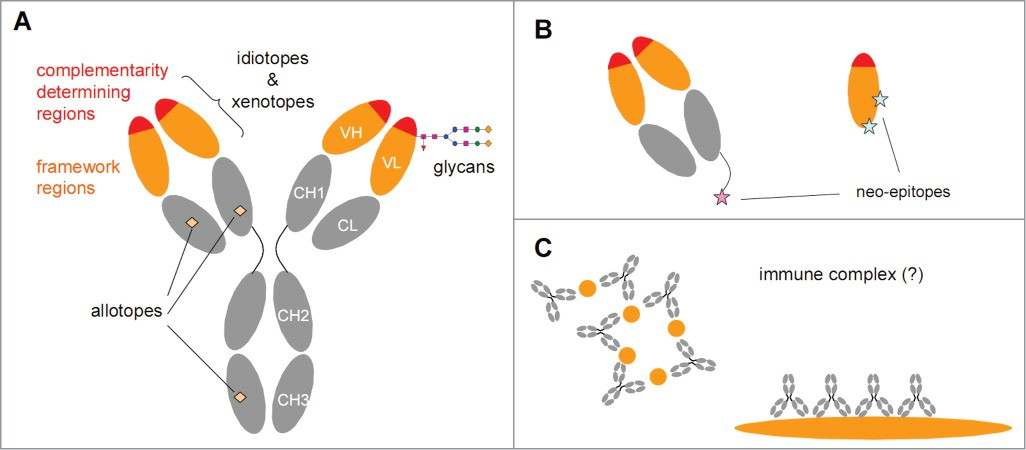 Figure 1. Potential Immunogenicity Determinants of Antibodies (Source: van Schie KA, et al. 2015)
Biologic drugs in clinical use experience increased clearance rates and reduced effectiveness when ADA develops along with potential adverse reactions. Treatments for rheumatoid arthritis and cancer immunotherapy face direct treatment outcome impacts from ADA immunogenicity. ADA triggers treatment failure in severe cases through either primary non-response to initial treatment or secondary failure which reveals drug efficacy loss over time.
It has been demonstrated that the development of ADA increases the risk of treatment-related side effects, including as allergic reactions and reactions during medication infusion. The presence of ADA causes infusion reactions and reduced drug longevity in patients with inflammatory bowel disease receiving treatment with TNF inhibitors like infliximab and adalimumab.
Finding ADA immunogenicity is crucial to developing individualized treatment programs and getting the best possible therapeutic outcomes.
A range of detection technologies for ADA emerged recently because researchers acknowledge their vital role in both drug effectiveness and safety.
1. Enzyme-Linked Immunosorbent Assay (ELISA)
ELISA remains a popular choice for ADA detection because of its superior sensitivity and simple procedure combined with wide-ranging application capabilities. The primary ELISA techniques used for detecting ADA include sandwich ELISA and bridging ELISA which feature unique characteristics alongside their respective benefits and limitations.
Researchers utilize this testing method to determine ADA presence by evaluating its binding affinity to the Fab or Fab2 fragment of anti-TNF drugs. It is cost-effective and easy to operate. The adsorption of drugs on plastic surfaces produces epitope masking and non-specific binding which leads to higher chances of false-positive results. Insufficient washing steps lead to cross-binding between the Fc fragment of antibodies and immobilized drugs which results in an increase of false-positive results.
This detection method uses the drug to function as both the capture and detection reagent which creates an antigen-antibody bridge to identify ADA. Bridging ELISA demonstrates high sensitivity toward bivalent and multivalent ADAs while maintaining effectiveness in samples with high drug concentrations. This method encounters interference from rheumatoid factors and anti-isotype antibodies along with low-affinity antibodies that can produce false positive results. The bridging ELISA fails to detect IgG4-type ADA because IgG4 antibodies remain functionally monovalent and incapable of forming the required bridge. This testing method reacts strongly to drug presence which may cause inaccurate negative results. Clinical estimates show that half of patients could experience this condition during their treatment process.
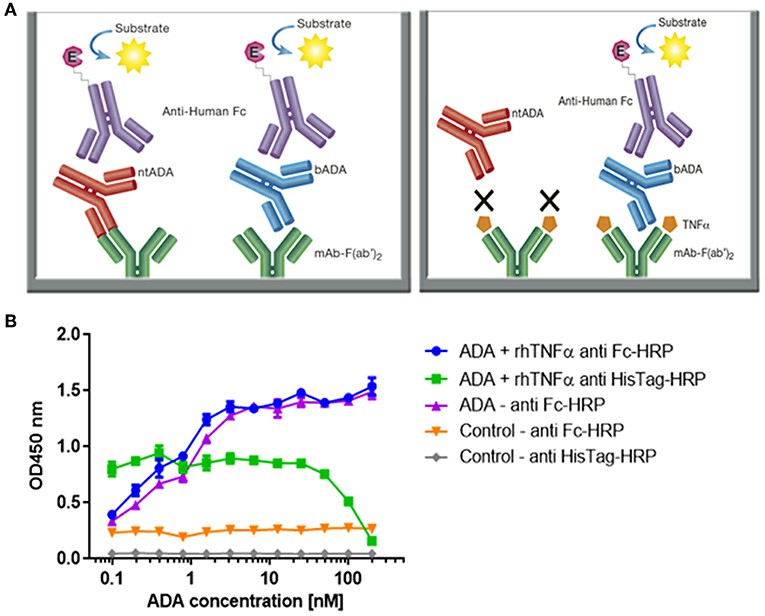 Figure 2. A Newly Developed Assay Configuration for Determining the Neutralization Index of ADA in Patient Serum and the Competitive ELISA Between ADA and rhTNFα (Source: Vaisman-Mentesh A, et al. 2019)
2. Cell-Based Assays
Cell-based assays become essential when biologics work by targeting cellular components. These techniques measure how drugs function within cells to identify their ability to neutralize ADA molecules. Researchers employ reporter gene cell lines to evaluate drug effectiveness in activating signaling pathways. Regulatory bodies suggest that cell-based assays should be the primary method used to identify neutralizing ADA reactions in therapeutic proteins. A TNF-induced cytotoxicity assay serves as the standard method to measure neutralizing ADA when testing anti-TNF drugs. The standardization of these assays proves difficult because they need long testing durations which might extend to several days and their results can be influenced by serum matrix effects. Results can be affected by substances present in patient serum that interfere with the measurements.
3. Electrochemiluminescence (ECL) Assay
The ECL assay functions as an exceptionally sensitive and precise tool to detect ADAs. The technique generates a luminescent signal through electrochemical reactions to detect ADAs at low concentrations. ECL receives broad application in ADA analysis because of its exceptional sensitivity.
4. Immunogenicity Testing for Biosimilars
Clinical trial validation requires establishing specific methods for ADA detection during biosimilar development. The process involves direct comparisons of immunogenic responses between biosimilars and reference drugs to confirm their equivalence. The safety and efficacy of biosimilars depend on the establishment and validation of detection methods.
The thorough validation of results remains essential no matter which detection method is chosen. Researchers evaluate both sensitivity and specificity along with precision and drug tolerance when conducting their assessments. Sample pre-treatment techniques like adsorption or acid dissociation can be utilized to increase sensitivity.
The growing understanding of immunogenicity has led to the development and implementation of multiple strategies to diminish ADA formation.
Conjugating fully humanized monoclonal antibodies provides a solution because these antibodies mimic natural human proteins thereby reducing immunogenicity more effectively than murine-derived or chimeric antibodies. Adjusting drug administration schedules to suit individual patient needs can produce beneficial effects. Protein engineering methods enable the removal of T-cell and B-cell epitopes from drug molecules which diminishes immune system detection.
Long-term biologic therapy patients benefit from methotrexate and similar immunosuppressants which effectively block ADA production.
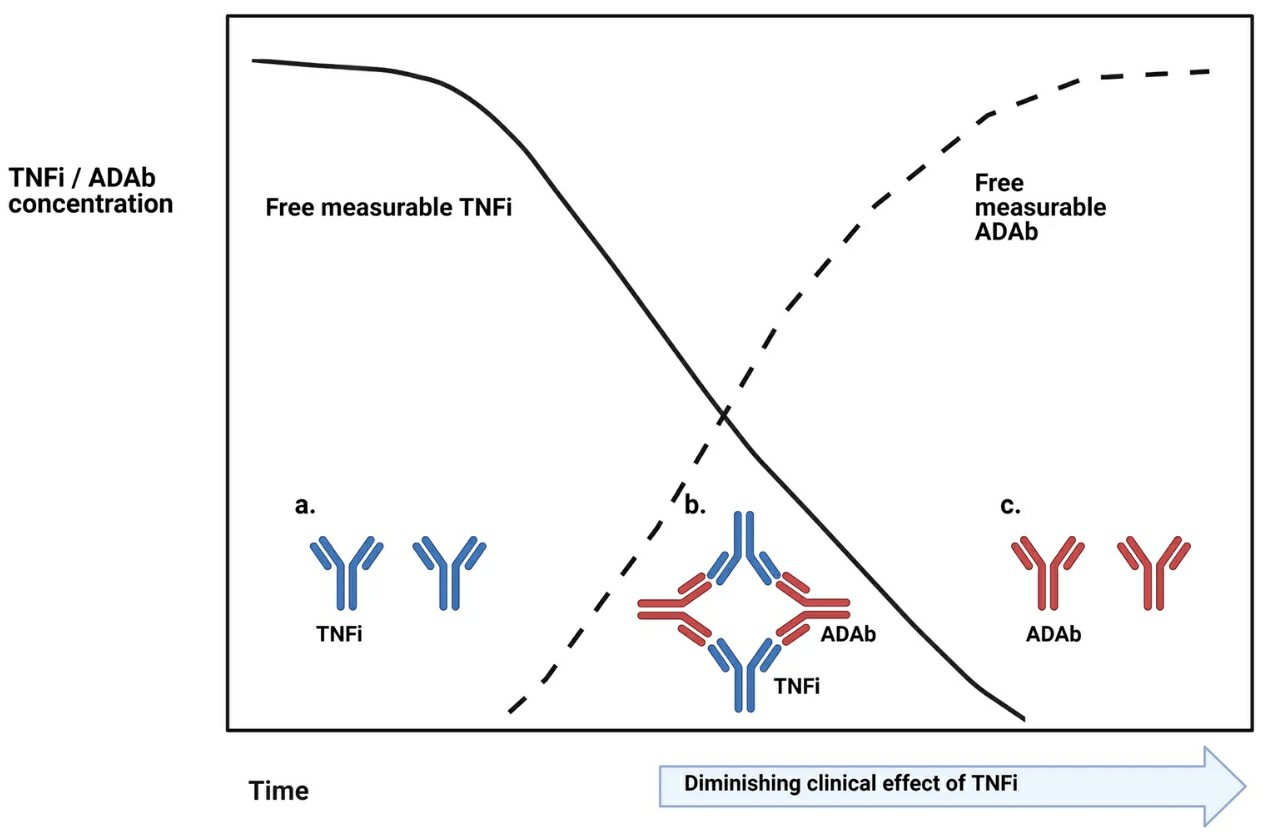 Figure 3. A Model of the Relationship Between ADA Production, the Reduction of Tumor Necrosis Factor-α (TNFα) Inhibitor Serum Concentration, and the Subsequent Loss of Clinical Response (Source: Gehin JE, et al. 2022)
Researchers are currently investigating new technological approaches to improve the minimization of drug immunogenicity. Nanotechnology provides promising approaches since single-domain antibody and antibody fragments function as low-immunogenicity biologics because of their reduced molecular size.
In conclusion, the immunogenicity of anti-drug antibodies represents a fundamental factor that must be considered during the creation of biologic drugs. Pharmaceutical makers and researchers need to regularly monitor drug immunogenicity to improve therapeutic success rates by employing detection methods such as ELISA. Creative Diagnostics offers superior ADA detection kits that accurately detect ADA. We stand ready to help you enhance your biologic drug development strategy. Reach out to us to obtain information about ADA detection services and macromolecular drug analysis along with support for your research project.
References
| Target | Cat. No. | Product Name | Size | Species | Application | Detection Sample | |
| Exendin-4 | DEIABL206 | Exendin-4 ADA ELISA kit | 96T | Human | Quantitative | Serum, plasma | Inquiry |
| TNF | DEIA068J | TNF α-Blocker ADA, Antibodies against infliximab ELISA Kit | 96T | Human | Qualitative | serum, EDTA plasma | Inquiry |
| DEIA069J | TNF α-Blocker ADA, Total Antibodies against infliximab ELISA Kit | 96T | Human | Qualitative | serum, EDTA plasma | Inquiry | |
| DEIA018J | TNF α-Blocker ADA, Antibodies against etanercept ELISA Kit | 96T | Human | Qualitative | EDTA plasma, serum | Inquiry | |
| DEIA019J | TNF α-Blocker ADA, Antibodies against infliximab ELISA Kit | 96T | Human | Qualitative | EDTA plasma, serum | Inquiry | |
| DEIA020J | TNF α-Blocker ADA, Total Antibodies against infliximab ELISA Kit | 96T | Human | Qualitative | EDTA plasma, serum | Inquiry |
| Target | Cat. No. | Product Name | Size | Species | Application | Detection Sample | |
| Semaglutide | DEIASL092 | Semaglutide ELISA Kit | 96T | NA | Quantitative | Serum, plasma | Inquiry |
| Ramucirumab | DEIAZ0009 | Anti-Ramucirumab ELISA Kit | 96T | Human | Qualitative | Serum, plasma | Inquiry |
| Filgrastim | DEIABL228 | Filgrastim Elisa kit | 2 x 96T | Human | Quantitative | Serum, plasma | Inquiry |
| Liraglutide | DEIA-XYZ95 | Liraglutide High Sensitivity Elisa Kit | 96T | NA | Quantitative | Serum, plasma | Inquiry |
| MMAE | DEIABL314 | Intact MMAE ADC ELISA Kit | 96T | Human | Quantitative | Serum, plasma | Inquiry |
| DM1 | DEIABL311 | DM1 ADC ELISA Kit | 96T | Human | Quantitative | Serum, plasma | Inquiry |
| SN38 | DEIABL316 | SN38 ADC ELISA Kit | 96T | Human | Quantitative | Serum, plasma | Inquiry |
| Eculizumab | DEIAZ0063 | Eculizumab ELISA kit | 96T | NA | Quantitative | Serum, plasma, cell culture samples | Inquiry |
Loading ......
