Medica 2026
Nov 16-19, 2026 - Düsseldorf, Germany
ADLM 2026
July 26-30, 2026 – Anaheim, CA, USA

What Is Cortisol

Cortisol, a vital glucocorticoid, is synthesized in the zona fasciculata of the adrenal cortex. Its secretion is regulated by the hypothalamic hormone, CRH (corticotropin-releasing hormone), and the pituitary hormone, ACTH (adrenocorticotropic hormone), in the hypothalamus-pituitary-adrenal (HPA) axis. As a stress hormone, cortisol plays a critical role in responding to physical and emotional stressors. Moreover, cortisol is involved in maintaining homeostasis by influencing blood pressure, the immune system, anti-inflammatory processes, and the metabolism of proteins, carbohydrates, and adipose tissues.

Addison's disease, characterized by a decrease in cortisol production, occurs when the adrenal glands fail to produce sufficient amounts of cortisol. Conversely, Cushing's syndrome is associated with excessive cortisol production. These conditions highlight the importance of maintaining a balanced cortisol level for overall health and well-being.

Browse all Cortisol products

Biosynthesis of Cortisol

Cortisol, a steroid hormone, is synthesized from cholesterol in the adrenal cortex, specifically in the zona fasciculata. The adrenal cortex produces other hormones like aldosterone and sex hormones, but cortisol is the primary secretion in humans and many other species.

The synthesis of cortisol is regulated by the interaction between the hypothalamus, pituitary gland, and adrenal gland. The anterior lobe of the pituitary gland releases ACTH, which stimulates cortisol synthesis. In turn, ACTH production is triggered by CRH released by the hypothalamus. ACTH plays a role in increasing the concentration of cholesterol in the inner mitochondrial membrane by regulating the steroidogenic acute regulatory protein. It also stimulates the primary rate-limiting step in cortisol synthesis, where cholesterol is converted to pregnenolone by the enzyme Cytochrome P450SCC (side-chain cleavage enzyme). Pregnenolone is then converted into cortisol through a series of enzymatic steps.
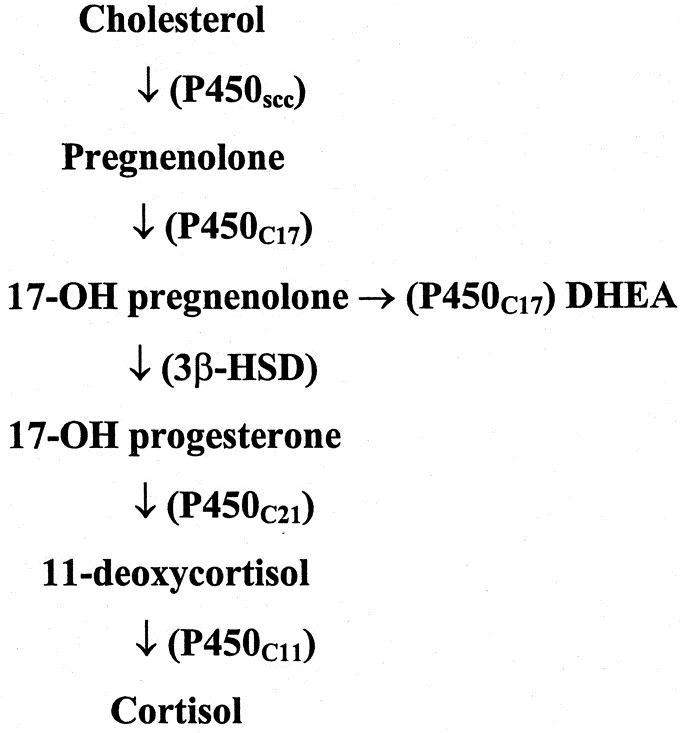
Synthetic pathway for cortisol.Figure 1. Synthetic pathway for cortisol.
(Source: Watterberg, K. L. et al., 2001)

Once synthesized, cortisol is released into the bloodstream, where it binds to cortisol-binding globulin (CBG) and albumin for transport. It can also freely diffuse across cell membranes to exert its effects on target tissues. Cortisol acts by binding to specific receptors inside cells, known as glucocorticoid receptors. These receptors are present in various tissues throughout the body. Once cortisol binds to its receptors, it influences gene expression, leading to various physiological effects.

Metabolism of Cortisol

The metabolism of cortisol refers to the processes by which cortisol, a steroid hormone, is broken down and eliminated from the body. Cortisol metabolism primarily occurs in the liver, where it undergoes various enzymatic reactions.
  • 11 beta-hydroxysteroid dehydrogenases
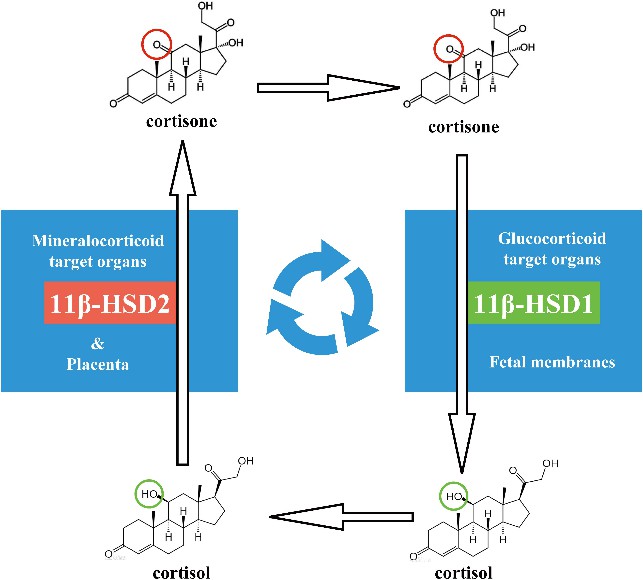
    Cortisol metabolism involves the action of enzymes such as 11-beta hydroxysteroid dehydrogenases (11-beta HSD). These enzymes convert cortisol to cortisone and vice versa. 11-beta HSD1 catalyzes the conversion of cortisone to cortisol, while 11-beta HSD2 converts cortisol to cortisone, regulating local cortisol concentrations in different tissues.

Recycle of cortisol and cortisone between placenta and fetal membranes in human pregnancy.Figure 2. Recycle of cortisol and cortisone between placenta and fetal membranes in human pregnancy.
(Source: Wang, W. S. et al., 2020)

  • A-ring reductases
    Cortisol undergoes metabolism by A-ring reductases, including 5-alpha reductase and 5-beta reductase, which convert cortisol into metabolites such as 5-alpha tetrahydrocortisol (5-alpha THF) and 5-beta tetrahydrocortisol (5-beta THF).
  • Cytochrome P450, family 3, subfamily A monooxygenases
    Cytochrome P450 enzymes, particularly CYP3A4, also contribute to cortisol metabolism by converting it into 6β-hydroxycortisol. Drugs that induce CYP3A4 may accelerate cortisol clearance.

Health Effects of Cortisol

  • Metabolic Effects
    • Cortisol plays a crucial role in regulating glucose metabolism. It promotes the synthesis of glucose through a process called gluconeogenesis, primarily occurring in the liver. This helps increase blood glucose levels.
    • Cortisol also affects protein and fat metabolism. It reduces protein synthesis and promotes the breakdown of proteins for energy. Additionally, cortisol stimulates lipolysis, which is the breakdown of fats into fatty acids.
    • These metabolic effects of cortisol are essential for providing energy during stressful situations or fasting periods.
  • Immune System Suppression
    • Cortisol has potent anti-inflammatory and immunosuppressive effects. It suppresses the activity of immune cells, such as lymphocytes and cytokines, and reduces the production of inflammatory molecules.
    • This anti-inflammatory response helps regulate the immune system and prevent excessive immune reactions.
  • Stress Response
    • Cortisol is often referred to as the "stress hormone" because its levels increase in response to stress. It is involved in the body's physiological response to stressors, such as physical or psychological stress.
    • Cortisol releases stored energy, increases heart rate and blood pressure, enhances focus and memory, and alters immune function, preparing the body for a fight-or-flight response.
  • Other Effects
    • Cortisol influences various other physiological processes, including electrolyte balance, bone metabolism, cardiovascular function, and central nervous system regulation.
    • It also plays a role in modulating mood, sleep-wake cycles, and memory consolidation.

Measurement of Cortisol

  • Blood Measurement
    Blood cortisol measurement is commonly performed using immunoassays, such as enzyme-linked immunosorbent assay (ELISA) or chemiluminescent assays. These assays detect and quantify cortisol levels based on the binding of cortisol-specific antibodies to cortisol molecules in the blood sample. Blood samples can be collected through venipuncture or by using dried blood spot (DBS) sampling, which involves collecting a small amount of blood on filter paper.
  • Urine Measurement
    Urinary cortisol measurement provides information about the total cortisol output over a specific time period. It is often used to assess cortisol levels over a 24-hour period, known as urinary free cortisol (UFC) measurement. UFC reflects the amount of cortisol that is not bound to proteins and is excreted in the urine. UFC can be measured using immunoassays or liquid chromatography-mass spectrometry (LC-MS) techniques.
  • Saliva Measurement
    Salivary cortisol measurement offers a non-invasive and convenient method to assess cortisol levels. Cortisol in saliva represents the biologically active, free fraction of cortisol. Salivary cortisol levels can be measured using immunoassays or more sensitive techniques like LC-MS. Saliva samples are collected using specialized collection devices or saliva collection tubes, and the cortisol levels are measured in the laboratory.
  • Dynamic Tests
    In certain clinical scenarios, dynamic tests may be performed to evaluate cortisol levels under specific conditions. These tests involve administering synthetic hormones or substances that stimulate or suppress cortisol production. For example, the ACTH stimulation test measures how cortisol levels respond to the administration of synthetic ACTH, which should stimulate cortisol release. The dexamethasone suppression test assesses the ability of dexamethasone (a synthetic glucocorticoid) to suppress cortisol production.

Measuring cortisol levels aids in the diagnosis of conditions such as adrenal insufficiency, Cushing's syndrome, and stress-related disorders. It helps evaluate the effectiveness of treatments, monitor disease progression, and assess the function of the hypothalamic-pituitary-adrenal (HPA) axis. However, cortisol levels should be interpreted in conjunction with clinical symptoms and other diagnostic tests to obtain a comprehensive understanding of a patient's endocrine status.

References

  1. Watterberg K L, et al. Impaired glucocorticoid synthesis in premature infants developing chronic lung disease. Pediatric Research. 2001, 50(2): 190-195.
  2. Wang W S, et al. Cortisol regeneration in the fetal membranes, a coincidental or requisite event in human parturition?. Frontiers in Physiology. 2020, 11: 540474.

Cortisol-Related Antibodies

TargetCat. No.Product NameHostIsotypeApplication
CortisolHMABPY027RHA™ anti-Hydrocortisone monoclonal antibody, clone HCSMouseIgGELISA, LFIAInquiry
CABT-B8906Anti-Cortisol monoclonal AntibodyMouseIgGELISAInquiry
CABT-L2525Mouse Anti-Cortisol monoclonal antibody, clone CRTMouseIgGELISA, LFIAInquiry
CABT-RM194Rabbit Anti-Cortisol-3 Polyclonal antibodyRabbitELISAInquiry
CABT-RM192Mouse Anti-Cortisol Monoclonal antibody, clone P5930MouseIgG2aELISAInquiry
CABT-RM193Mouse Anti-Cortisol Monoclonal antibody, clone 9F309MouseIgG2aELISAInquiry
CABT-ZB164Sheep Anti-Cortisol monoclonal antibody, clone 21303SheepIgGELISAInquiry
DMABT-Z59444Anti-Cortisol-BSA monoclonal antibody, clone H6r3c5MouseIgG2bELISAInquiry
DMABT-Z59445Anti-Cortisol-BSA monoclonal antibody, clone ZO322MouseIgG2aELISAInquiry
DPATB-H81352Anti-Cortisol polyclonal antibodyRabbitIgGRIAInquiry
DPAB4168Anti-Cortisol-BTG polyclonal antibodySheepInquiry
DMABT-49107MCAnti-Cortisol-BSA monoclonal antibody, clone D24 (CHO/D24)MouseIgG3ELISAInquiry
DMABT-49109MCAnti-Cortisol-BSA monoclonal antibody, clone CHO/D53MouseIgG1ELISAInquiry
DMABT-49111MCAnti-Corticosterone-BSA monoclonal antibody, clone CHO/D64MouseIgG3ELISAInquiry
DMAB7635Mouse anti-Cortisol-3 Monoclonal antibody, clone D56H58MouseIgG2aELISAInquiry
CRHCABT-L1736Rabbit Anti-Human CRH polyclonal antibodyRabbitIgGIHC-PInquiry
CABT-50786MHAnti-Corticotropin Releasing Factor monoclonal antibody, clone 5D5MouseIgG1ELISA, IHC-PInquiry
ACTHCABT-L2971Mouse Anti-Human ACTH monoclonal antibody, clone JID614MouseIgGIHCInquiry
CABT-L1178Rabbit Anti-Human ACTH monoclonal antibody, clone 0I6M8RabbitIgGELISA, FC, ICC, IF, WBInquiry
CABT-L1697Mouse Anti-Human ACTH monoclonal antibody, clone TQN602MouseIgG1IHC-PInquiry
CABT-L6427Goat Anti-Human ACTH (24-39) polyclonal antibodyGoatIgGELISAInquiry
CABT-L6428Goat Anti-Human ACTH (1-16) polyclonal antibodyGoatIgGELISAInquiry
CABT-L4282Mouse Anti-ACTH (N-Term) monoclonal antibody, clone N546MouseIgG1ELISAInquiry
CABT-L873MDMouse Anti-Human ACTH (C-Terminal) Monoclonal Antibody, clone N984MouseIgG1ELISAInquiry
CholesterolCABT-Z305RRabbit Anti-Cholesterol Polyclonal AntibodyRabbitIgGWB, ICC, IHC-P, IHC-F, ELISAInquiry
CYP3A4DPAB-DC690Anti-CYP3A4 polyclonal antibodyGoatELISAInquiry
DCABH-11197Anti-CYP3A4 monoclonal antibodyRabbitIgGWB, ELISAInquiry
DPABH-26420Anti-CYP3A4 (aa 234-264) polyclonal antibodyRabbitIgGFC, IHC-P, WBInquiry
DPATB-H81366Anti-Cytochrome P450 3A4 / 3A5 (internal region) polyclonal antibodyRabbitIgGWB, ELISAInquiry
CPBT-67711RHAnti-CYP3A4 polyclonal antibodyRabbitIgGFA, WBInquiry
CPBT-31719RHAnti-CYP3A4 (full length) polyclonal antibodyRabbitIgGWB, IHC-PInquiry
DCABY-1083Anti-CYP3A4 monoclonal antibody, clone 602DU27.2.2MouseIgMWBInquiry
DPABH-11924Anti-CYP3A4 (full length) polyclonal antibodyRabbitIgGWB, IHC-PInquiry
DCABH-1672Anti-CYP3A4 monoclonal antibody, clone FQS7313RabbitIgGWB, IP, IHC-PInquiry
CortisoneDPAB-DC4133Anti-Cortisone (C-terminal) polyclonal antibodyRabbitIgGIP, EIAInquiry
DPABY-825Anti-Cortisone polyclonal antibodySheepELISA, Pr*Inquiry
DPABH-00039Anti-Cortisone polyclonal antibodySheepIgGELISA, cELISAInquiry

Cortisol-Related Antigens

TargetCat. No.Product NameExpression SystemTag/ConjugateApplication
CortisolDAG-WT814Cortisol (3) [HRP]N/AHRPImmunoassaysInquiry
DAG-WT1217Cortisol Standard solutionN/AN/AELISA, LFIAInquiry
DAGA-024BHydrocortisone [BSA]N/ABSALFIAInquiry
DAGA-027KHydrocortisone [KLH]N/AKLHImmunogenInquiry
DAGA-021HHydrocortisone [HRP]N/AHRPELISAInquiry
DAG-WT179Cortisol [OVA]N/AOVAImmunoassaysInquiry
DAG1072Cortisol(4) [HRP]N/AHRPN/AInquiry
DAG2978Cortisol-3 [AP]N/AAPN/AInquiry
DAG2979Cortisol-3 [BSA]N/ABSAN/AInquiry
CYP3A4CDBP0941Human CYP3A4 blocking peptideN/AUnconjugatedApuri, BL, ELISAInquiry
CortisoneDAG248SCortisone [HSA]N/AHSAELISAInquiry
DAG529SCortisone [HSA-Biotin]N/AHSA-BiotinELISAInquiry
DAGS057Cortisone standardN/AN/AELISAInquiry
DAG1073Cortisone [HRP]N/AHRPN/AInquiry

Cortisol-Related ELISA Kits

TargetCat. No.Product NameSizeSpecies ReactivityApplicationDetection Sample
CortisolDEIA-JY2313Salivary Cortisol ELISA Kit96THuman and some animalsQuantitativeSalivaInquiry
DEIANJ18Human Hydrocortisone ELISA kit96TQuantitativebody fluids, tissue homogenates, secretions, fecesInquiry
DEIA04951Sheep Cortisol ELISA Kit96TSheepQuantitativeserum, plasmaInquiry
DEIA6135Cortisol ELISA Kit96TQuantitativeserum, plasmaInquiry
DEIA2788Human COR(Cortisol) ELISA Kit96THumanQuantitativeserum, plasma, tissue homogenates, other biological fluidsInquiry
DEIA2286Human Cortisol ELISA Kit96THumanQuantitativeserum, plasmaInquiry
DEIA1729Urinary Cortisol ELISA Kit96TQuantitativeurineInquiry
DEIA-NS2307-78Human COR(Cortisol) ELISA Kit96THumanQuantitativeserum, plasma, tissue homogenates and other biological fluids.Inquiry
DEIA-FN312COR(Cortisol) ELISA Kit96TUniversalQuantitativeserum, plasma, tissue homogenates and other biological fluids.Inquiry
DEIACL9CDSimple™ CA-125 Chemiluminescent ELISA Kit96T, 192TQuantitativeSerumInquiry
DEIACL26CDSimple™ Cortisol Chemiluminescent ELISA Kit96T, 192TQuantitativeSerumInquiry
DEIACL40CDSimple™ Cortisol Chemiluminescent ELISA Kit96T, 192TQuantitativeSerumInquiry
CRHDEIA2256Human CRH(Corticotropin Releasing Hormone) ELISA Kit96THumanQuantitativeSerum, plasma, tissue homogenates, other biological fluidsInquiry
DEIA4545Mouse/Rat Corticotropin Releasing Factor ELISA Kit, Sensitive, Extraction-free96TMouse, RatQuantitativePlasma-EDTA, Plasma-Heparin, Plasma-Citrate, Brain extractInquiry
ACTHDEIA-XYZ46ACTH (1-24) ELISA Kit96TQuantitativeserum, plasmaInquiry
DEIA-FN34Horse ACTH (adrenocorticotropic hormone) ELISA Kit96TQuantitativeserum, plasma, cell culture supernatants, tissue homogenateInquiry
CholesterolIKJU-019CLHDL and LDL/VLDL Cholesterol Assay kit (Colorimetric/Fluorometric)quantitativeserumInquiry
DEIA-JY2150HDL and LDL/VLDL Cholesterol Assay Kit192TN/AQuantitativeSerum or plasmaInquiry
CYP3A4DEIA-XYA519Cytochrome P450 3A4/5 ELISA Kit96TQualitativecultured cellsInquiry
CortisoneDEIABL246Cortisone ELISA Kit96TQuantitativesaliva, urine, plasma, tissue culture, Dried fecal MatterInquiry
Inquiry Basket