
Inquiry Basket
 Loading ......
The western blot in combination with polyacrylamide gel electrophoresis has been a valuable research tool for life sciences research. It provides qualitative information on predominantly low-abundance proteins in a biological sample. There are, however, multiple steps in the process involving separation of the proteins on a gel matrix, transfer to a membrane, and probing of the membrane with antibodies specific to the protein of interest. Additional time- and resource-intense steps are required to minimize nonspecific binding and enhance the specificity of antibody binding to the protein of interest. Given the recent biological insights enabled through high-throughput proteomic approaches it would be extremely beneficial were an automated, miniaturized, and rapid western blot system available to validate the findings from the high-throughput proteomic approaches and otherwise. Recent advances have led to the incorporation of microfluidics into western blotting approaches. One approach involves a combination of conventional polyacrylamide gel electrophoresis, transfer of separated proteins onto membranes followed by microfluidic based manipulation to facilitate detection of multiple proteins.
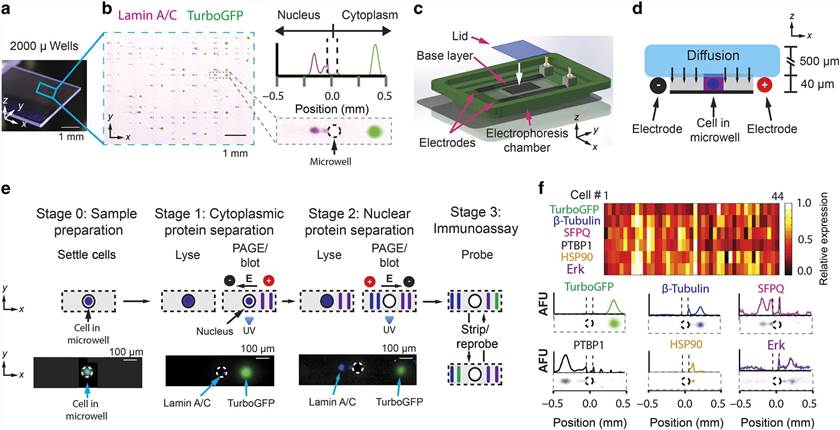 Figure 1. Microfluidic subcellular western blotting reports protein localization to the cytoplasmic or nuclear compartment of single cells. (Kevin A. Yamauchi, et al.; 2017)
References
Loading ......
