

Inquiry Basket
 Loading ......
The chemical alteration of small molecule drugs through tissue-specific chemical modification allows drugs to target specific tissues more precisely while reducing toxicity in non-target tissues to improve therapeutic results.
Chemical modification of small molecule drugs for tissue specificity modifies drug structures to boost their selectivity and targeting capabilities in specific tissues and minimizes toxic side effects in non-target tissues which enhances therapeutic results. The ability of drugs to reach and work in target tissues requires the incorporation of particular functional groups or structures.
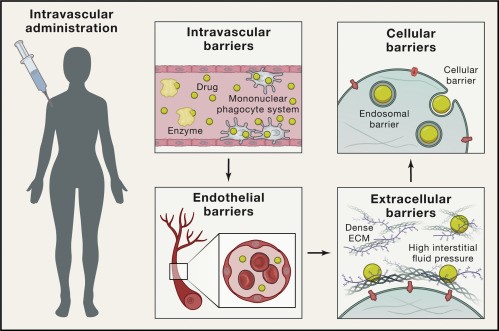 Figure 1. Biological Barriers for Tissue-Specific Drug Delivery. (Sources: Zhao Z, et al. 2020)
Its principles are reflected in many aspects. The chemical modification mechanism that uses specific chemical groups like biotin and click chemical groups alters drugs' solubility and lipophilicity or hydrophilicity which improves drug distribution and effects in targeted tissues. Modified drugs achieve targeted delivery by binding to specific tissue receptors or cell surface molecules which reduces toxicity in non-target tissues. Chemical modification reduces drug accumulation in non-target tissues while minimizing toxic side effects from off-target activity and it enhances drug stability and extends their in vivo half-life. The effectiveness of drug function is greatly influenced by both the modification location and count. Glycosylation modification enhances drug binding to target tissues while phosphate backbone modification boosts drug stability and extends its half-life.
Tissue-specific modification typically utilizes prodrug design and conjugate modification techniques. Prodrug design involves adding particular chemical groups to drug molecules to transform them into active drugs inside the body. Through processes like phosphorylation and carboxylation along with amidation prodrug design increases drug solubility and bioavailability and redirects the drug metabolism pathway to enable tissue-specific delivery. Conjugate modification involves attaching drugs to antibodies or other target molecules to enable delivery to precise tissues or cells. Antibody-drug conjugates (ADCs) employ glycosylation modification and chemical conjugation technology to link cytotoxic drugs with antibodies which then accurately destroy tumor cells.
The primary method for achieving tissue-specific chemical modification of small molecule drugs involves enzyme-sensitive groups alongside receptor-mediated delivery. Specific enzymes present in particular tissues or cells can recognize and activate drug molecules through enzyme-sensitive groups which leads to the breakdown of these groups in drug compounds for targeted drug release in environments like the tumor microenvironment. The receptor-mediated delivery system targets drug delivery by identifying specific cell surface receptors like the transferrin receptor (TfR) and folate receptor (FR) and boosts both drug delivery performance and targeting through the use of multifunctional linkers. Using enzyme-sensitive groups with receptor-mediated delivery methods leads to better drug targeting and more effective therapeutic outcomes.
The pharmacokinetic role of A2 involves the CYP1A2 subfamily which is part of the cytochrome P450 enzyme family (CYP450). The mixed-function oxidase CYP1A2 metabolizes many drugs and procarcinogens within living organisms and its active site can adjust to various substrate sizes and shapes. The liver exhibits high expression levels of CYP1A2 which is responsible for metabolizing numerous drugs and hormones and activating particular carcinogens. Multiple factors such as smoking habits and dietary choices and genetic variations determine the function of CYP1A2 while extensive research has examined the effects of its drug metabolism inhibitors and inducers.
The field of drug development demonstrates wide-ranging and varied examples of small molecule drugs that undergo tissue-specific chemical modifications. Ampicillin utilizes carboxyl esterification to enhance bioavailability and effectiveness while dexamethasone employs hydroxyl phosphate esterification to boost water solubility butroban binds with specific esters to prevent first-pass metabolism and perphenazine extends drug action time by modifying phenolic hydroxyl groups. Antibody-drug conjugates like brectinib provide specific cancer cell targeting through conjugate modification while ProTAC technology enhances targeting efficiency and polyethylene glycol modification boosts drug solubility and stability. The field of chemical modification technology showcases its critical applications through chemically modified RNA drugs, peptide bionics, RNAi drugs, and natural product enhancements which advance drug bioavailability, targeting precision, therapeutic potency and minimize toxic side effects.
The field of drug research and development can benefit greatly from tissue-specific chemical modification of small molecule drugs because this approach offers effective strategies and methods to enhance treatment effectiveness while minimizing toxic side effects. Continued research advancements will lead to the launch of new drugs utilizing this technology which will ultimately help patients.
The process of adding chemical groups such as biotin and click chemistry tags to drug molecules enables improved targeting and accumulation in specific tissues while minimizing toxic side effects in non-target areas. Researchers modify physicochemical characteristics such as solubility through PEGylation 14 while they also develop enzyme-sensitive linkers for controlled release. Prodrug design and antibody-drug conjugates (ADCs) represent essential approaches to enhance bioavailability and achieve precise targeting of drugs.
Tissue-specific enzymes (e.g., MMPs in tumors) cleave enzyme-sensitive groups (e.g., polyglutamate chains) to activate drugs exclusively within diseased areas. Nanocarriers release drugs when tumor microenvironments exhibit high protease activity leading to reduced systemic toxicity 6. Researchers have developed V8 enzyme-responsive PG linkers to achieve targeted drug release in bacterial infections on demand.
Prodrug design: Liver-targeted activation of drugs becomes more effective when phosphate/ester modifications such as dexamethasone phosphate enhance solubility.
Conjugate systems: Antibody-drug conjugates such as Brentuximab Vedotin together with GalNAc-siRNA complexes like Inclisiran 3 use receptor-mediated uptake for targeting (e.g., ASGPR in hepatocytes).
Nanoformulations: Tumor penetration is increased by lipid nanoparticles (LNPs) and mesoporous silica structures.
Metabolic variability: CYP1A2 polymorphisms affect drug activation.
Immune recognition: Chemical tags such as PEG 14 can cause unintended immunogenicity which requires careful design consideration.
Stability trade-offs: Sulfur substitutions in siRNA molecules increase nuclease resistance but can lower the effectiveness of target binding.
ADCs: Two approved antibody-drug conjugates include Trastuzumab emtansine for breast cancer treatment and Polatuzumab vedotin for lymphoma therapy.
GalNAc conjugates: The medication Inclisiran for treating hypercholesterolemia involves six-month dosing through ASGPR targeting.
Prodrugs: Capecitabine functions as a prodrug for colon cancer treatment activated by thymidine phosphorylase within tumor cells.
Reference
| Target | Cat. No. | Product Name | Type | Host | Conjugate | Application | |
| Aconitine | DAG001S | Aconitine [BSA] | Synthetic | N/A | BSA | Inquiry | |
| Cotinine | DAGF-190K | Cotinine-3 [BSA] | Synthetic | N/A | BSA | Inquiry | |
| Dexamethasone | DAG1086B | Dexamethasone [BSA] | Synthetic | N/A | BSA | Inquiry | |
| Estrone 3 glucuronide | DAG-L2616 | Estrone-3-Glucuronide (E1G) [BSA] | Synthetic | N/A | BSA | Inquiry | |
| Fumonisin | DAG-L3200MB | Fumonisin [BSA] | Synthetic | None | BSA | Inquiry | |
| Hyaluronic Acid | DAG-IV05 | Hyaluronic acid [KLH] | Synthetic | N/A | KLH | Inquiry | |
| Hydrocodone | DAG1203B | Hydrocodone [BSA] | Synthetic | N/A | BSA | Inquiry | |
| Kratom | DAG031H | Kratom [HRP] | Synthetic | N/A | HRP | Inquiry | |
| DAG031K | Kratom [KLH] | Synthetic | N/A | KLH | Inquiry | ||
| DAG031B | Kratom [BSA] | Synthetic | N/A | BSA | Inquiry | ||
| Nicotine | DAG3011B | Nicotine [BSA] | Synthetic | N/A | BSA | Inquiry | |
| Sulfachloropyridazine | DAGS098 | Sulfachloropyridazine standard | N/A | N/A | Inquiry | ||
| Sulfadimethoxine | DAGS099 | Sulfadimethoxine standard | N/A | N/A | Inquiry | ||
| Sulfadoxine | DAGS100 | Sulfadoxine standard | N/A | N/A | Inquiry | ||
| Sulfamonomethoxine | DAGS101 | Sulfamonomethoxine standard | N/A | N/A | Inquiry | ||
| Sulfanilamide | DAGS102 | Sulfanilamide standard | N/A | N/A | Inquiry | ||
| Sulfapyridine | DAGS103 | Sulfapyridine standard | N/A | N/A | Inquiry | ||
| Testosterone-19 | DAG3024 | Testosterone-19 [BSA] | Synthetic | N/A | BSA | Inquiry | |
| Tiamulin | DAGS105 | Tiamulin standard | N/A | N/A | Inquiry | ||
| Tolfenamic Acid | DAGS106 | Tolfenamic acid standard | N/A | N/A | Inquiry | ||
| Toltrazuril | DAGS107 | Toltrazuril standard | N/A | N/A | Inquiry | ||
| Triamcinolone Acetonide | DAGS109 | Triamcinolone acetonide standard | N/A | N/A | Inquiry | ||
| Valproic Acid | DAG3422A | Valproic Acid [ALP] | Synthetic | N/A | ALP | Inquiry |
Loading ......
