
Inquiry Basket
 Loading ......
Adeno-associated virus serotype 8 (AAV8) belongs to the Parvoviridae family and falls under the Dependoparvovirus genus. In the 1980s researchers identified AAV8 as a new AAV serotype during their analysis of human serum samples.
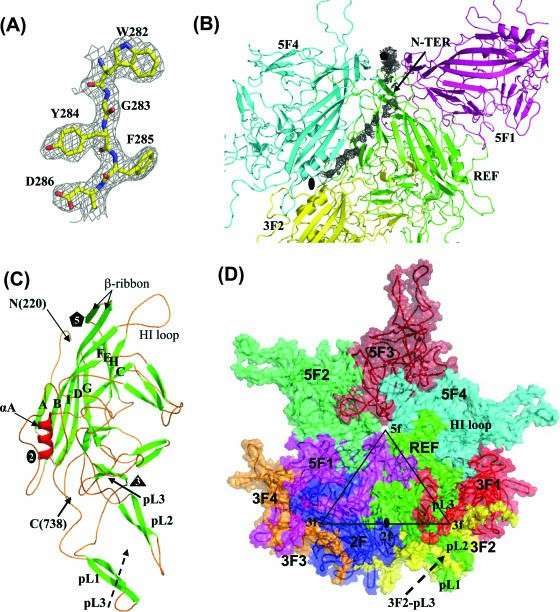 Figure 1. Structure of AAV8. (Source: Nam HJ, et al. 2007)
After AAV8's discovery researchers identified that this serotype maintained similar structural features and replication processes as other members of the AAV family. This serotype showed unique tissue targeting ability alongside specific transduction efficiency.
Gene therapy advancements motivated scientists to explore AAV8's therapeutic possibilities. Research involving animals and laboratory settings revealed that AAV8 achieved high gene transfer rates into liver tissues and muscle and nervous system tissues without causing significant immune responses. The combination of high efficiency in transducing tissues and low immune response makes AAV8 an exceptional candidate for gene therapy vectors.
Over the past several years researchers have employed AAV8 in clinical trials to treat both genetic disorders and acquired conditions. Research studies demonstrate that AAV8-based gene therapy vectors achieve beneficial safety profiles while delivering successful results for hemophilia treatment and spinal muscular atrophy management as well as some liver diseases.
High Transduction Efficiency
Liver cells: The transduction efficiency of AAV8 outperforms the commonly used AAV serotypes AAV2, AAV5 and AAV9 in liver cells. AAV8 demonstrates efficient gene delivery to hepatocytes within the portal area of the liver.
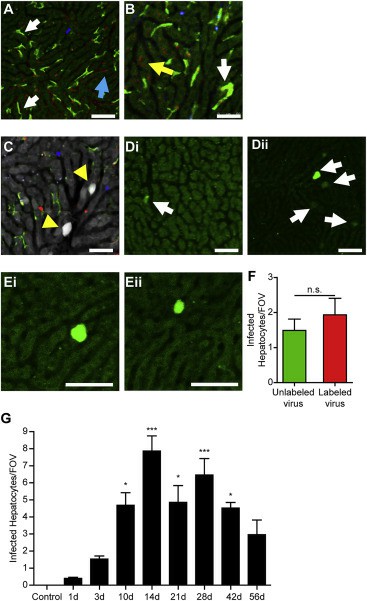 Figure 2. Infection of the liver by AAV8 (Source: Carestia A, et al. 2022)
Cardiac and muscle cells: AAV8 shows a high affinity for cells in both cardiac and skeletal muscles. The high effectiveness of AAV8 in heart and muscle-related disorders stems from its capability to perform efficient gene transduction which facilitates tissue repair and dysfunction correction.
Broad Tissue Tropism
AAV8 demonstrates effective gene delivery capabilities to skeletal muscles along with the central nervous system besides its infection of liver and muscle tissues. The wide-ranging tissue tropism of this vector allows it to serve as a therapeutic tool for numerous diseases that target various organs.
Low Immunogenicity
The immunogenicity of AAV8 remains low because pre-existing neutralizing antibody levels in humans are minimal. AAV8 allows therapeutic genes to reach target cells successfully in many cases because it does not provoke strong immune reactions which supports the effectiveness of gene therapy.
Long-lasting Gene Expression
AAV8 enables continuous gene expression within non-dividing cells which makes it ideal for treating chronic and genetic diseases over long periods. Research on Wilson's disease demonstrates that AAV8-mediated gene expression exhibits prolonged persistence which sustains therapeutic benefits.
Although AAV8 generally displays low immunogenicity it can initiate antiviral immune responses when used systemically or at high doses. The development of neutralizing antibodies (NAbs) stands as a primary concern because they can compromise the therapeutic capability of AAV8.
AAV8-based gene therapy triggers cellular immune responses in certain conditions. A significant rise in intra-retinal immune cell infiltration was detected by flow cytometry during day 14 post-injection in a clinical trial assessing retinal subretinal injections of AAV8. The evidence indicates that AAV8 has the potential to engage and stimulate leukocyte activity under certain conditions.
Research must account for the different ways individuals react to immune challenges. Patients undergoing AAV8-based treatment in Wilson's disease research exhibited temporary increases in serum ALT levels which suggested mild liver toxicity. Research into the long-term safety profile of AAV8 remains incomplete and needs additional study.
Liver Diseases
AAV8 demonstrates superior ability to modify liver cells which positions it as the optimal vector for gene therapy aimed at liver function enhancement. In Crigler-Najjar syndrome research studies AAV8 vectors containing the UGT1A1 gene proved effective at increasing bilirubin breakdown which led to a reduction in jaundice symptoms.
Cardiovascular Diseases
The strong preference of AAV8 for cardiac muscle cells facilitates successful therapeutic gene delivery that repairs damaged heart tissue and improves cardiac function. Research studies using AAV8 vectors for heart failure and myocardial infarction treatments have confirmed their potential effectiveness and safety.
Neuromuscular Diseases
AAV8 vectors have the ability to penetrate the blood-brain barrier and precisely target the central nervous system. Its exceptional ability establishes AAV8 as an important instrument for neuromuscular disease treatment. During SMA clinical trials researchers demonstrated that AAV8 vectors delivered therapeutic genes to motor neurons in both the brain and spinal cord which resulted in improved motor function for patients.
Hemophilia Treatment
Gene therapy for hemophilia extensively employs AAV8 vectors to deliver coagulation factor genes. AAV8 therapy enhances coagulation factor activity which lowers patient reliance on supplemental clotting factors. The liver-specific high transduction efficiency of AAV8 combined with its stable gene expression profile establishes it as an excellent choice for hemophilia gene therapy.
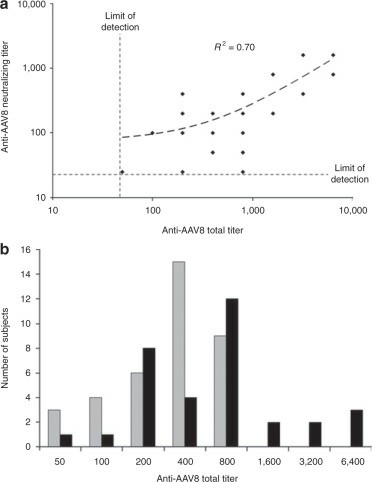 Figure 3. Anti-AAV8 total titers are a more sensitive indicator of prior virus exposure in humans than neutralizing titers (Source: Hurlbut GD, et al. 2010)
AAV8 excels as a gene therapy vector due to its high transduction effectiveness combined with extensive tissue targeting ability and long-term gene expression with low immune response activation. The characteristics of AAV8 qualify it as the ideal vector for curing liver diseases and cardiovascular diseases alongside neuromuscular disorders and hemophilia. Research advancements and technological progress will further broaden AAV8's capabilities in gene therapy which will provide new treatment possibilities for patients with genetic and acquired diseases.
References
| Target | Cat. No. | Product Name | Size | Species | Application | Detection Sample | |
| AAV2 | DEIA589 | AAV2 Titration ELISA Kit | 96T | N/A | Quantitative | cell culture supernatants and purified virus preparations | Inquiry |
| AAV5 | DEIAAV5 | AAV5 titration ELISA kit | 96T | N/A | Quantitative | cell culture supernatants and purified virus preparations | Inquiry |
| AAV6 | DEIAAV6 | AAV6 Titration ELISA Kit | 96T | N/A | Quantitative | cell culture supernatants and purified virus preparations | Inquiry |
| AAV8 | DEIAAV8 | AAV8 Titration ELISA Kit | 96T | N/A | Quantitative | cell culture supernatants, purified virus preparations | Inquiry |
| AAV9 | DEIAAV9 | AAV9 Titration ELISA Kit | 96T | N/A | Quantitative | cell culture supernatants, purified virus preparations | Inquiry |
Loading ......
