
Inquiry Basket
 Loading ......
Creative Diagnostics has developed several neutralizing antibodies against SARS-CoV-2. The activities of these antibodies have been extensively validated in both binding assays, and pseudovirus infection assays. These antibodies can be used as reference antibodies in neutralization assays and may also be used in animal research.
The neutralization assay was performed on 293T-ACE2 cells infected with Lentiviral SARS-CoV-2 Pseudovirus. Neutralizing antibodies can effectively inhibit the infection of SARS-CoV-2 Spike pseudovirus on ACE2 overexpression 293T cells.
| CABT-CS064 | CABT-CS065 | CABT-CS079 | |||
| Conc.(ug/mL) | Inhibition % | Conc.(ug/mL) | Inhibition % | Conc.(ug/mL) | Inhibition % |
| 100 | 96.39% | 100 | 95.51% | 100 | 99.56% |
| 10 | 94.57% | 10 | 93.32% | 4 | 99.90% |
| 1 | 42.24% | 1 | 75.69% | 0.16 | 59.29% |
| 0.1 | -5.53% | 0.1 | 10.11% | 0.032 | 5.59% |
The new neutralizing antibodies join our full collection of coronavirus reagents, including the SARS-CoV-2 Inhibitor Screening ELISA Kit, SARS-CoV-2 MAb Pairs with Proven Performance in Commercially Launched Rapid Antigen COVID-19 Assays.
Contact us with any questions or to request a quote.
Coronavirus (CoV) disease 2019 (COVID-19) caused by severe acute respiratory syndrome (SARS)-CoV-2 (also known as 2019-nCoV) is threatening global public health, social stability, and economic development. The medical research community is exploring every avenue to find solutions for the prevention, detection, and treatment of the disease. Unfortunately, there are no specific antiviral drugs or vaccines currently. Several approaches can be suggested to control infections of SARS-CoV-2, including vaccines, monoclonal antibodies, oligonucleotides, peptides, interferon and small molecule drugs.
The antibody-mediated humoral response is crucial for preventing viral infections. A subset of these antibodies, which reduce viral infectivity by binding to the surface epitopes of viral particles and thereby blocking the entry of the virus to an infected cell, are defined as neutralizing antibodies (NAbs). NAbs elicit their protective activities in three main steps. NAbs may prevent the attachment of the virion to its receptors on targeted cells, causing aggregation of virus particles. Further, the viruses are lysed through the constant region of the antibody-mediated opsonization or complement activation.
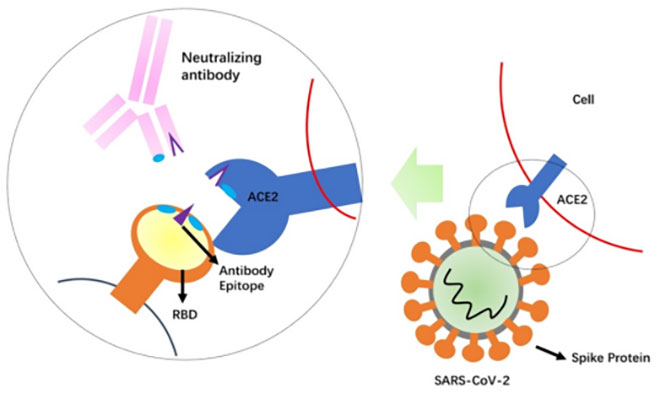 Fig. 1 Schematic mechanism of the neutralizing antibodies.
(Source: Perspectives on therapeutic neutralizing antibodies against the Novel Coronavirus SARS-CoV-2)
Neutralizing antibodies are of great concern, as they can effectively prevent the infection by blocking the interaction between the SARS-CoV-2 virus and the host cells. The entry of SARS-CoV-2 into its target cells depends on binding between the receptor-binding domain (RBD) of the viral spike protein and its cellular receptor, angiotensin-converting enzyme 2 (ACE2). Most neutralizing antibodies react to the RBD of the spike protein, which directly binds with the cell surface receptor ACE2.
| Cat. No. | Product Name | Host | |
| CABT-CS064 | SARS-CoV-2 Spike Neutralizing Monoclonal antibody, clone NN54 | Mouse | Inquiry |
| CABT-CS065 | SARS-CoV-2 Spike Neutralizing Monoclonal antibody, clone NN68 | Mouse | Inquiry |
| CABT-CS079 | SARS-CoV-2 Spike RBD Neutralizing Monoclonal antibody, clone 112 | Rabbit | Inquiry |
| CABT-CS033 | SARS-CoV-2 S1 Monoclonal antibody, clone BIB114 | Humanized | Inquiry |
| CABT-CS056 | SARS-CoV-2 S1 Polyclonal antibody | Rabbit | Inquiry |
| CABT-CS057 | SARS-CoV-2 S1 Polyclonal antibody | Monkey | Inquiry |
Loading ......
