
Inquiry Basket
 Loading ......
Malaria is one of the most severe and life-threatening diseases. It is a mosquito-transmitted infectious disease and a major global health issue in tropical and subtropical regions. In 2022, there were 249 million malaria cases globally that led to 608,000 deaths in total. Of these deaths, 76% were children under 5 years of age. Symptoms include fever, chills, headache, muscle aches, and tiredness. Nausea, vomiting, and diarrhea may also occur. Malaria may cause anemia and jaundice because of the loss of red blood cells. Human malaria is caused by five Plasmodia species, of which P. falciparum is the most common and the most deadly. P. vivax is also an important cause of morbidity and mortality worldwide.
When an Anopheles mosquito bites a healthy human being, it injects sporozoites (infective stage for humans) while feeding on blood.These sporozoites travel through the bloodstream to the hepatic cells (in the liver). These sporozoites mature into merozoites (exo-erythrocytic cycle) inside the hepatic cells. They are released into the blood vessel and invade the erythrocytes in which they grow and re-invade the fresh red blood cells (RBCs) for the completion of the erythrocytic cycle (asexual stage). During this erythrocytic cycle, the merozoites transform into ring-stage trophozoites, then mature trophozoites, and finally into schizonts, a process that takes about 48 hours for P. falciparum. Later, schizonts rupture and release 8 to 36 merozoites to invade the new RBCs and continue the cycle where some of the merozoites undergo sexual development and mature into the male and female gametocytes (infective stage for mosquito); this process is called gametocytogenesis. When the mosquito feeds on a blood meal, it takes in these gametocytes. Inside the mosquito's gut, the microgamete (male gamete) fuses with the macrogamete (female gamete) and produces a zygote (gametogenesis). The zygote then matures into ookinetes, which takes around 24 hours. The ookinetes then develop into oocysts. These oocysts grow and rupture, releasing sporozoites produced through asexual replication. The sporozoites are released and migrate through the hemocoel; they invade and are stored in the salivary gland of mosquitoes.
 Fig 1. Life cycle of malaria parasite (Tripathi H, et al. 2023)
Diagnostic methods of malaria including clinical diagnosis, microscopy, rapid diagnostic test (RDTs) , Polymerase chain reaction (PCR), flow cytometry, and serological detection.
Malaria vaccines are classified by the parasite developmental stage targeted: (i) pre-erythrocytic vaccines, (ii) blood stage vaccines, and (iii) transmission blocking vaccines. An ideal malaria vaccine would effectively prevent the first stages of parasite development completely, blocking further stages from developing and preventing transmission.
RTS,S (Mosquirix), the first WHO-approved malaria vaccine, has set a milestone in WHO’s malaria eradication roadmap effort. RTS,S is a subunit vaccine having CSP antigen (the last 18 NANP repeats and C-terminus terminal region that contains T- and B-cell epitopes) fused with hepatitis B surface antigen (HBsAg) on VLPs. CSP fragment in RTS,S contains three known T-cell epitopes: a highly variable CD4+ T-cell epitope before the TSP-like domain (TH2R), a highly variable CD8+ T-cell epitope within the TSP-like domain (TH3R), and a conserved “universal” CD4+ T cell epitope (CS.T3) at the C-terminus. The approved version of RTS,S vaccine for malaria, employed adjuvant system 01 (AS01) consisting of MPL A, a TLR4 agonist that induces biased Th1 response, and QS21, a highly purified saponin that does not work through only one such PRR or signaling cascade; instead, they enhanced antigen uptake and induced a strong Th1 and Th2 response.
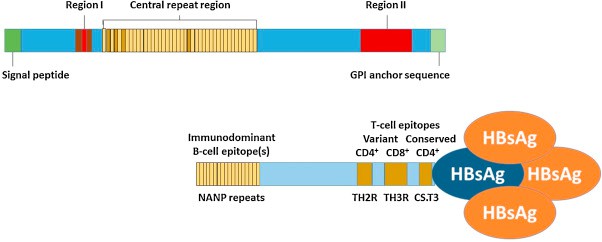 Fig 2. Graphical depiction of circumsporozoite (CSP) and RTS,S structures. (Laurens, M. B. 2020)
The R21/Matrix M vaccine, recommended by WHO in 2023, is the second malaria vaccine for the prevention of malaria in children, following the RTS,S/AS01 vaccine. R21 has shown increased efficacy compared with RTS,S in its second phase of clinical trials, employing the VLP technique and CSP antigen similar to RTS,S. Unlike RTS,S, R21 does not contain hepatitis B surface antigen (HBsAg) in a separate form; instead, HBsAg is expressed as a fusion protein with the CSP antigen. Consequently, in response to this fusion protein present on VLPs, the majority of antibodies generated will be directed against the CSP rather than the HBsAg. This aspect makes R21 a highly promising vaccine candidate for malaria in the upcoming year. Furthermore, when formulated with the adjuvant Matrix M, a saponin-based adjuvant, R21 has achieved a 77% efficacy rate in clinical trials.
Merozoite Surface Proteins (MSPs) located on the surface of red blood cells infected by merozoites are extensively researched for their potential use in drugs and vaccines against all types of Plasmodium. MSP1 plays an important role in erythrocyte invasion by the merozoite and is a leading candidate for malaria vaccines. MSP1 is ∼200 kDa protein and has several sites where it can be cleaved by proteolytic enzymes. It consists of four subunits, p83, p30, p38, and p42, which are held together noncovalently. p42 is cleaved into p33 and p19 during the process of invasion. p19 fragment of MSP1 alone or in combination with other merozoite antigens (AMA1) was tested in clinical trials. Likewise, a fusion protein combining PvMSP1 (p42) with PvMSP8 has been recently evaluated as a potential vaccine against P. vivax. A novel method for developing a P. vivax vaccine involves controlled blood-stage human malaria infections with an inoculum of parasitized blood. Currently, vaccine candidates targeting blood-stage which are under trials include ChAd63-MVA RH5 and MSP3-CRM-Vac4All.
TBVs reduce disease transmission by breaking the continuous cycle of infection between the human and vector Anopheles. The target antigens for TBVs are divided into two groups, namely, pre-fertilization and post-fertilization antigens. Pre-fertilization antigens are expressed on the surface of gametocytes and gametes of malaria parasites, such as Pfs230 and Pfs48/45. Pfs25 is a post-fertilization antigen expressed on the surface of zygote and ookinete and has shown strong immunogenicity with limited antigenic polymorphism. Two leading malaria TBV candidates, Pfs25M-EPA/AS01 and Pfs230D1M-EPA/AS01, target the sexual stage development of P. falciparum parasites within the mosquito host; they are currently being developed and evaluated in clinical trials.
References
| Cat. No | Product Name | Host | Applications | |
| DAG-WT1137 | Recombinant P. falciparum CSP (a.a.17-315) | E. coli | ELISA, WB | Inquiry |
| DAG1344F | Recombinant P. falciparum CSP (a.a. 19-424) | E. coli | ELISA, WB | Inquiry |
| DAGA-216 | Recombinant P. falciparum pAldolase | E. coli | ELISA, LFIA | Inquiry |
| DAGA-217 | Recombinant P. falciparum pLDH | E. coli | ELISA, LFIA | Inquiry |
| DAG3217 | Recombinant P. falciparum HRP2 | E. coli | ELISA | Inquiry |
| DAG1343 | Recombinant P. falciparum HSP70 | E. coli | ELISA, WB | Inquiry |
| DAG-WT341 | Recombinant P. falciparum Pfs 25 | E. coli | ELISA, WB | Inquiry |
| DAGA-218 | Recombinant P. falciparum MSP-1 | E. coli | ELISA, LFIA | Inquiry |
| DAG448 | Recombinant P. vivax CSP | E. coli | ELISA, LFIA | Inquiry |
| DAGA-220 | Recombinant P. vivax pLDH | E. coli | ELISA, LFIA | Inquiry |
| DAG447 | Recombinant P. vivax MSP-1 | E. coli | ELISA | Inquiry |
| Cat.No | Product Name | Sample | Applications | |
| DEIA1929 | Human Malaria ELISA Kit | Serum or plasma | Qualitative | Inquiry |
| DEIABL353 | Human Malaria Antibody ELISA Kit | Serum or plasma (citrate, heparin) | Qualitative | Inquiry |
Loading ......
