
Inquiry Basket
 Loading ......
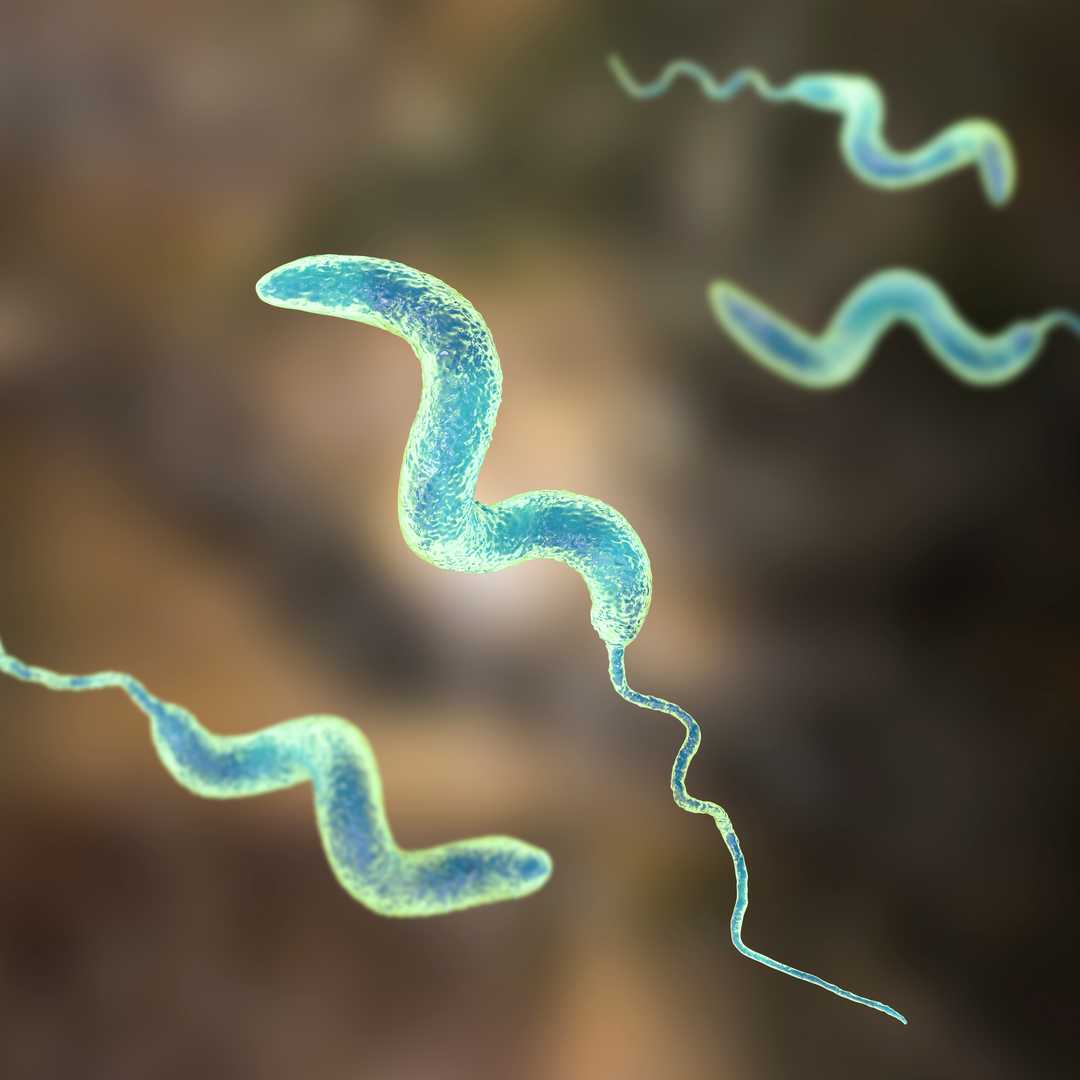
Campylobacter is a genus of Gram-negative, slightly curved or spiral rods with 57 species. The organisms are usually one or more flagellated and show active motility. This is thought to be one of their major virulence factors.
How is Campylobacter transmitted?
Transmission is strongly linked to food of animal origin and the environment. Spread is most commonly linked to eating undercooked poultry, drinking untreated water, unpasteurised milk, animal or patient feces, or (less commonly) from international travellers. In contrast to other enteric pathogens, most C. jejuni infections are sporadic, and outbreaks are comparatively rare; the most common foodborne clusters have been related to the consumption of unpasteurised raw milk.
Campylobacter symptoms
Campylobacteriosis is thought to be one of the most common bacterial foodborne illnesses. Indeed, its reported incidence in some developed countries is actually higher than for other, more traditional enteric pathogens such as Salmonella and Shigella. Epidemiologic data suggest that Campylobacteriosis is rising or is high in many regions of the world. The highest disease burden is in Europe and North America.
Campylobacter infections are also seasonal, with the peak in summer. This is likely multifactorial, but probably reflects an increased tendency to grill foods outdoors, as well as hotter temperatures which may increase bacterial survival in the environment. While most cases are sporadic, outbreaks associated with contaminated food or water occur from time to time.
In addition to the acute gastrointestinal impact, a minority of patients can suffer from severe postinfectious sequelae, including Guillain–Barré syndrome (acute flaccid paralysis), reactive arthritis, and functional gastrointestinal disorders (e.g., irritable bowel syndrome). These sequelae significantly increase the socioeconomic burden of Campylobacteriosis and dramatically affect the quality of life of the patients.
Creative Diagnostics provides high-quality antibodies, antigens, and various reagents related to Campylobacter to support your research and development needs.
Campylobacter jejuni is the most clinically important species of this genus as of today. There are two subspecies of C. jejuni, Campylobacter jejuni subspecies jejuni and Campylobacter jejuni subspecies doylei. Both subspecies have been shown to be pathogenic for humans, causing acute febrile enteritis.
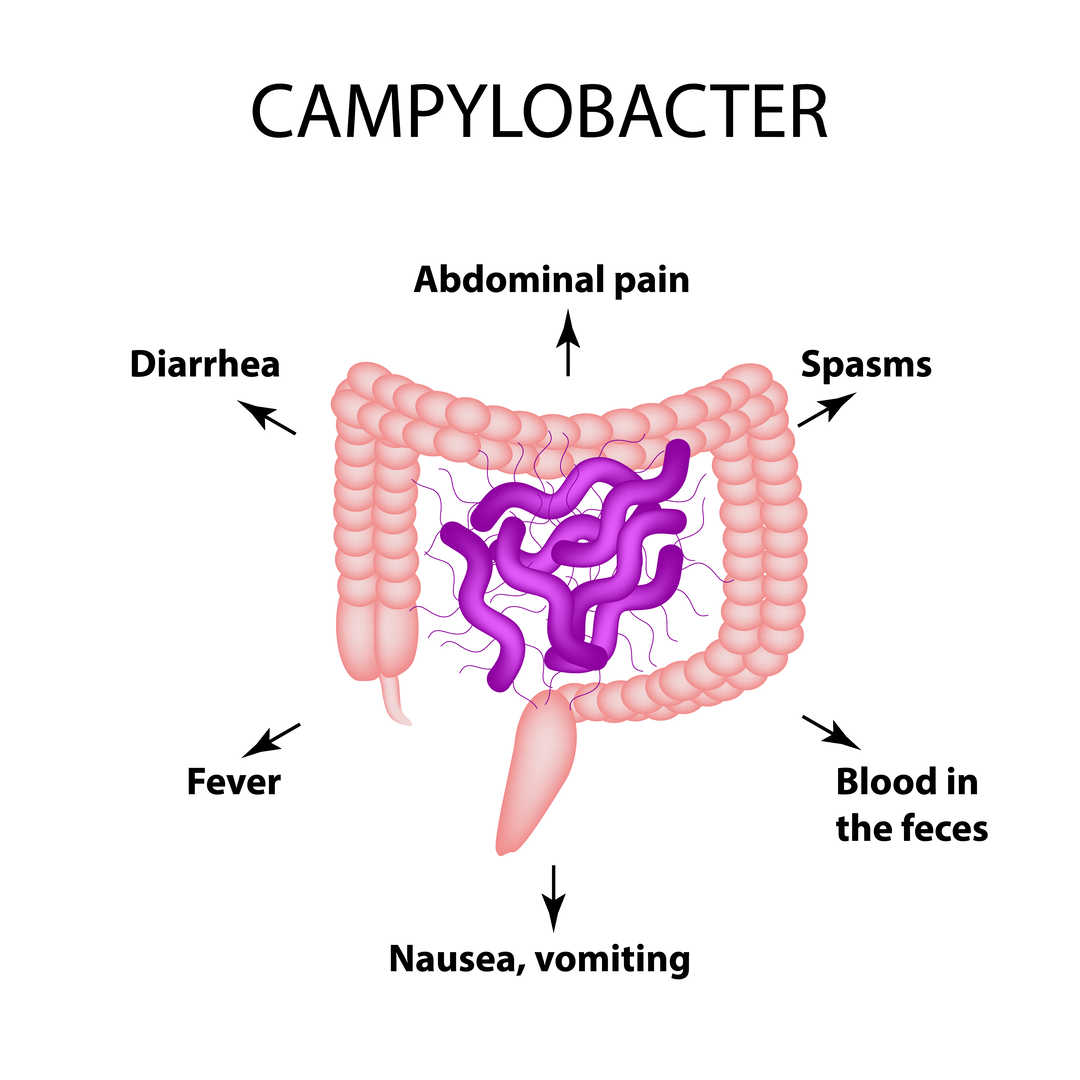
Campylobacter jejuni is a human pathogen. It is considered the major etiological agent of bacterial gastroenteritis. C. jejuni causes self-limiting mild to severe diarrheal disease with fever, nausea, and abdominal cramping. The symptoms last about a week. However, C. jejuni can also cause invasive disease such as bacteraemia. In addition, C. jejuni–induced gastroenteritis (campylobacteriosis) has been linked to myocarditis and to various long-term sequelae, including dysbiosis, IBS, and GBS.
The pathogenicity of C. jejuni results from the coordinated action of multiple virulence factors over time and space.
Part 01
Colonization phase
The bacterium uses its monopolar flagellum for motility to penetrate the physical barrier of the intestinal mucus layer. Fla, maintained by O-glycosylation, preserve motility integrity, while surface adhesins such as CadF, PEB1, and FlpA bind host extracellular matrix proteins like fibronectin to activate Rac1 signaling, induce membrane ruffling, and trigger bacterial internalization.
Part 02
Invasion
T3SS secretes CiaB, which directly induces host cytoskeletal rearrangement to promote bacterial uptake. The serine protease HtrA cleaves epithelial junction proteins such as E-cadherin, disrupting gut barrier integrity to facilitate paracellular translocation.
Part 03
Damage phase
CDT induces host cell apoptosis, and LPS triggers autoimmune responses, serving as core inducers of Guillain–Barré syndrome. Outer membrane vesicles (OMVs) act as toxin delivery vehicles, packaging factors like CDT and PEB4 to extend damage via a paracrine route.
Part 04
Persistent survival
Virulence of C. jejuni is also due to the temporal regulation of gene expression to suit the host conditions. For instance, up-regulation of peb4 and peb1 at higher temperatures to a higher level of expression of virulence factors; capsular polysaccharides expressed at high temperatures to confer serum resistance to complement-mediated killing; quorum-sensing regulatory systems in the modulation of biofilm formation for enhanced environmental tolerance; and high-frequency genetic recombination leading to antigenic variation for immune evasion and chronic colonization.
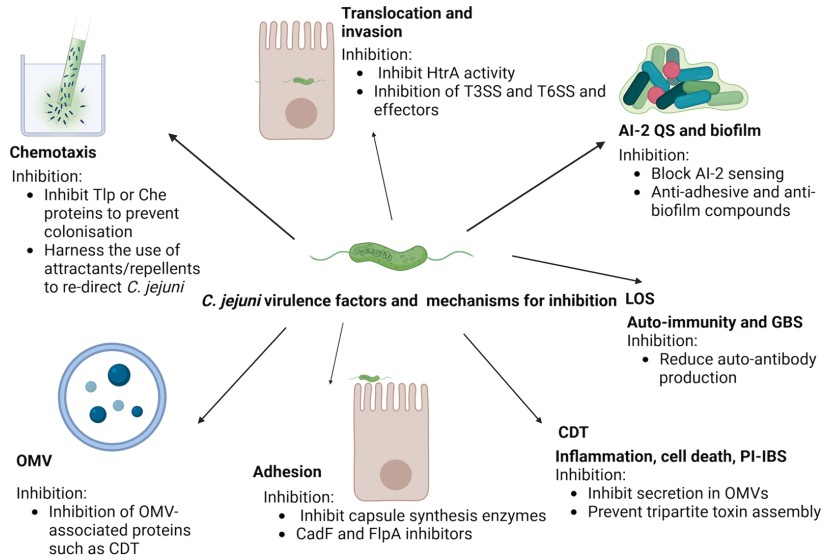 Figure 1. C. jejuni virulence mechanisms and potential strategies for their inhibition. (Source: Tikhomirova A, et al. 2024)
Campylobacter coli is distinguished from its close relative C. jejuni by a negative hippurate hydrolysis test. In natural hosts, C. coli primarily colonizes the porcine intestine and can also be isolated from poultry, wild birds, and aquatic environments. The incubation period is 2–5 days. Usual symptoms are watery diarrhea (15% with blood), crampy abdominal pain and fever and it is self-limited. Pathogenicity depends on flagellar motility to reach the mucus layer, surface adhesins such as CadF to mediate invasion of the epithelium and the secretion of a cytolethal distending toxin (CDT) to cause apoptosis and mucosal inflammation. In contrast to C. jejuni, the risk of severe sequelae such as Guillain–Barré syndrome is markedly lower with C. coli.
An increasing number of Campylobacter species—such as C. concisus, C. lari, C. upsaliensis, and C. ureolyticus—are now recognized as having significant implications for human and animal health, and are referred to as "emerging Campylobacter spp." The pathogenic roles of some of these species remain to be fully elucidated.
 Figure 2. Colorized scanning electron microscopic images of a number of emerging Campylobacter species. (Source: Man SM, et al. 2011)
References
Loading ......
