
Inquiry Basket
 Loading ......
Gentamicin. The mere mention of this word brings to mind hospital corridors and medical discussions where doctors pronounce it confidently beyond your ability. Many doctors turn to this antibiotic when they need to treat infections from stubborn Gram-negative bacteria. We need to determine if Gentamicin will effectively eliminate harmful bacteria from the body. The solution to determining how effective Gentamicin will be lies in performing Antimicrobial Susceptibility Testing (AST). Think of it as matchmaking for antibiotics: The search for the right antibiotic match requires finding a drug that can eliminate your specific bacteria. This exploration will cover the foundational principles and testing methods while pinpointing unusual factors that determine Gentamicin susceptibility testing outcomes.
As we prepare to explore AST we must first provide a proper introduction to Gentamicin. Gentamicin from the aminoglycoside antibiotic class binds to the 30S ribosomal subunit in bacteria which results in the cessation of protein synthesis. Protein production failure in bacteria leads to their inability to grow and reproduce.
Gentamicin shows remarkable efficacy against Gram-negative bacteria including Escherichia coli and Pseudomonas aeruginosa as well as Klebsiella pneumoniae. While Gentamicin works against some Gram-positive bacteria it is best known for its effectiveness against difficult Gram-negative infections. The antibiotic functions to treat serious infections including sepsis and pneumonia and urinary tract infections through combination therapy with other antibiotics that improves therapeutic outcomes.
Gentamicin functions as a powerful antibiotic yet its effectiveness varies according to bacterial type requiring testing to ensure it does not lead to ineffective treatments. And that's where AST comes in!
You have identified the infection and the presumed bacteria while Gentamicin is available for treatment. The issue with Gentamicin treatment is that some bacteria will simply refuse to surrender despite its potency. Certain bacteria have become resistant because they now have the survival capability when Gentamicin is present in their environment. The effectiveness of Gentamicin as a treatment option is becoming less predictable in modern medicine which prevents doctors from assuming its reliability every time.
Antimicrobial Susceptibility Testing (AST) enables doctors to decide if Gentamicin is effective or if alternative treatments should be used. AST establishes the Minimum Inhibitory Concentration (MIC) which represents the smallest antibiotic amount needed to prevent bacterial growth. We'll discuss the different methods used to determine MIC values shortly.
AST helps determine the effectiveness of antibiotics so doctors can tailor treatment plans to provide patients with the correct medication at appropriate doses. This process functions as a personalized medicine approach to treatment. AST provides essential information which enables us to customize therapy to match each patient's precise bacterial infection. AST acts as a compatibility test between antibiotics and infections is improtant.
Understanding AST's significance leads us to ask what specific methods enable its execution. Multiple techniques exist to evaluate Gentamicin susceptibility in bacterial strains and each method presents unique benefits and limitations. Let's break them down.
A petri dish containing small paper discs impregnated with antibiotics is used to perform the Kirby-Bauer technique which is also known as the disk diffusion method. The classical method of this test demonstrates ease of execution and achieves extensive application within laboratory settings.
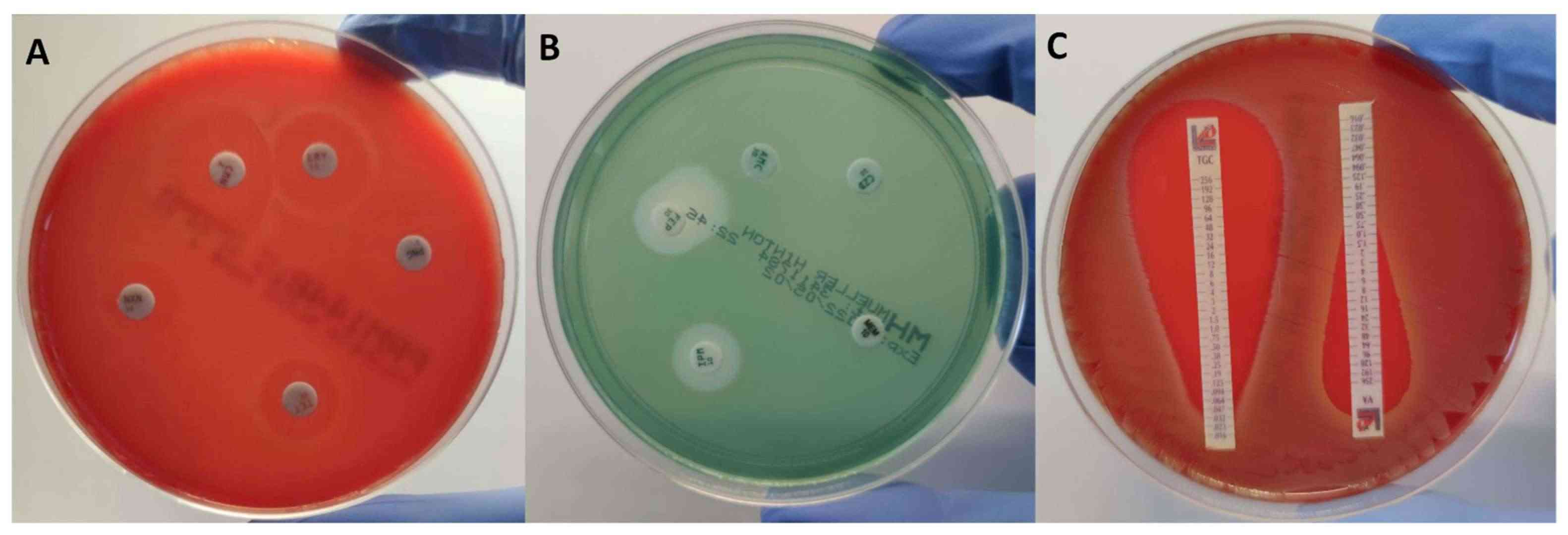 Figure 1. Disk diffusion and gradient test of various bacterial isolates. (Sources: Gajic I, et al. 2022)
How it Works:
Soak paper discs with Gentamicin before placing them on a bacterium-filled petri dish.
The growth of bacteria generates a zone where Gentamicin prevents growth by diffusing out from the disk to form an inhibition area.
Healthcare professionals measure the inhibition zone size to categorize bacterial resistance into susceptible, intermediate, or resistant groups.
The microdilution method stands as the gold standard for individuals who require precise results. In microtiter plates, researchers add multiple concentrations of Gentamicin and observe bacterial growth.
How it Works:
Wells with different Gentamicin concentrations receive bacterial inoculations.
After incubation scientists determine the minimum concentration of Gentamicin required to prevent visible bacterial growth which is the MIC.
The E-test represents a combination of the Kirby-Bauer and microdilution methods. This test requires the placement of a strip featuring a continuous range of Gentamicin concentrations. The strip should be placed on an agar plate containing bacteria and growth should be observed as it develops. The MIC represents the lowest concentration point where bacterial growth gets stopped.
How it Works:
You measure the MIC by placing an E-test strip onto a bacterial lawn and reading the result where bacterial growth halts.
The table below offers a convenient way to examine various methods for Gentamicin susceptibility testing.
| Method | Advantages | Disadvantages |
| Kirby-Bauer Disk Diffusion Method | - Simple, fast, and easy to perform - Inexpensive and accessible | - Provides only qualitative results (zone size) - Can be affected by environmental factors (e.g., humidity, agar thickness) |
| Microdilution Method | - Provides precise MIC values (quantitative) - High accuracy for testing antibiotic susceptibility | - Time-consuming - Requires specialized equipment and technical skill - More expensive than other methods |
| E-test | - Quick and accurate MIC results - Simple to perform with clear outcomes - Combines advantages of Kirby-Bauer and microdilution methods | - More expensive than Kirby-Bauer - Requires careful handling and technique |
Okay, now you've got your methods down, but here's the thing: AST appears more complex than it really is. The accuracy of the results depends on multiple influencing factors which complicate the process beyond following a simple recipe. Let's explore these quirks!
Bacteria are finicky little creatures. The choice of culture media affects the results you obtain from the test. Astounding results may emerge when some bacteria excel in one type of medium while others fail to survive in the same conditions. The diffusion of the antibiotic through media becomes compromised when the media's thickness is either excessive or inadequate resulting in wrong interpretations.
The susceptibility of various bacterial strains to Gentamicin varies. Several bacteria possess efflux pumps that remove antibiotics before they can function while others have modified ribosomal targets which reduce antibiotic effectiveness.
The environmental conditions of the AST test are critical. The diffusion of Gentamicin and bacterial growth depend on temperature levels, humidity conditions and the agar's composition.
Once the test is complete, the big question is: What does it all mean? The interpretation of results stands as the last step and becomes critically important at this point.
Gentamicin susceptibility testing serves multiple purposes beyond determining the antibiotic's effectiveness. We avoid squandering vital resources on treatments that don't work while offering patients their best chance for recovery and maintaining a strategic lead against intelligent bacterial strains. Whether it's through Kirby-Bauer, microdilution, or the E-test, the goal remains the same: research focuses on achieving the optimal combination between medication and bacterial strain. Whenever you hear the term "Gentamicin," understand that it represents more than just a singular word. This scientifically-supported choice requires careful calculation because it determines whether patients will experience quick healing or prolonged sickness.
References
| Target | Cat. No. | Product Name | Host | Isotype | Application | |
| Gentamicin | HMABPY043 | RHA™ anti-Gentamicin monoclonal antibody, clone GM | Mouse | IgG | ELISA, LFIA | Inquiry |
| DPBT-68266SG | Anti-Gentamicin polyclonal antibody | Sheep | IgG | ELISA | Inquiry | |
| DMAB3403 | Anti-Gentamicin monoclonal antibody, clone A104 | Mouse | IgG2a | IA | Inquiry | |
| DMAB3404 | Anti-Gentamicin monoclonal antibody, clone A103 | Mouse | IgG2a | ELISA | Inquiry | |
| DMAB6614 | Anti-Gentamicin monoclonal antibody, clone monoclonal,H5-10 | Mouse | IgG2a | cELISA, IFIA | Inquiry | |
| DMAB6615 | Anti-Gentamicin monoclonal antibody, clone monoclonal, clone CloneH11-18 | Mouse | IgG1a | cELISA, IFIA | Inquiry | |
| DMAB6616 | Anti-Gentamicin monoclonal antibody, clone monoclonal,H17-33 | Mouse | IgG1a | cELISA, IFIA | Inquiry | |
| DMABT-54913MG | Anti-Gentamicin monoclonal antibody, clone HF2 | Mouse | IgG1 | IA | Inquiry | |
| DMABT-54914MG | Anti-Gentamicin monoclonal antibody, clone HF3 | Mouse | IgG1 | IA | Inquiry |
| Target | Cat. No. | Product Name | Expression System | Tag/Conjugate | Application | |
| Gentamicin | DAG4468 | Gentamicin [BSA] | N/A | BSA | N/A | Inquiry |
| DISNJ17 | Gentamicin Sulfate Standard | N/A | N/A | ELISA | Inquiry | |
| DAGA-043K | Gentamicin [KLH] | N/A | KLH | Immunogen | Inquiry | |
| DAGA-032H | Gentamicin [HRP] | N/A | HRP | ELISA | Inquiry | |
| DAG4468O | Gentamicin [OVA] | N/A | OVA | ELISA, LFIA | Inquiry | |
| DAG-WT2703 | Gentamicin control | N/A | Unconjugated | Immunoassays | Inquiry |
| Target | Cat. No. | Product Name | Size | Species | Application | Detection Sample | |
| Gentamicin | DEIA047 | Gentamicin ELISA Kit | 96T | N/A | Quantitative | Vaccine, cell culture | Inquiry |
| DEIA6884 | Gentamicin ELISA Kit | 96T | N/A | Quantitative | serum, plasma, cell lysates, tissue homogenates, and food samples | Inquiry | |
| DEIA-WZ6884 | High Sensitivity Gentamicin ELISA Test Kit | 96T | Quantitative | biological samples | Inquiry |
Loading ......
