
Inquiry Basket
 Loading ......
Gas plasma processes are utilized on a variety of materials for the purpose of engineering a working surface. A well-structured surface chemistry enables attachment of many biologically relevant molecules such as: antibodies, antigens, proteins, gels, and other macromolecules. The plasma based surface modification may be performed on a wide range of materials from metals to glass to polymers.
Plasma surface modification of polymers is a growing field. It is important to note that many of the first plasma systems entered into service for the purpose of surface etching. Surface etching generally refers to a method of removing or cutting into a surface. Such plasma technologies found wide adoption within the semiconductor industry for their nanoscale precision and uniformity. However these plasma etching tools were not especially suited for addition of surface chemistry on three-dimensional (3D) and thermally sensitive materials such as polymers. Thus the development of equipment configurations to allow for treatment of materials in a variety of forms from powders to extruded tubing to large rolls.
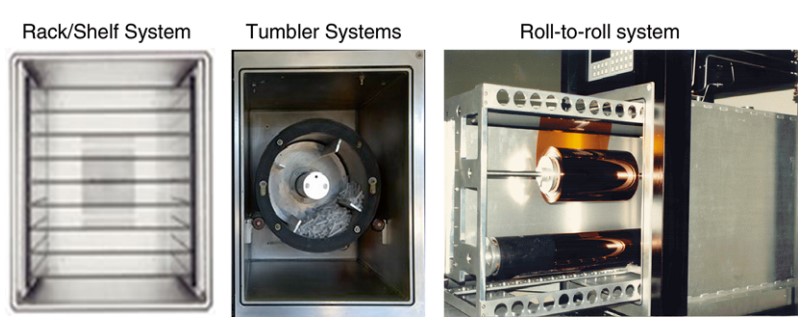 Figure 1. Plasma system chamber configurations.
These equipment and process advances have contributed to commercially scalable and reproducible stable surface modifications. Gas plasma technologies are increasingly innovating surface engineering through automation and process efficiencies.
Charged particles and disassociated chemical bonds make up gas plasma. These particles may become ionized with heat or a strong electromagnetic field. Sufficient energy must be applied to a system in order to produce plasma. The plasma may be generated under atmospheric pressure or under partial vacuum pressure. A few distinct advantages of an atmospheric plasma system are in-line processing, rapid treatment speeds, and compact line-of-sight automation. A system for producing plasma under partial vacuum pressure typically involves batch treatment within a vessel; however continuous treatments of transported profiles do exist. The distinct advantages of partial vacuum plasma are 3D surface treatments, environmental control, chemical versatility, and the modification of porous structure. Notably, a partial vacuum process also enables lower temperature plasma. Such plasma systems are able to produce tailored surface chemistry onto thermally sensitive materials. Additionally these methods provide atomic-level cleaning, stable surface wetting and deposition of thin organic films.
Plasma treatment technologies modify surfaces without affecting the bulk material properties ( see Note 1). These methods provide inexpensive and controlled alternatives to custom material formulation and to traditional wet chemistry processing. In many cases low cost or commodity lab ware surfaces may be reengineered into high-performance substrates for cell culture, selective filtration, and discovery.
Partial pressure plasma reactors offer the user a versatile tool for creating tailored working surfaces. Tools for design include the equipment, chemistry and control of the variables described herein. Since practiced in a controlled reduced pressure environment, once a process has been validated, and materials specified, the operator can expect reproducibility. While plasma processing has grown into a distinct field of practice, the user can evaluate and prepare research and production tools simply by evaluation of and consideration of the variables discussed in this chapter.
Bulk properties often make up the initial criteria for material selection (see Note 1). Examples include optical transmission, material processability, cost, biocompatibility, and gas or vapor transmission. When the surface does not meet performance requirements such as stable wetting or surface polarity for compatibility with biological fluids and reagents, gas plasma is a manufacturing solution for molecular reengineering of the surface to enable hydrophilicity, hydrophobicity, and linkers for covalent bonding for example. These linkers may be designed to be closely coupled or spaced, enabling tailoring for maximum attachment of the molecule without steric hindrance.
There are many components considered common to systems which produce plasma under partial vacuum pressure. The equipment used for the processes described in this chapter was manufactured by Plasma Science, Plasma Technology Systems and Plasmatreat. Equipment configurations are selected upon the throughput requirements and product form factor. The following is a list of common components in equipment used by the authors.
Reaction Chamber: The portion of the system which generates the plasma. The chamber volume is sealed from atmosphere ( see Note 8 ). Parts are loading into the chamber on trays or with a custom fixture ( see Note 5). The trays may be electrically isolated, powered, or ground.
Process Controller: The Process Controller is the module that monitors all the sensors and transducers, stores the program into nonvolatile memory, displays pertinent data, and assures program execution.
HMI: The Plasma HMI (Human Machine Interface) is the primary display and peripheral hardware for monitoring the Process Controller and for initiating instruction. It allows the user to recall programmed recipes, to commence a process in manual or automatic modes, to edit set points, to enable manually activated devices, to view trends, to view alarms, and to export data for analysis to comply with FDA Part 21CFR 11 electronic record requirements.
RF Generator: A module whose function is to generate high frequency radio frequency (RF) power. Equipment used by the authors is configured with 13.56 MHz, solid state generators. The RF power from the generator provides the energy required to create plasma.
Matching Network: A module whose function is to assure efficient transfer of RF energy from the RF Generator into the Reaction Chamber electrodes. With proper matching, plasma is reproducibly maintained regardless of the chamber load and/or changes in pressure (see Note 3.)
Electrodes: The electrodes, which are located in the reaction chamber, conduct the energy from the generator. It is this energy that creates the plasma. Electrode configurations vary, with capacitively coupled (two electrodes separated by a small distance) as the primary arrangement for the equipment used by the authors.
Gas/Vapor Flow Controllers: Mass Flow Controllers (MFC) or Liquid Flow Controllers (LFC) is a feedback control device designed to regulate gas or vapor flow rates to a desired set point. The MFC/LFC reproduces flow rate independent of temperature and inlet or outlet pressure ( see Note 3.) Pressure Transducer: The transducer, also known as a capacitance manometer, is a sensor for measuring chamber pressure under partial vacuum. The output signal is read by the plasma Process Controller ( see Note 3.)
Vacuum pump: The pump is plumbed to the Reaction Chamber by vacuum conduit. The function of the Vacuum Pump is to reduce the chamber to operating pressure, and to expel used process gases. Pump selection is important for achieving adequate pumping capacity. Outgassing such that occurs with polymers and materials with high moisture uptake (where the moisture is not favorable for processing) requires high pumping capacity. Outgassed species are removed by the pump so that they do not become products in the plasma. Pump configurations vary and should be selected to ensure compatibility with the process chemistries ( see Notes 7 and 8.)
Vacuum Valve: A pneumatically actuated solenoid valve is used to isolate the chamber from the Vacuum Pump. The valve is opened to pump down to base pressure, purge, and closed to vent the Reaction Chamber to atmosphere.
Vent: As the process nears completion, the Reaction Chamber must be returned to atmospheric pressure in order to load and/or unload parts. This process is referred to as venting and begins with the closing of the Vacuum Valve. The Vent Routine begins with an optional slow vent function. The slow vent allows a neutral gas or air to leak into the system for a programmed length of time. After that point the main Vent Valve opens and room air enters the Reaction Chamber at maximum speed until the system has returned to atmospheric pressure.
View Port: The view port is a glass portal, with UV and RF filters, that enables viewing and monitoring of the plasma color and parts inside the Reaction Chamber ( see Note 6). There are also view ports on the pumping station for observing and monitoring fluid levels.
Base Pressure: Base pressure refers to a set point whose function is to act as a pressure switch for a programmed process step. Equipment safety interlocks should be designed to ensure that the gases and the energy cannot be activated manually or automatically unless the system has reached the Base Pressure. A base pressure is selected that is lower that the processing pressure to ensure adequate evaluation of the chamber of out gassed species and moisture. Depending on the material, extended “pump downs” may be desirable to extend the out gassing step ( see Note 4.)
Step: A step is defined as a discreet duration of time when the plasma process gases flow with or without energy. A series of steps makes up the complete process. A process may be comprised of multiple steps, allowing an operator to execute a recipe with different steps with a single process. For example, a part may be cleaned in Step A with one chemistry and activated in Step B with another chemistry, without removing the samples or venting to atmosphere.
Torr: A unit of pressure approximately equivalent to the pressure required to raise mercury up a tube one millimeter. There are 760 Torr in one atmosphere.
The relationship between different vacuum units is given here:
1,000 Torr
=0.00131 ATM (atmospheres)
=0.9999 mm Hg (millimeters of mercury)
=0.535 in. of H2O
=0.0193 psi
760 Torr = 1 ATM
Plasma is referred to as the fourth state of matter. It is comprised of electrons, ions, and other excited meta-stables ( see Fig. 3). The color of the plasma is distinct for every gas ( see Note 6). The signature wavelengths of light are produced when excited electrons return back into a lower energy state. The spectra of light emissions will extend past the visible region into the UV and far UV. UV emissions can contribute to the surface modifications. This requires that chamber view ports are equipped with a UV filter. Substrates placed within the glow region are referred to as being within the “Primary” plasma. “Secondary” plasma refers to dark space regions outside the glow. The terms “downstream” or “remote” also refer to secondary plasma. The secondary plasma contains lower concentrations of charged species. The authors primarily practice surface modification within the primary plasma where there is a greater reactivity.
During the plasma process, energetic particles commence to cleave or form complexes with chemical bonds near the substrate surface. Unstable bonds and free radicals are produced on the substrate. They eventually recombine with molecular fragments or other charged moieties moving through the plasma. The dominant reaction on most polymer substrates occurs through hydrogen substitution along a polymer’s aliphatic linkages. In the presence of oxygen, many hydrogen bonds are abstracted from the carbon backbone and then substituted by oxygen to form polar compounds. Different chemical functionalities are produced by regulating the concentration of elements present within the plasma. Under these conditions the substrate material will form new covalent bonds and thereby the surface chemistry becomes reengineered. The chemical reactions generated by the plasma are generally confined to the substrate surface. The bulk properties are rarely impacted.
RF and microwaves sources efficiently generate plasma under partial vacuum pressure. Low gas pressures increase the mean free path allowing particles to accelerate with greater ease within the electromagnetic field. Collisions become less frequent translating to less heat generation from friction. Eventually particles do collide. There are both elastic and inelastic collisions. In an elastic collision the particle rebounds without losing or giving up its energy. It then continues to travel until its next collision. In an inelastic collision the particle gives up its energy and returns to its ground state. Within the primary plasma there is a continuous field for particles to accelerate within. This enables treatment of porous and microporous media such as filters, membranes, sintered parts, non-wovens, and foams. Reactive plasma species sustain enough energy to modify interstitial surfaces.
There exists a misconception that plasma processing provides a standard or universal result. The outcome of the plasma process will actually vary as a function of substrate material, chemistry selection, and many other factors related to the plasma process and equipment design. The following section identifies a methodology for designing, testing, and scaling a plasma process which produces a set of objectives.
The primary variables to study in a plasma process development program are: chemistry, gas and/or liquid vapor flow (resulting in specific pressures), plasma power, and process time. Keep in mind that polymers are complex and may express different affinities or susceptibilities to various plasma gases or plasma compositions (see Note 1). Therefore an implementation that worked with one material system will not inherently work with all material systems. A basic methodology for determining a successful plasma condition would be to screen plasma chemistry and then to optimize around a desirable surface response. A review of considerations in designing a process follows.
Once a study has been outlined, the steps to partial vacuum processing are simply listed as follows:
Designing a validation method is as important as designing the plasma process. It is critical to validate the surface with a test that is representative and correlates to your application. A few popular techniques for quantifying and qualifying the effects of a plasma surface modification are described herein.
When designing a plasma process, take into consideration the equipment operation, base material, design of the process and subsequent environment. Once a plasma chemistry has been targeted, if you observe irregular results (uneven treatment), con- sider further examination of the surface cleaning and preparation step as well as placement of the part(s) in the chamber. With some processes, rotating the part may be required to ensure even treatment.
Reference
Loading ......
