
Inquiry Basket
 Loading ......
Digoxigenin (DIG) is a steroidal compound derived from the digitalis plant that combines with sugar to form glycosides such as digoxin. DIG is widely used in molecular biology and biotechnology as a marker for the detection and quantification of nucleic acids and proteins in a variety of experiments. Digoxin, a glycosylated steroid drug, was first revealed by researchers to be useful in the treatment of edema caused by circulatory failure, and is now an important medication in the health care system, critical in the treatment of various heart conditions such as atrial fibrillation, atrial flutter, and heart failure. As a treatment for heart disease, Digoxin's main action is to increase the contractility of the heart muscle and reduce the heart rate, thus improving heart function and blood circulation.
Cardenolide digoxigenin is extracted directly from Digitalis orientalisi and Digitalis lanata L. Scrophulariaceae, and can also be obtained by chemical or enzymatic removal of four sugar residues from desacetylanatoside C isolated from Digitalis purpurea. In molecular cloning, DIG is used as a ligand that can be bound to DNA and RNA probes and detected after hybridization with an anti-DIG-antibody enzyme coupling.
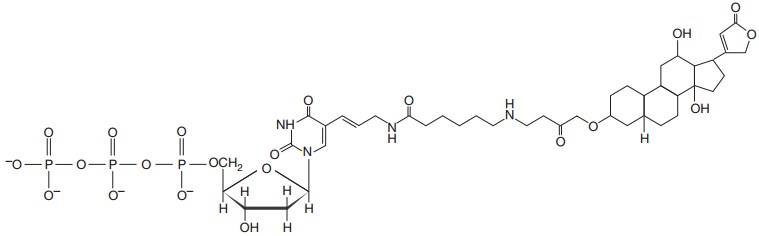 Figure 1. Structure of digoxigenin-11-dUTP (DIG-11-dUTP)
(Source: Green MR, et al. 2022)
Digoxin is a steroidal compound with the physical appearance of a white crystalline powder that is slightly soluble in water. Its molecular structure contains several hydroxyl groups and double bonds, making it highly hydrophilic and antioxidant.
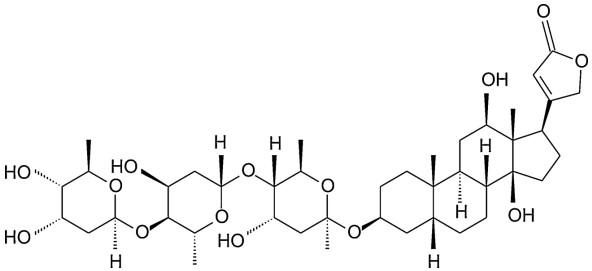 Figure 2. Chemical structure of digoxin
(Source: Patocka J, et al. 2020)
Digoxin acts directly on myocardial and vascular smooth muscle, indirectly increasing myocardial contractility, slowing heart rate, and decreasing AV node conduction. Its mechanism of action is through inhibition of Na⁺/K⁺ ATPase on the cardiomyocyte membrane, leading to an increase in intracellular sodium ion concentration. This process inhibits the calcium exchange mechanism, resulting in an increase in intracellular calcium ion concentration, which enhances myocardial contractility (positive inotropic effect). Digoxin also improves blood circulation to the kidneys, increases urine formation, and makes it easier to excrete excess water, thus reducing swelling of the lower extremities, breathing difficulties, and improving physical performance.
Digoxin also reduces heart rate by enhancing vagal tone. This effect is achieved by inhibiting Na⁺/K⁺ ATPase in vagal afferent fibers, with the resultant slowing of sinus node autoregulation and atrioventricular node conduction velocities, which is effective in controlling tachyarrhythmias such as atrial fibrillation and atrial flutter. This electrophysiologic effect makes digoxin particularly important in the treatment of patients with atrial fibrillation accompanied by a rapid ventricular response. The effects of digoxin on the neuroendocrine system should not be overlooked. It increases the sensitivity of carotid sinus pressure receptors, inhibits sympathetic activity, and decreases the activity of the renin-angiotensin-aldosterone system. These effects help to improve symptoms in patients with heart failure, especially in long-term therapy.
Digoxin is usually administered orally with a bioavailability of approximately 60% to 80% and is rapidly absorbed in the body after oral administration. Approximately 25% of digoxin is bound to serum albumin. Because digoxin is extensively bound to muscle tissue, it has a large volume of distribution. Digoxin penetrates the cerebrospinal fluid and crosses the placental barrier into breast milk. Digoxin has an onset of action of approximately 2 hours after oral administration, peaks approximately 6 hours after administration, and is excreted primarily through the kidneys; therefore, it should be used with caution in patients with renal insufficiency.
Digoxin has a long history as a classic heart medication for the treatment of atrial fibrillation and heart failure and is effective in improving patient symptoms. In patients with chronic heart failure, digoxin improves left ventricular ejection fraction and improves symptoms. Studies have shown that digoxin reduces hospitalization rates, but the effect on mortality is inconclusive. For arrhythmias, digoxin is commonly used to control tachycardia and atrial flutter. It reduces the ventricular rate by slowing AV node conduction, thereby improving the patient's clinical condition.
Digoxin interacts with a variety of drugs. For example, when used in combination with certain diuretics it may lead to hypokalemia, which may increase the toxicity of digoxin. Concomitant use of digoxin with beta-blockers may result in bradycardia. In addition, certain antibiotics (e.g., erythromycin, tetracycline) may increase digoxin blood levels. Therefore, when using digoxin, the patient's medication history should be carefully evaluated.
In addition, digoxin has some toxicity. Clinical manifestations of poisoning include nausea, vomiting, diarrhea, blurred vision, etc. In severe cases, it may lead to fatal cardiac arrhythmia, and the elderly and people with renal insufficiency are more prone to poisoning. One investigator found that in patients with atrial fibrillation taking digoxin, the risk of death was associated with serum digoxin concentration, and the risk of death was highest in patients with atrial fibrillation who had a digoxin concentration ≥1.2 ng/mL. Serum digoxin concentrations of 0.5-0.9 ng/mL reduced mortality and hospitalization rates in all heart failure patients. Because digoxin has a narrow therapeutic window, regular clinical monitoring of its blood levels is required. Toxic reactions occur in approximately 1% of patients with congestive heart failure (CHF) treated with digoxin. In addition, 3% of adverse drug reactions in patients over 85 years of age were due to digoxin toxicity. In general, ventricular arrhythmias are more common in the elderly, while supraventricular arrhythmias are more common in children. Increased intracellular calcium due to Na-K transporter toxicity and AV node block due to increased vagal tone are the main causes of digoxin toxicity. The former leads to increased autoregulation and dystonia and the latter to decreased dystonia.
The unique chemical properties of DIG make it a highly efficient immunolabel, which is widely used in various experiments, such as in situ hybridization (ISH), enzyme-linked immunosorbent assay (ELISA), etc. The use of DIG not only improves the sensitivity of the experiments, but also reduces the dependence on radioisotopes. In molecular cloning, DIG is used as a ligand that can be bound to DNA and RNA probes and detected after hybridization with anti-DIG-antibody enzyme couplers. Thus, digoxigenin-labeled probes can be used for Southern, Northern and dot blot hybridization. DIG is commonly used in ISH technology to detect specific RNA or DNA sequences in cells or tissues. In this process, DIG-labeled probes are visualized by anti-DIG antibodies after binding to the target sequence. This method is highly sensitive and specific, enabling analysis at the single-cell level.
Table 1. Methods of labeling nucleic acids with DIG
| Method of labeling | Enzyme | Number of digoxigenin molecules incorporated |
| Random priming | Klenow fragment | 1 per 25-36 nt |
| Nick translation | E. coli DNA polymerase Ⅰ | 1 per 25-36 nt |
| Tailing | Terminal transferase | 1 per 12 nt |
| Amplification by PCR | Taq and other thermostable polymerases | 1 per 25 nt |
| Transcription | T3, T7, and SP6 RNA polymerases | 1 per 25-36 nt |
| cDNA synthesis | Reverse transcriptase | 1 per 25-36 nt |
(Source: Green MR, et al. 2022)
In ELISA, DIG can be used as a marker that binds to an antibody and is used to detect the target protein in the sample. Quantitative analysis of target protein concentration is achieved by generating measurable signals through enzymatic reactions. This method is widely used in clinical diagnosis and research. PCR-FISH combines PCR amplification and in situ hybridization techniques to accurately localize specific genes within cells using DIG-labeled probes. High-affinity DIG-specific antibodies were raised after immunizing sheep with the DIG-coated protein edestin or bovine serum albumin. The most versatile immunological reagent for the detection of DIG-labeled probes is a Fab (fragment antigen-binding) fragment of anti-DIG immunoglobulin coupled to alkaline phosphatase.
DIG as a marker is characterized by non-radioactivity, high sensitivity, and broad applicability, but the use of DIG requires attention to the issue of specificity, and in some cases, DIG may bind to non-target molecules, resulting in false-positive results. The optimal concentration and reaction time of DIG-labeled probes under different experimental conditions need to be optimized to ensure reliable results. In addition, DIG-related reagents are relatively expensive, which may limit their use in some laboratories.
References
| Target | Cat. No. | Product Name | Size | Species Reactivity | Application | Detection Sample | |
| Digoxigenin | DEIA8706 | DIG-Detection PCR ELISA Kit | 5 pack | N/A | Semi-quantitative | DIG-labeled products | Inquiry |
| DIG | DEIACL20 | CDSimple™ DIG Chemiluminescent ELISA Kit | 96T, 192T | Quantitative | Serum | Inquiry |
| Target | Cat. No. | Product Name | Expression System | Tag/Conjugate | Application | |
| Digoxigenin | DAG1091 | Digoxigenin [HRP] | N/A | HRP | N/A | Inquiry |
| DIG | DAGA-257B | Digoxigenin [BSA] | N/A | BSA | LFIA | Inquiry |
| DAGA-257K | Digoxigenin [KLH] | N/A | KLH | Immunogen | Inquiry |
| Target | Cat. No. | Product Name | Host | Isotype | Application | |
| Digoxigenin | DPAB28578 | Magic™ Anti-Digoxigenin polyclonal antibody [HRP] | Chicken | IgY | ELISA | Inquiry |
| DMABT-Z60500 | Anti-Digoxigenin monoclonal antibody, clone JRQ.34J0 [HRP] | Mouse | IgG1, κ | WB, ELISA, IHC, ISH, SB | Inquiry | |
| DMABT-Z60477 | Anti-Digoxigenin monoclonal antibody, clone 33J0 | Mouse | IgG1, κ | WB, ELISA, IHC-P, IHC-Fr, SB | Inquiry | |
| CABT-L1267 | Rabbit Anti-Digoxigenin monoclonal antibody, clone 0I38M20 | Rabbit | IgG | WB | Inquiry | |
| DPAB27748 | Anti-Digoxigenin polyclonal antibody | Sheep | IA | Inquiry | ||
| DPATB-H82431 | Anti-Digoxigenin polyclonal antibody | Goat | IgG | IHC-P, WB, ELISA | Inquiry | |
| DPABY-846 | Anti-Digoxigenin polyclonal antibody | Sheep | ELISA, Pr* | Inquiry | ||
| DIG | DPAB-DC4174 | Anti-Digoxigenin polyclonal antibody | Sheep | ELISA | Inquiry | |
| DPABH-29432 | Anti-Digoxigenin polyclonal antibody | Sheep | IgG | ELISA, cELISA | Inquiry |
| Target | Cat. No. | Product Name | Size | Species Reactivity | Application | Detection Sample | |
| Digoxin | DEIA1744 | Human Digoxin ELISA Kit | 96T | Human | Quantitative | Serum, plasma | Inquiry |
| Target | Cat. No. | Product Name | Expression System | Tag/Conjugate | Application | |
| Digoxin | DAG3043 | Digoxin [BSA] | N/A | BSA | N/A | Inquiry |
| DAG3044 | Digoxin [HRP] | N/A | HRP | N/A | Inquiry | |
| DAG172 | Digoxin [FITC] | N/A | FITC | N/A | Inquiry | |
| DAG5661 | Digoxin [KLH] | N/A | KLH | ELISA | Inquiry | |
| DAG-WT2701 | Digoxin control | N/A | Unconjugated | Immunoassays | Inquiry | |
| DAG3042 | Digoxin [AP] | N/A | AP | N/A | Inquiry |
| Target | Cat. No. | Product Name | Host | Isotype | Application | |
| Digoxin | DMABT-Z60491 | Anti-Digoxin monoclonal antibody, clone FK-34 [FITC] | Mouse | IgG1 | Dot | Inquiry |
| DMABT-Z60352 | Anti-Digoxin monoclonal antibody, clone 37R3E20 | Mouse | IgG1 | ELISA | Inquiry | |
| DPATB-H83405 | Anti-Digoxin polyclonal antibody | Rabbit | IgG | ELISA, RIA | Inquiry | |
| DPATB-H82992 | Magic™ Anti-Digoxin polyclonal antibody | Chicken | IgY | ELISA | Inquiry | |
| CABT-L2334 | Mouse Anti Digoxin monoclonal antibody, clone 214 | Mouse | IgG1 | ELISA | Inquiry | |
| DPBT-68263SD | Anti-Digoxin polyclonal antibody | Sheep | IgG | RIA | Inquiry | |
| CABT-ZB155 | Sheep Anti-Digoxin polyclonal antibody | Sheep | IgG | ELISA | Inquiry | |
| CABT-CS493 | Duck Anti-Digoxin Polyclonal Antibody | Duck | IgY (∆Fc) | ELISA | Inquiry |
Loading ......
