
Inquiry Basket
 Loading ......
Food poisoning refers to non-infectious acute and sub-acute illnesses that occur after ingestion of food containing biological or chemical toxic and harmful substances, or after ingestion of toxic and harmful substances as food. According to the types of causative agents that can cause food poisoning, food poisoning can be classified into seven types, including bacterial, viral, parasitic, chemical, fungal, botanical and animal food poisoning.
Clostridium perfringens (C. perfringens), first isolated from cadavers, is a Gram-positive anaerobic bacillus with a distinct capsule, no flagellum, and is non-motile, but readily forms spores. This bacterium is found in natural environments such as soil and water sources, as well as in the intestines and faeces of humans and animals, where it is part of the normal intestinal flora and is generally not pathogenic. When the body's immunity is low, after surgery or under the influence of certain factors, the bacterium overpopulates and an imbalance in the intestinal flora occurs, leading to intestinal dysfunction and disease. Food poisoning caused by C. perfringens is most common in summer and autumn and is mainly an oral infection. Poisoned foods are mainly meat foods such as livestock, poultry and fish, and plant protein foods. Poisoning is manifested by severe abdominal cramps, abdominal distension, watery diarrhea and blood in the stool, usually without fever, nausea or vomiting. The vast majority of them can recover spontaneously after 24-48h, except for the old, the young and the weak, the general prognosis is good, and seldom cause fatal diseases.
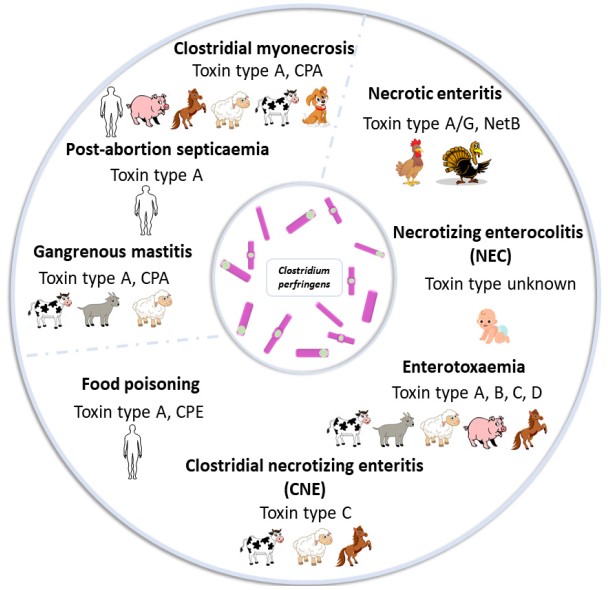 Figure 1. Overview of C. perfringens-induced diseases
(Source: Fu Y, et al. 2022)
C. Perfringens is highly resistant to heat and can survive for 1-4h at 114°C, which is the main reason for its widespread presence and strong transmission. When cultured in the laboratory, the bacterium has two main characteristics, one is that the colonies form a double-layered haemolytic ring on the blood plate, and the other is that the casein coagulates in milk medium due to the decomposition of lactose to produce acid, and at the same time produces a large amount of gas, which flushes the coagulated casein into a honeycomb shape. C. Perfringens secretes nearly 20 toxins, and the bacteria can be classified into seven serotypes on the basis of the main toxins they produce. Each type of C. Perfringens has a different host and a different main pathogenic toxin.
A variety of exotoxins secreted by C. Perfringens are major virulence factors. Among them, α, β and ε toxins and enterotoxins are the main lethal toxins, which act individually or synergistically to involve the gastrointestinal tract, soft tissues and a variety of other organs, and can cause neuronal dysfunction and even lead to the death of the patient.
Table 1. Main toxins produced by C. perfringens and their locations
| Toxins | Toxin Types | Encoded Genes | Gene Location | Protein Size, kDa |
| Alpha (CPA or PLC) | A, B, C, D, E, F, G | cpa or plc | Chromosome | 42.5 |
| Beta (CPB) | B, C | cpb | Plasmid | 35 |
| Epsilon (ETX) | B, D | etx | Plasmid | 34 |
| Iota (ITX) | E | iab and iap | Plasmid | Ia: 47.5, Ib: 71.5 |
| Enterotoxin (CPE) | C, D, E, F | cpe | Chromosome or Plasmid | 35.5 |
| Enteritis B-like toxin (NetB) | G | netB | Plasmid | 28 |
(Source: Fu Y, et al. 2022)
C. perfringens alpha toxin (CPA), one of the major virulence factors and the first bacterial protein found to have both enzymatic activity and toxin properties, plays an important role in the pathogenicity of C. perfringens. CPA consists of two functional regions, the α-helix-dominant N-terminal domain and the β-fold-dominant C-terminal domain, and possesses the enzymatic activities of both phospholipase C and sphingomyelinase, which hydrolyse phosphatidylcholine and sphingomyelin on the host cell membrane. The N-terminal and C-terminal alone have no haemolytic or lethal activity and are toxins only when they are synergistic. The histidine residue at position 68 of CPA is the ion-binding site, and when this site is mutated to a glycine residue, it results in a complete loss of the haemolytic activity, phospholipase C activity and sphingomyelinase activity of CPA. In addition, the amino acid at position 56 of CPA is closely related to the enzymatic catalysis of the toxin, and the amino acid at position 130 is an important site for maintaining the structure of CPA.
CPA has a variety of toxic effects including cytotoxicity, haemolytic activity, promotion of platelet aggregation and increased vascular permeability. In the presence of calcium ions CPA binds to the host cell membrane and causes hydrolysis of phospholipids on the membrane, leading to cell lysis and necrosis. It can also activate endogenous phospholipases and sphingomyelinases through interaction with GTP-binding proteins of the Gi type, destroying the structural integrity of cell membranes through a series of cascade reactions and signaling pathways, causing cell lysis, and contributing to the elevation of interleukin 8 (IL-8), reactive oxygen species, and calcium ions, thus displaying the toxin's cytotoxicity, lethality, and haemolytic activities, among others. When CPA acts on epithelial or endothelial cells, it activates protein kinase C (PKC) in the diacylglycerol (DG) pathway, contributing to the production of platelet-activating factor (PAF) and prostacyclin. PAF contributes to platelet accumulation, leading to an inflammatory response at the site of infection, increasing vascular permeability and promoting vasoconstriction, which further hypoxifies the infected tissue and promotes bacterial growth. In addition, CPA action is not limited to membrane disruption, but also specifically binds ganglioside-like glycans and subsequently promotes their aggregation and tyrosine kinase A activation, triggering the release of IL-8, which then causes acute cellular inflammation through the recruitment and activation of neutrophils, ultimately leading to cell death.
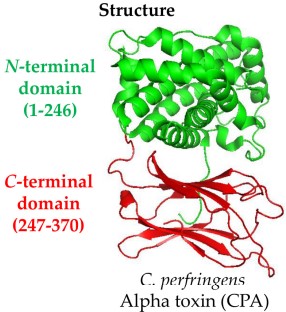 Figure 2. Representation of the Clostridium perfringens Alpha toxin structure
(Source: Ferreira MR, et al. 2016)
C. perfringens epsilon toxin (ETX) is a pore-forming toxin secreted by Clostridium perfringens and is the most virulent Clostridium perfringens toxin found, second only to Clostridium botulinum and Clostridium tetani neurotoxins. ETX consists of 3 basic domains. Initially in the precursor form (proETX), it can be converted to the fully active form by protease treatment. Subsequent activation of the toxin removes the carboxy-terminal peptide (CTP), which forms an oligomeric complex re-forming a pore in the target cell membrane, causing release of intracellular contents and unregulated ionic transmembrane movement, ultimately leading to cell death and organ damage. The C-terminus of ETX is responsible for completing the activation of the toxin and is essential for its heptamerisation within the membrane. ETX is sensitive to a number of epithelial and endothelial cells that share the common property that cell membranes contain myelin and lymphocyte (MAL) proteins, which are required for ETX activation.
ETX exhibits extreme lethal toxicity in animals and is thought to be an important cause of rapidly fatal enteritis and enterotoxaemia in animals. In the body, ETX can be absorbed by the intestines, but not by the stomach, and cause a toxic reaction locally, which later triggers lesions in multiple organs of the body. When the toxin accumulates to a certain level, it will trigger multi-organ oedema and congestion, which will lead to the death of the animal. ETX can cause damage to the renal system, but the pathological mechanisms involved are unclear. ETX causes lung damage by damaging the microvascular system and endothelial cells. Some studies have found that ETX can act on the purinergic receptors P2X7 and P2Y13 on the surface of erythrocytes, leading to haemolysis of human erythrocytes. However, this haemolysis is only seen in human red blood cells. In addition, ETX has effects on the nervous system, causing brain damage and neurological disorders.
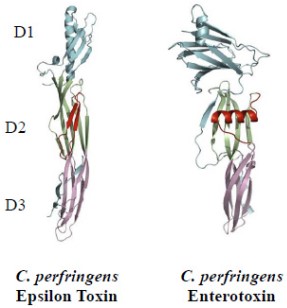 Figure 3. Crystal structures of C. perfringens epsilon toxin, C. perfringens enterotoxin
(Source: Stiles BG, et al. 2013)
C. perfringens enterotoxin (CPE) is the major toxin causing food poisoning and non-food-borne diarrhoea in humans with F-type C. perfringens, and expression of the toxin occurs only during spore formation. CPE consists of a single protein containing 319 amino acids, with a non-toxic receptor-binding domain at the C-terminus and a cytotoxic domain at the N-terminus. Tight junction proteins are cellular receptors for CPE and are important for maintaining the structure and function of the tight junctions formed by epithelial and endothelial cells. Initial CPE binding to tight junction proteins leads to the formation of small complexes, and the interaction of six small complexes can lead to CPE oligomerisation and pore formation at the plasma membrane, culminating in the formation of hexameric complex 1 (CH-1). The complex assembles a β-hairpin ring from CPE into a β-barrel structure, which is inserted into the membrane to form an active pore that enhances ionic inward flow, leading to cell death.
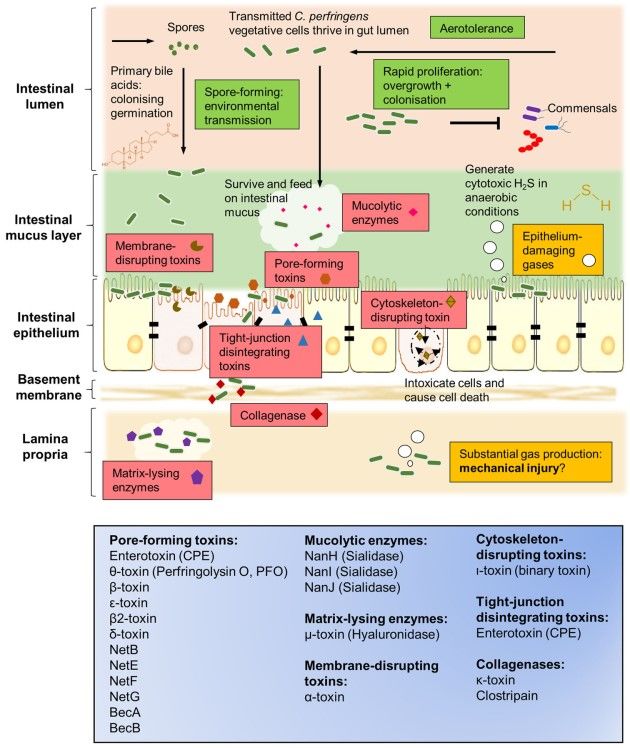 Figure 4. Graphical representation of disease-associated virulence factors of C. perfringens associated with enteric infections.
(Source: Kiu R, et al. 2018)
Intestinal toxaemia, necrotizing enterocolitis, gas gangrene, systemic diseases and even sudden death caused by C. perfringens in humans and many species of animals are difficult to prevent and treat, and thus are of great concern worldwide. The hazards caused by C. perfringens in livestock and poultry production are also of concern, as sick animals often develop rapidly in a short period of time and go into shock or even die. The prevalence of necrotising enteritis caused by C. perfringens has increased significantly since the ban on the addition of antimicrobials to feed, with consequent serious economic losses.
Currently, the mainstay of treatment for C. perfringens infections is still timely debridement and heavy use of antibiotics. Severe gas gangrene requires urgent surgical management, including prompt and repeated wound irrigation and removal of necrotic tissue. However, due to the rapid onset, short duration and high mortality rate of the disease caused by this bacterium, the clinical use of drugs has a certain lag, and it is difficult to achieve a better therapeutic effect. Clinical practice has found the use of antibodies to be efficacious in the treatment of C. perfringens infections, targeting secreted exotoxins and synergising with antibiotics to inhibit bacterial multiplication and produce a more effective protective effect. In addition to traditional monoclonal antibody drugs, with the development of antibody engineering technology and in-depth research on antibody drugs, a variety of new, non-natural antibody structural modes have been derived, including antibody-fusion proteins, bispecific antibodies and antibody-coupled drugs.
Vaccines are highly effective tools for preventing many diseases caused by C. perfringens. Traditional C. perfringens toxoid vaccines are prepared by harvesting toxins secreted by strong strains inactivated with high concentrations of formaldehyde, which is associated with unstable efficacy, high risk and adverse reactions. Heterologous expression of genetically engineered recombinant toxin protein vaccines has emerged as the most promising alternative to provide solutions to the problems of traditional toxoid vaccines. Recombinant toxins that have been mutated are virtually non-toxic and do not require formaldehyde attenuation, thus making the production process simpler and safer. In addition, the exotoxins of C. perfringens are ideally suited for the use of structural vaccinology to screen immunoprotective epitope peptides of different toxins, and even to construct recombinant proteins from antigenic epitope peptides of multiple toxins as immunogens for the preparation of effective, safe and broad-spectrum vaccines.
References
| Target | Cat. No. | Product Name | Size | Species Reactivity | Application | Detection Sample | |
| C. Perfringens | DEIA5434 | Clostridium perfringens and Theta, Beta and Epsilon toxins ELISA Kit | 2×96T | Human | Qualitative | Biological samples | Inquiry |
| DEIA-JY2138 | Clostridium Perfringens Alpha Toxin ELISA Kit | 192T | Universal | Quantitative | Serum and plasma | Inquiry | |
| NetB | DEIASL175 | Clostridium Perfringens NetB ELISA Kit | 96T | Quantitative | Serum, plasma | Inquiry | |
| DEIASL178 | Human Clostridium Perfringens NetB ELISA Kit | 96T | Quantitative | Serum, plasma, cell culture supernates and other biological fluids | Inquiry | ||
| CPE | DEIA05710 | Clostridium perfringens Enterotoxin ELISA Kit | 96T | Human | Qualitative | Stool | Inquiry |
| Target | Cat. No. | Product Name | Expression System | Tag/Conjugate | Application | |
| C. perfringens | DAG-WT2753 | Recombinant C. perfringens beta2 (rCPB2) toxin [GST] | E. coli | GST | ELISA | Inquiry |
| DAG-WT1200 | Recombinant C. perfringens alpha toxin (Phospholipase C) [His] | E. coli | His | ELISA, WB | Inquiry | |
| C. perfringens Alpha-N-Acetylgalactosaminidase | DAG2622 | Recombinant C. perfringens Α-N-acetylgalactosaminidase (a.a. 2-619) [His] | E. coli | His | N/A | Inquiry |
| C. Perfringens NA | DAG2612 | Recombinant C. perfringens Neuraminidase (a.a. 2-382) [His] | E. coli | His | N/A | Inquiry |
| DAGC299 | Native C. perfringens Neuraminidase | C. Perfringens | Unconjugated | Inquiry | ||
| DAG-H10037 | C. perfringens HA [His] | E. coli | His | N/A | Inquiry |
Loading ......
