
Inquiry Basket
 Loading ......
Veterinarians common use kanamycin to treat various bacterial infections. It proves to be an effective treatment because it works against both Gram-negative and Gram-positive bacterial strains. This essay examines kanamycin applications in veterinary medicine alongside its preventive uses and discusses safe administration protocols as well as antibiotic stewardship best practices.
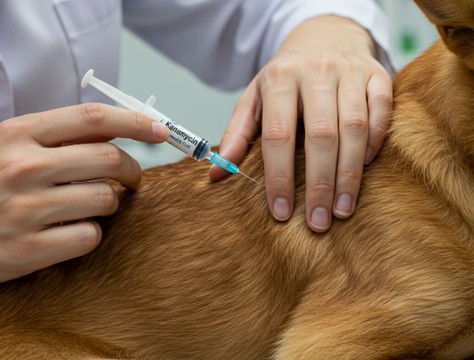
What is Kanamycin?
Kanamycin functions as a broad-spectrum antibiotic which classifies under the aminoglycoside group. Researchers first isolated kanamycin from Streptomyces kanamyceticus which exists in soil environments. Kanamycin functions by stopping bacterial protein production which causes the bacteria to die. Veterinary medical practice employs this treatment for infections across various animal groups such as cattle, poultry, swine and pet animals.
Mechanism of Action
Studies found that 30S subunit of bacterial ribosomes can bound by the antibiotic kanamycin which will stop protein synthesis. The process disruptes of their protein synthesis mechanism resulting in defective protein structures.
Veterinary professionals commonly administer kanamycin to treat infections in different animal species. Some of the most common conditions include:
Kanamycin treatment is administered to various animal categories including cattle and poultry as well as swine horses and pets like dogs and cats by veterinarians. This medicine be used for serious infections which have shown no improvement with other antibiotic treatments. This specific drug works best for treating multi-drug-resistant bacterial infections.
Since dairy cows frequently get mastitis veterinarians commonly prescribe kanamycin as a treatment. Colibacillosis which leads to most poultry deaths in commercial farms can be treated and prevented with kanamycin.
Veterinarians should adapt the kanamycin administration method and dosage based on the animal species and infection severity together with the kanamycin formulation type. Veterinarians can deliver kanamycin through multiple administration routes including injectable forms oral dosages and topical applications. To treat systemic infections veterinarians must administer kanamycin through injections, but gastrointestinal problems require oral kanamycin administration.
Prophylactic Use
Veterinary medicine frequently uses kanamycin prophylactically to protect animals in crowded farms and during transportation or surgical procedures. Kanamycin reduces secondary bacterial infection risks by preventing infections in animals that experience stress from surgery or transport.
Birds receive kanamycin through their water or feed systems to protect against bacterial infections especially in young chicks who are vulnerable to diseases at the start of their lives. During post-surgical care for swine animals healthcare providers administer kanamycin to prevent infections that occur after surgery.
Role in Disease Prevention Programs
Veterinary medicine disease prevention programs rely on kanamycin as a critical component for managing health in large animal groups. The close housing of animals on intensive farms leads to fast disease transmission among them. Veterinary disease prevention programs use antibiotics such as kanamycin to control infection spread and stop outbreaks.
Dairy farms apply kanamycin in mastitis prevention programs yet poultry farming utilizes the antibiotic to decrease colibacillosis cases. The preventative ability of this treatment against infections before they reach next stages helps farmers keep their herds and flocks healthy which enhances animal welfare and ensures food safety.
Concerns About Antibiotic Resistance
Veterinary medicine faces a critical issue because antibiotics usage can lead to bacterial resistance development. Inappropriate kanamycin usage creates resistant bacteria which complicates future infection treatments. Resistant bacteria to kanamycin can infect both animals and humans which results in cross-species transmission of resistant strains.
Responsible antibiotic use now requires veterinary antibiotic stewardship as a fundamental component. The objective is to limit unnecessary antibiotic use while reducing resistance development so future generations can benefit from effective antibiotics.
Regulations and Guidelines
Organizations that regulate medicine usage worldwide have established guidelines to control antibiotic applications in animals to combat resistance issues. Kanamycin use is heavily controlled in many countries where it can only be used when other antibiotics fail or cannot be found. Control over dosage, treatment duration and administration method prevent excessive and improper antibiotic use.
The European Union imposes rigorous rules on antibiotic use in livestock which allow for kanamycin administration only with veterinary prescription for specific approved cases. The FDA in the United States manages kanamycin application in food-producing animals to maintain meat and milk residue below safety thresholds.
To promote responsible antibiotic use, veterinarians and farmers are encouraged to follow best practices, such as:
Considerations for Safety and Potential Side Effects when Using Veterinary Medications
Kanamycin delivers strong results but also brings possible risks. Kanamycin treatment can lead to severe nephrotoxicity which damages the kidneys and ototoxicity which harms the ears. Animals that already have kidney problems or diminished renal function show more severe adverse effects from this treatment. Rare occurrences of hearing loss or kidney failure may result from extended or excessive kanamycin therapy.
Veterinarians track kidney function when animals receive kanamycin since prolonged treatment requires special attention to reduce risk. Veterinarians use blood tests that measure creatinine and blood urea nitrogen (BUN) levels to commonly evaluate kidney health. Veterinarians will either lower the dosage or opt for a different antibiotic in cases where toxicity is observed.
Veterinarians adhere to specific safety protocols to guarantee kanamycin is used safely in animals. Vets administer suitable doses of the medication while also making sure animals receive enough fluids to maintain kidney function. Veterinarians monitor withdrawal times closely when treating food-producing animals with antibiotics to avoid contamination of meat, milk, or eggs with antibiotic residues.
Alternative Antibiotics
Kanamycin works well as an antibiotic but veterinarians might select different drugs based on the specific infection and the overall health of the animal. When kanamycin fails to work healthcare providers can opt to use gentamicin or amikacin as alternative aminoglycosides. In some scenarios cephalosporins, penicillins, and tetracyclines become the preferred treatment options due to bacterial susceptibility results.
Integrated Disease Management
Kanamycin functions as part of a combined strategy with other disease prevention and control methodologies. Besides antibiotics disease prevention depends on vaccination practices along with proper hygiene biosecurity measures and nutritional management. The integrated method both minimizes antibiotic use and promotes sustained health for animals.
Veterinary medicine depends on Kanamycin to both treat and prevent multiple bacterial infections in animals. The tool serves as an essential management resource for disease treatment and prevention in livestock as well as poultry and companion animals. Veterinary professionals need to manage kanamycin use carefully to prevent antibiotic resistance development and reduce its potential side effects. Veterinary professionals who adhere to best practices will be able to use kanamycin safely and effectively which leads to improved health and welfare for animals. Kanamycin will persist as a vital tool in veterinary medicine for treating bacterial infections in animals while the field develops further.
References
| Target | Cat. No. | Product Name | Host | Isotype | Application | |
| Kanamycin | HMABPY044 | RHA™ anti-Kanamycin Monoclonal antibody, clone KAN | Mouse | IgG | ELISA, LFIA | Inquiry |
| DPABY-883 | Anti-Kanamycin polyclonal antibody | Sheep | ELISA, Pr* | Inquiry | ||
| DPAB-DC4461 | Anti-Kanamycin polyclonal antibody | Sheep | EIA | Inquiry |
| Target | Cat. No. | Product Name | Expression System | Tag/Conjugate | Application | |
| Kanamycin | DAG1208 | Kanamycin [HRP] | N/A | HRP | N/A | Inquiry |
| DISNJ15 | Kanamycin Sulfate Standard | N/A | N/A | ELISA | Inquiry | |
| DAGA-040B | Kanamycin [BSA] | N/A | BSA | LFIA | Inquiry | |
| DAGA-044K | Kanamycin [KLH] | N/A | KLH | Immunogen | Inquiry | |
| DAG227S | Kanamycin [HSA] | N/A | HSA | ELISA | Inquiry | |
| DAG515S | Kanamycin [HSA-Biotin] | N/A | HSA-Biotin | ELISA | Inquiry |
| Target | Cat. No. | Product Name | Size | Species | Application | Detection Sample | |
| Kanamycin | DEIAH-004H | Kanamycin ELISA Kit | 96T | Quantitative | milk, milk powder, chicken, pork | Inquiry | |
| Kanamycin | DEIA048 | Kanamycin ELISA Kit | 96T | N/A | Quantitative | biological samples | Inquiry |
| Kanamycin | DEIA-WZ048V | High Sensitivity Kanamycin ELISA Test Kit | 96T | Quantitative | biological samples | Inquiry | |
| Kanamycin | DEIA048V | Kanamycin ELISA Kit | 96T | Quantitative | Vaccine | Inquiry | |
| Kanamycin | DEIA-004H | Kanamycin ELISA Kit | 96T | N/A | Quantitative, qualitative | tissue, milk | Inquiry |
| kanamycin | DTS761 | Kanamycin Residue Rapid Test(milk) | 96T | N/A | Qualitative | Milk | Inquiry |
Loading ......
