
Inquiry Basket
 Loading ......
Phage T7 was first isolated in 1945, and since then it has received a great deal of attention from researchers and has become a major model system for experimental biologists. T7 RNA polymerase (T7 RNAP), the main gene product of T7 phage, has long attracted the attention of researchers because of its highly specific processing ability of single subunit structure and the ability to transcribe complete genes without additional proteins.
It is one of the simplest macromolecules that catalyzes RNA synthesis, consisting of 883 amino acids and a protein molecular weight of 99kDa, and its primary structure was determined by researchers in the early 1980s. It was found that T7 RNAP had strong structural similarity with Klenow fragment of E. coli DNAP I by superposition comparison of aggregation domains. T RNAP consists of an N-terminal domain (residues 1-325) and a polymerase domain (residues 326-883). The polymerase domain can be divided into subdomains, which are represented as thumb, finger and palm respectively. The gap formed by two subdomains is the binding site of the DNA template.
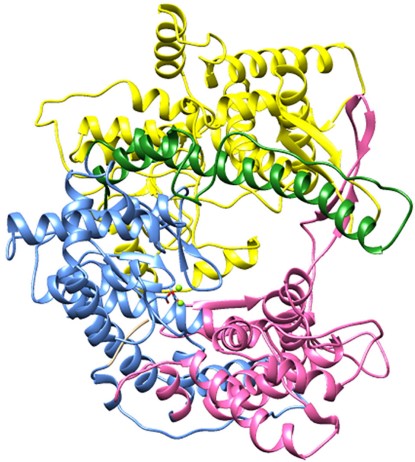 Figure 1. Three-dimensional structure of T7 RNAP
(Source: Borkotoky S, et al. 2018)
The essential genes of T7 linear genome can be divided into three categories, which are expressed at different stages of T7 infection cycle. Class I genes create favorable conditions for phage growth by being expressed early in infection, class II genes are mainly involved in encoding DNA replication proteins, and class III genes are expressed late in phage growth, encoding mainly structural gene products. In the early stage of infection, class I genes are transcribed by host (E. coli) RNA polymerase, while II and III genes are transcribed by T7 RNAP.
The transcriptional complex needs to be formed at the beginning of transcription, and the reaction can be broken down into four steps: (1) initial promoter recognition and binding, (2) promoter melting, (3) RNA extension to the length of polymerase release promoter (/ 9nT), and (4) RNA extension to make the extension complex completely stable (/ 14nT). 23bp T7 promoter plays a role in the first three steps of this process, which is consistent with the general principle of macromolecular tissue in polymerase. It shows a three-part modular structure, in which three basically non-overlapping sequence elements participate in three different functions: recognition, melting and effective initial transcription.
The common sequences of the most active class III T7 promoters include the upstream 17bp sequence of the transcriptional initiation site and the downstream 6bp sequence. Sequence-specific recognition involves sequences between -5 and -17. Gene mutations in this region affect promoter activity and affinity for polymerase. Despite its specificity, the binding of T7 RNAP to its promoter was surprisingly weak, and it is speculated that this relatively weak binding reflects the polymerase's need to release the promoter at the end of the initial reaction so that it can move down the DNA as an extension complex.
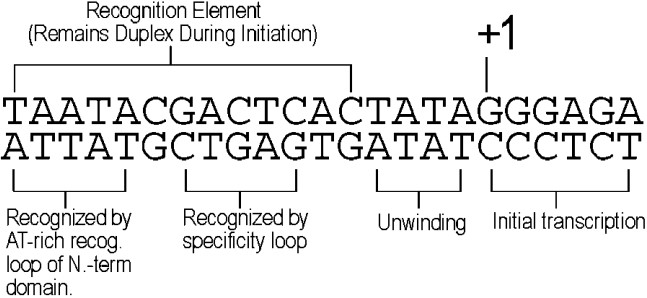 Figure 2. Structure of a class III T7 promoter with the functions of different parts of the promoter indicated.
(Source: Sousa R, et al. 2003)
Whereas mutations in the -5 to -17 region affect promoter and polymerase affinity, mutations downstream of -5 reduce promoter activity without affecting affinity for polymerase. In fact, while promoters must be double-stranded upstream of -5 to have full activity and affinity, T7 promoters that are single-stranded downstream of -5 (lacking non-template chains) are active, forming a more stable initiation complex with a higher affinity for polymerase than full double-stranded promoters.
Studies have shown that -1 to -4 sequences are conserved, not because of their base-specific interaction with polymerase, but because they promote the melting of the promoter, and in the transcriptional initiation reaction, the -5 to -17 parts of the promoter remain base paired, while the DNA downstream of -5 is melted.
The formation of the first phosphodiester bond must first bind the two initiating NTPs. The consensus is that both are GTP on T7 promoter, although GDP or GMP can be replaced at +1 position, and +2 NTP must have triphosphate moiety.
The existence of cytosine in the +1 and +2 positions of the template chain of T7 promoter is very important, it can overcome the normal space limitation and directly select the starting site of transcription. If the template bases of +1 and +2 are not cytosine, but cytosine appears at +3 and +4, then the polymerase can start with +3.
The formation of the first phosphodiester bond does not complete the transcriptional initiation process. Instead, the polymerase enters a stage called "initial" or "abortive" transcription. At this stage, short RNA (2-9 nucleotides in length) is often released from the transcriptional complex, then the polymerase is reactivated and usually does not dissociate from the promoter.
T7 RNA polymerase work, like cellular RNA polymerase, translocates along the DNA template during the synthesis of double-stranded products, opening downstream DNA double strands without a single helicase protein. The structural data of T7 RNA polymerase are consistent with the translocation mechanism related to PPi dissociation.
T7 RNAP-mediated transcription consists of three different stages: initiation and elongation and termination. During the initiation process, the N-terminal domain (NTD) of T7 RNAP binds to the promoter sequence to form an initiation complex (IC). This IC is unstable and produces short RNA transcripts with a length of 2-10 nucleotides. This process is called abortion cycle. Once the length of the transcript is more than ~ 10 nucleotides, the promoter in NTD rearranges the residues and releases the DNA promoter region to form a stable and progressive enzyme elongation complex. Termination occurs either in response to a specific signal sequence or when it reaches the end of a linearized DNA template, a process known as "runoff transcription", which usually produces full-length RNA, but sometimes leads to non-template addition at the 3' end. T7 RNAP also has the ability of covert RNA template transcription, resulting in the formation of dsRNA products and loop dsRNA products.
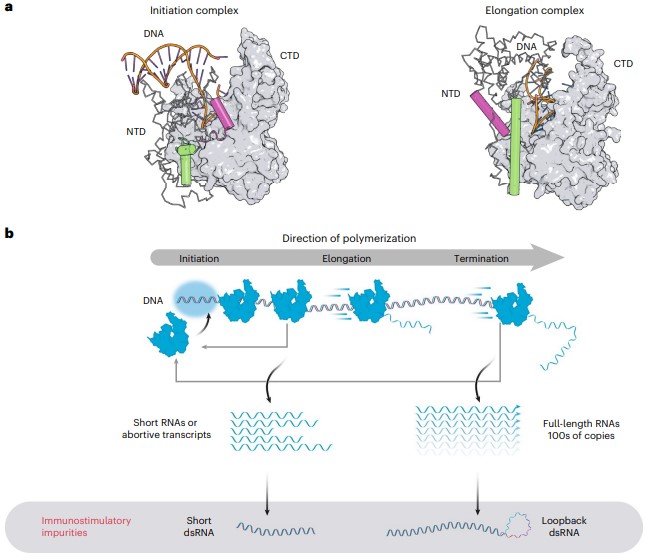 Figure 3. T7 RNA polymerase transcription cycle
(Source: Dousis A, et al. 2023)
T7 RNA polymerase is widely used in RNA synthesis in vitro and protein expression in vivo (bacterial high expression system). However, in addition to the advantages of high transcriptional efficiency, strong extension ability and high fidelity, it also has some disadvantages that cannot be ignored as a tool for RNA synthesis in vitro. T7 RNAP may produce many by-products during the synthesis of RNA, including oligonucleotides produced during transcriptional initiation, interrupted RNA products caused by termination signals, and 3'- terminal extension products caused by RNA-dependent RNA polymerase activity. These immunostimulatory double-stranded RNA transcribed from product templates may affect efficacy and safety, especially in therapeutic applications. Therefore, we urgently need to optimize and improve T7 RNAP so that it cannot only maintain efficient transcription, but also reduce the problem of heterogeneity of RNA products.
Current research shows that by combining structural, mechanical, computational and laboratory screening methods to design mutated T7 RNAP, the production of dsRNA by-products can also be significantly reduced. Researchers designed a double mutant of T7 RNAP through reasonable calculation. Compared with wild-type T7 RNAP, it produces much less immunostimulatory RNA in the in vitro transcription process, can simplify the production process, has similar mRNA potency, lower immunostimulatory content and faster production time.
And it is reported that a single mutation (S43Y) significantly reduced the termination efficiency of T7 RNAP on all tested transcriptional terminators. Coincidentally, the S43Y mutation almost eliminated the RNA-dependent RNAP (RdRp) activity of T7 RNAP without hindering the main DNA-dependent RNAP (DdRp) activity of the enzyme, thus reducing the unwanted termination of run-off RNA synthesis and producing RNA with higher terminal uniformity.
References
| Target | Cat. No. | Product Name | Size | Species | Application | Detection Sample | |
| T7 RNA Polymerase | DEIANS032 | T7 RNA Polymerase ELISA Kit | 96T | N/A | Quantitative | Universal | Inquiry |
| DEIA-NS2308-1 | T7 RNA Polymerase ELISA Kit | 96T | NA | Quantitative | Universal | Inquiry |
| Target | Cat. No. | Product Name | Host | Isotype | Application | |
| T7 RNA Polymerase | CABT-B8990A | Rabbit Anti-T7 RNA Polymerase polyclonal antibody [AF488] | Rabbit | IgG | ELISA | Inquiry |
| CABT-B8990B | Rabbit Anti-T7 RNA Polymerase polyclonal antibody [Biotin] | Rabbit | IgG | ELISA | Inquiry | |
| CABT-B8990H | Rabbit Anti-T7 RNA Polymerase polyclonal antibody[HRP] | Rabbit | IgG | IF, ELISA | Inquiry | |
| CABT-B8990 | Rabbit Anti-T7 RNA Polymerase Polyclonal Antibody | Rabbit | IgG | ELISA, WB, IF | Inquiry |
| Target | Cat. No. | Product Name | Expression System | Tag/Conjugate | Application | |
| T7 RNA Polymerase | DAG-WT297 | T7 RNA Polymerase | E. coli | Unconjugated | N/A | Inquiry |
Loading ......
