
Inquiry Basket
 Loading ......
Collagen is the most abundant protein in the body and is found mainly in human skin, cartilage, tendons and internal organs. It is an important structural protein in the body, with the function of improving the skin condition and maintaining the structural stability of tissues and organs, as well as an important raw material substance and stabilizing component in various tissue structures. It is a triple helix structure consisting of a glycine (Gly)-X-Y repeat sequence, where X is mostly proline (Pro) and almost all Pro residues in the Y position are post-translated to hydroxyproline (Hyp). One of them, the glycine-proline-hydroxyproline (GPH) tripeptide, is considered to be a collagen-specific sequence. Collagen peptides are small molecular peptides between amino acids and proteins formed by enzymatic hydrolysis of collagen, with molecular weights ranging from several hundred to several thousand Daltons. Collagen peptides can be extracted from the by-products of aquatic and terrestrial organisms. Due to the good properties and abundant sources of collagen peptides, it is now widely used in food and beverages, cosmetics and personal care, medicine and other fields.
 Figure 1. Overview of the collagen triple helix
(Source: Shoulders MD, et al. 2009)
Collagen contains 28 isoforms which can be classified into different categories such as fibrillar collagen, fibre-associated collagen with interrupted triple helices, filamentous collagen, long chain collagen, and multi-helical domain collagen. Receptors that interact with a variety of collagen proteins are present on the cell surface, including integrins, discoidin domain receptor (DDR), glycoprotein VI (GPVI, p62), leukocyte-associated immunoglobulin-like receptor (LAIR-1), osteoclast-associated receptor (OSCAR), and G protein-coupled receptor 56 (GPR56).
Collagen cannot be directly absorbed by the body, while collagen peptides hydrolysed into collagen can be actively absorbed by the body. Degradation of collagen by proteases, acids or bases yields collagen peptides, which are mostly triple-helical in structure. Each collagen chain consists of 1000 amino acid residues in a left-handed helical configuration, and the three collagen chains are intertwined with each other in a typical right-handed helical structure, so its molecular structure has a high degree of stability and strong tensile strength.
Table 1. Properties of native and hydrolyzed collagen
| Properties | Type of Collagen | |
| Native | Hydrolyzed | |
| Molecular weight (Mw) | ∽300 KDa | 3-6 KDa |
| Isoelectric point (pI) | 7.0-8.3 | 3.68-5.7 |
| Viscosity | High | Low (0 Cp) |
| Film formation | Yes | No |
(Source: León-López A, et al. 2019)
Collagen from animal sources is in short supply and carries some risk of infection, making recombinant collagen the biomaterial of focus. Industrial production of recombinant collagen can be achieved using genetic engineering techniques with high yields, stability and biosafety. This recombinant collagen has the advantages of molecular homogeneity, good biocompatibility, stable quality, no risk of viral transmission, and improved hydrophilicity and immune rejection, as well as tunable physicochemical properties and biological functions. It is now widely used in the fields of tissue engineering, regenerative medicine and trauma repair. Recombinant collagen can be made into gels, sponges, dressings, lyophilized powders, injections and oral dosage forms for exploratory applications in haemostasis, wound repair, corneal injuries, gynaecological disorders, cardiovascular disorders, cancer, and anti-ageing.
Collagen peptides are a class of biologically active peptides with a variety of biological functions that have been found to be beneficial to bones, joints and skin. In addition, it has anti-hypertensive, diabetic, antioxidant and antibacterial activities.
Osteoporosis (OP) is a systemic metabolic bone disease, one of the most common osteoarticular pathologies, characterised by reduced bone mineral density and increased fracture susceptibility. OP is mainly caused by oestrogen or nutrient deficiencies, aging and chronic diseases, and can therefore be classified as primary, idiopathic and secondary osteoporosis. Collagen peptides are used as a dietary supplement to improve bone and joint health and are a good supplement to prevent OP. Collagen peptides were found to promote osteoblast proliferation and differentiation in vitro and to increase bone mineral density and osteoblast alkaline phosphatase (ALP) activity in a dose-dependent manner after de-ovulation in rats. At the same time, it increased the organic matter content of the left femur, promoted the proliferation of osteoblasts, and decreased the water content of the left femur after de-ovulation in spontaneously hypertensive rats. Salmon collagen peptides from the sea can promote cartilage differentiation, lay the foundation for cartilage regeneration, increase serum osteocalcin levels, promote the proliferation of bone marrow stem cells and mature osteoblasts, and reduce osteoclasts. A clinical trial examining the risk of osteoporosis in menopausal women has found that a dietary supplement using a calcium-collagen peptide chelate improves blood biomarkers of bone mineral density and bone turnover in postmenopausal women.
Skin ageing factors are classified into extrinsic and intrinsic factors. Aging determined by external environmental factors and lifestyle is called exogenous skin aging, also known as skin photoaging, while aging determined by an individual's genetic make-up is called endogenous skin aging, also known as natural skin aging. Natural ageing causes dryness, thinning of the skin with fine wrinkles and periorbital hyperpigmentation, while photoageing causes coarse wrinkles, roughness and loss of elasticity of the skin, changes in the skin's barrier function, localised hyperpigmentation or dilated capillaries.
Intake of catfish skin collagen peptides reduces pathological changes in the uneven distribution, fracture and laxity and morphology of skin collagen fibres under UV irradiation, reduces transepidermal water loss, skin wrinkles and abnormal elastin fibres, promotes collagen synthesis, increases skin elasticity, and contributes to an increase in the content of Hyp and hyaluronic acid in skin tissues. In animal model experiments, it was found that ingestion of collagen peptides or Pro had no effect on the moisture and hyaluronic acid content of naturally aged mouse skin, but significantly reduced skin laxity, increased collagen fibre and collagen content, and normalized the ratio of type I and type III collagen in naturally aged skin. In addition, significant improvements in visual appearance, tissue structure and matrix homeostasis of mouse skin were found by gavage of collagen peptides in mice. It also maintains normal antioxidant indexes in animal skin and serum by increasing catalase, SOD, glutathione peroxidase activity and glutathione (GSH) content and decreasing malondialdehyde (MDA) and protein carbonyl content. In a study of healthy female subjects, researchers found that sustained administration of a supplement of fish-derived collagen peptides or other antioxidants for 90 days increased the thickness of naturally aging dermal papillae of the skin, the water content of the stratum corneum of the skin of the cheeks and the corners of the eyes, decreased the destruction of the skin's collagenous structure, reduced the pores of the skin, and reduced the periorbital hyperpigmentation and the skin's roughness in order to repair the skin's natural aging.
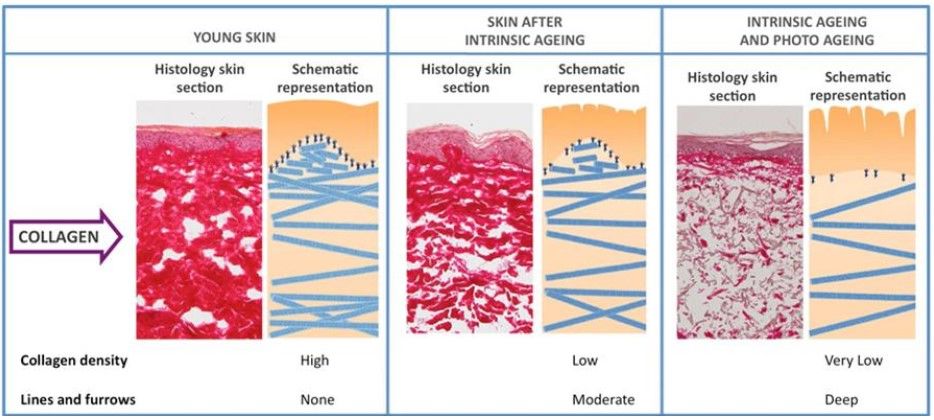 Figure 2. Collagen loss following intrinsic and extrinsic aging
(Source: Sibilla S, et al. 2015)
Diabetes mellitus (DM) is a metabolic disease caused by insulin resistance or lack of insulin secretion, and hyperglycemia is its main feature, of which the most common is type 2 diabetes mellitus (T2DM). Insulin resistance and pancreatic beta cell dysfunction are the main causes of T2DM. Several studies have found that salmon skin collagen peptide treatment for T2DM improves glucose metabolism and insulin sensitivity in T2DM rats by decreasing MDA formation associated with oxidative stress, increasing serum antioxidant activity SOD activity and GSH content, inhibiting inflammatory factor activity, and protecting pancreatic β-cells from apoptosis for the purpose of treating T2DM. Clinical trials of patients with T2DM and healthy subjects showed significant reductions in fasting blood glucose, mean arterial pressure and diastolic blood pressure, and significant reductions in total cholesterol and triglyceride, LDL, free fatty acid, and prostacyclin levels in the fish collagen peptide-treated group of patients, compared to the control group. However, HDL and adiponectin levels were elevated, and insulin sensitivity index and insulin secretion index levels were elevated. These results suggest that collagen peptides improve glucose and lipid metabolism in T2DM patients.
Alopecia is one of the common clinical disorders nowadays, which seriously affects the quality of life of patients. Its pathogenesis has not been fully elucidated and may be related to genetics, immunity, oxidative stress, microbiome, epigenetics, and other factors, and is the result of a multifactorial approach. Currently only minoxidil and finasteride are approved as treatments for hair loss. X Type VII collagen (COL17) is a transmembrane protein of the epidermal basal layer, which has the function of maintaining tight junctions between the epidermis and dermis to promote epidermal turnover and stabilize the basement membrane. It has been found that COL17 hydrolysis can cause miniaturization of hair follicles and ultimately lead to hair loss. Deficiency of COL17 induces alopecia through accumulation of DNA damage effects, imbalance of epidermal cell polarity, and inhibition of stem cell competition. Small molecule drugs that induce COL17 are yet to be further developed in the field of promoting hair regrowth.
References
| Target | Cat. No. | Product Name | Size | Species Reactivity | Application | Detection Sample | |
| COL2A1 | DEIA11773 | Human/Monkey Anti-Type I and Type II Collagen IgG Antibody ELISA Kit | 96T | Human/Monkey | Quantitative | Serum and Plasma | Inquiry |
| DEIA11774 | Mouse Anti-Type II Collagen ELISA Kit | 96T | Mouse | Quantitative | Serum | Inquiry | |
| DEIA11776 | Capture Type II Collagen ELISA Kit | 96T | Quantitative | Cells, tissues culture, cartilage | Inquiry | ||
| COL4 | DEIA1122 | Human Type-IV collagen ELISA Kit | 96T | Human | Quantitative | Serum | Inquiry |
| NTX | DEIA4005 | Human NTXI(Cross Linked N-telopeptide of Type I Collagen) ELISA Kit | 96T | Human | Quantitative | Serum, plasma, tissue homogenates and other biological fluids. | Inquiry |
| COL11A1 | DEIASL346 | Human Collagen Type XI Alpha 1 (COL11A1) ELISA Kit | 96T | Human | Quantitative | Serum, plasma, tissue homogenates and other biological fluids | Inquiry |
| PINP | DEIA-ZH068 | Human N-terminal propeptide of Collagen alpha-1(I) chain (PINP) ELISA Kit | 96T | Human | Quantitative | Serum, plasma, tissue homogenates and other biological fluids | Inquiry |
| COL6a1 | DEIA-BJ280 | Human COL6 1(Collagen Type VI Alpha 1) ELISA Kit | 96T | Human | Quantitative | Serum, plasma, tissue homogenates and other biological fluids. | Inquiry |
| COL7A1 | DEIA-BJ281 | Human Collagen Type VII ELISA kit | 96T | Quantitative | Serum, plasma, cell culture supernatants, body fluid and tissue homogenate | Inquiry | |
| COL8a1 | DEIA-BJ282 | Human Collagen Type VIII Alpha 1 ELISA kit | 96T | Quantitative | Serum, plasma, cell culture supernatants, body fluid and tissue homogenate | Inquiry |
| Target | Cat. No. | Product Name | Expression System | Tag/Conjugate | Application | |
| collagen | DAG-WT130 | Native Collagen IV(CIV) | Human placenta | Unconjugated | Immunogen/Calibrators/Control | Inquiry |
| COL4 | DAG-WT2669 | Human collagen type III control | N/A | Unconjugated | Immunoassays | Inquiry |
| DAG-WT2670 | Human collagen type IV control | N/A | Unconjugated | Immunoassays | Inquiry | |
| COL4A3 | DAG621 | Human type 4 Collagen [His] | Insect cells | His | N/A | Inquiry |
Loading ......
