
Inquiry Basket
 Loading ......
Tetrodotoxin (TTX) is a potent neurotoxin that poses a significant threat to human health. Its origin in pufferfish is associated with endosymbiotic bacteria, and contamination through consumption is the primary cause of toxicity. The global spread of TTX, coupled with its devastating effects on sodium channels, highlights the need for caution and regulation. While there is no known antidote, TTX's paralyzing properties may hold promise for medical applications, particularly in the treatment of cancer-related pain.
Browse all Tetrodotoxin products
TTX is a neurotoxin that was initially believed to be present only in pufferfish. However, it has been detected in various unrelated organisms, including dinoflagellates, algae, arthropods, echinoderms, mollusks, newts, worms, and frogs. TTX has even been found in sediments from marine and freshwater environments.
Despite extensive research, the biosynthesis and biological origin of TTX remain uncertain. It is suggested that arginine may serve as a precursor for TTX production within organisms. The wide presence of TTX in diverse taxa suggests that its ultimate origin is likely exogenous. Evidence indicates that the uptake of bacteria-producing TTX plays a significant role in the toxicity of TTX in marine organisms. However, this model has been questioned concerning terrestrial taxa.
On the contrary, it is proposed that TTX may be endogenously produced, derived from elements of the organisms' diet. Some studies have reported that bacteria are responsible for TTX production. Although many bacteria have been isolated from marine organisms, the levels of TTX produced by these bacteria appear insufficient to account for the concentrations found in toxic organisms. Furthermore, there are currently no specific techniques to definitively prove the microbial origin of TTX.
TTX's chemical formula is C11H17N3O8, with a molar mass of 319.270 g/mol. The carbon skeleton of TTX consists of a cyclohexane ring with C1 and C2 side chains. The two cis-hydroxyl groups and the carboxyl group form the iconic dioxadamantane core of TTX, which is fused with the cyclic guanidine through an α-tertiary amine. In addition, the molecule contains four rings and nine consecutive chiral centers, as well as a primary hydroxyl group, two secondary hydroxyl groups, a tertiary hydroxyl group, and a hemiacetal, which further increases the structural complexity of the molecule.
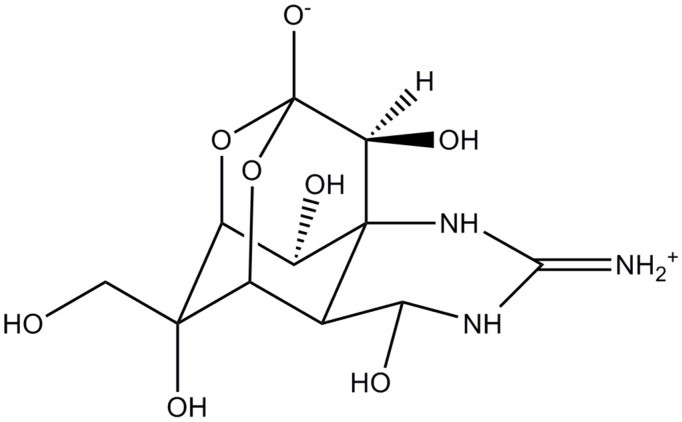 Figure 1. Chemical structure of tetrodotoxin (TTX).
(Source: Lago, J. et al., 2015)
As a highly toxic non-protein neurotoxin, TTX is rapidly absorbed by the intestines after being ingested by the human body. After entering the blood, it reaches the whole body through the circulatory system, causing vomiting and diarrhea, decreased blood pressure, cerebral nerve dysfunction, limb nerve paralysis, loss of locomotor activity, and in more serious cases, respiratory and cardiovascular failures. Studies have shown that only 0.5-3 mg of TTX can cause death in adults. TTX is responsible for 30-50 cases of poisoning annually.
The biological effects of tetrodotoxin are mediated by its interaction with voltage-gated sodium channels (VGSCs). VGSC is a transmembrane protein mainly expressed in the muscle and nervous system and plays a role in the initiation and propagation of neuronal signals by selectively allowing the influx of sodium ions. VGSC is structurally composed of a functional α-subunit and one or more β-subunits involved in voltage sensing. According to the differences in α-subunits, it can be divided into multiple subtypes, among which Nav1.1, Nav1.2, Nav1.3, Nav1.4, Nav1.6, and Nav1.7 are sensitive to TTX, and the others include Nav1.5, Nav1.8, and Nav1.9 are resistant to TTX.
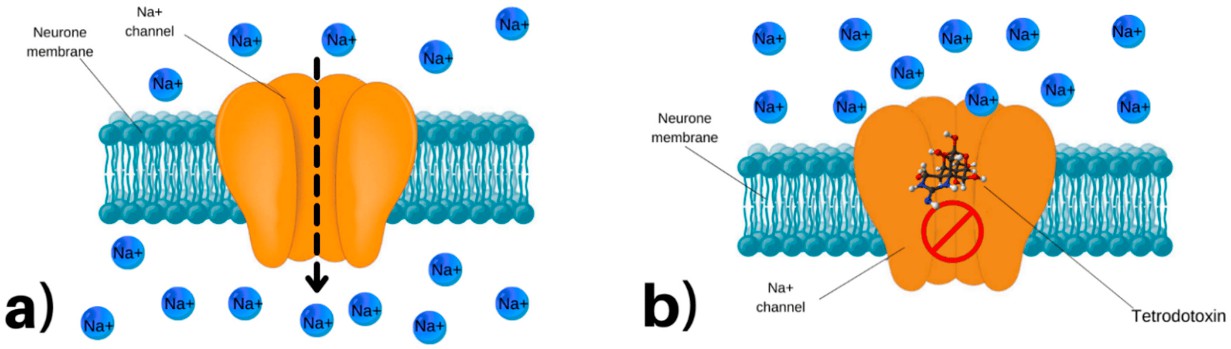 Figure 2. TTX action mechanism in voltage-gated Na channels of neuron cell.
(Source: Katikou, P. et al., 2022)
The α-subunit of the channel determines how it interacts with TTX. When activated, the channel selectively opens, and sodium ions enter the intracellular environment. Local changes in transmembrane potential cause the opening of adjacent VGSCs, allowing signals to propagate along the neuron, which forms the basis for action potential initiation and propagation in neurons and muscle cells. When TTX binds to relevant sites in the VGCS, it blocks the influx of sodium ions, and neurons and related muscles will be unable to function. Therefore, tetrodotoxin mainly blocks nerve and muscle conduction, leading to paralysis.
Tetrodotoxin (TTX) has shown promise in various medical applications, particularly in the field of pain management. Some specific medical applications of TTX include:
References
| Target | Cat. No. | Product Name | Host | Isotype | Application | |
| TTX | DPAB-DC4815 | Anti-Tetrodotoxin polyclonal antibody | Rabbit | IgG | ELISA | Inquiry |
| CABT-L3089 | Mouse Anti-Tetrodotoxin monoclonal antibody, clone TTX | Mouse | IgG | ELISA, LFIA | Inquiry | |
| DMABA-0215 | Anti-TTX monoclonal antibody, clone psc214778 [FITC] | Mouse | IgG | IA | Inquiry |
| Target | Cat. No. | Product Name | Expression System | Tag/Conjugate | Application | |
| TTX | DAG035K | Tetrodotoxin [KLH] | N/A | KLH | ELISA, LF | Inquiry |
| DAG-WT1763 | Tetrodotoxin (>98%) | N/A | N/A | ELISA | Inquiry | |
| DAG3416O | Tetrodotoxin [OVA] | TTX | OVA | ELISA, LFIA | Inquiry | |
| DAG034S | Tetrodotoxin [HRP] | N/A | HRP | ELISA, LF | Inquiry | |
| DAG035S | Tetrodotoxin [BSA] | TTX | BSA | ELISA, LFIA | Inquiry | |
| DAG3416 | Tetrodotoxin [BSA] | TTX | BSA | ELISA, LFIA | Inquiry |
| Target | Cat. No. | Product Name | Size | Species Reactivity | Application | Detection Sample | |
| TTX | DEIANJ48NS | Tetrodotoxin ELISA Kit | 96T | N/A | Quantitative | Pufferfish | Inquiry |
| DEIANJ48 | Tetrodotoxin ELISA Kit | 96T | N/A | Quantitative | Water, Fish | Inquiry |
Loading ......
