
Inquiry Basket
 Loading ......
The importance of vitamin B12 is increasingly recognized, especially in the elderly. Clinically, the view that persistent or severe vitamin B12 deficiency causes megaloblastic anemia, atrophic glossitis, and subacute combined degeneration of the spinal cord is increasingly accepted. In recent years, it has been found that the incidence of vitamin B12 deficiency in the elderly is increasing, and it has been found that vitamin B12 deficiency is also closely related to cardiovascular system diseases, reproductive system, and other nervous system diseases.
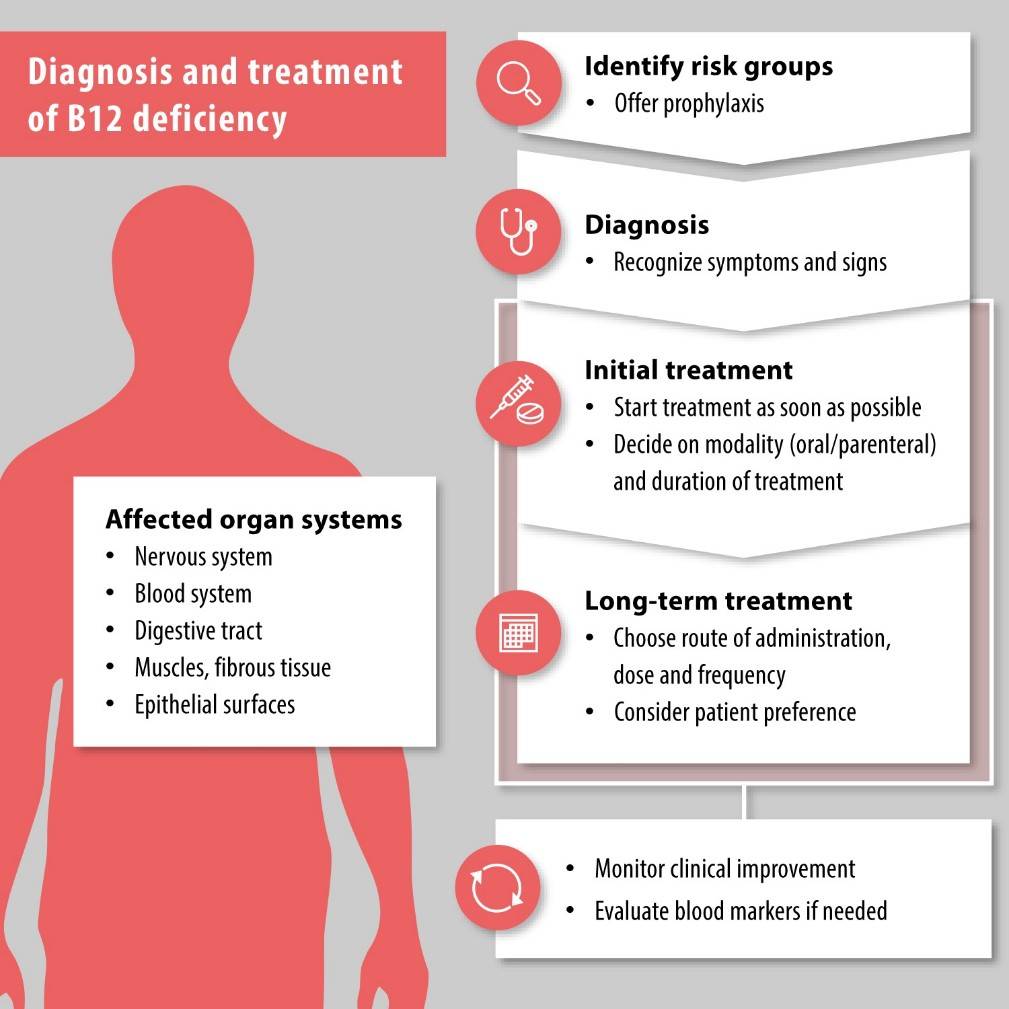 Figure 1. Diagnosis, treatment, and long-term management of vitamin B12 deficiency. (Sources: Kufe DW., 2009)
Vitamin B12 is a coenzyme of N5-CH3-FH4 methyltransferase (methionine synthetase), catalyzing the methylation of homocysteine to produce methionine. It is also a coenzyme of L-methylmalonyl CoA, catalyzing succinyl CoA and generation, which is necessary for cell growth at all stages of life. When B12 is deficient, the effects are as follows:
1. The methyl group on N5-CH3-FH4 cannot be transferred out, which affects the synthesis of methionine, reduces the regeneration of tetrahydrofolate, hinders the metabolism of one-carbon units, and reduces the synthesis of deoxynucleotides;
2. Homocysteine metabolism is impaired, causing its accumulation, which damages cardiovascular function and cognitive function;
3. L-methylmalonyl accumulates in large quantities, affecting the normal synthesis of fatty acids and leading to obesity.
Vitamin B12 in food is often bound to protein. Under the action of gastric acid and pepsin, vitamin B12 is freed and bound to cobalamin from saliva. In the duodenum, the cobalamin-B12 complex is hydrolyzed by trypsin to release B12. Free B12 needs to be tightly bound to the intrinsic factor secreted by the gastric mucosa to form an IF-B12 complex before it can be absorbed by the ileum.
1. Insufficient intake, such as long-term vegetarianism or partial eating;
2. Acquired absorption disorders, such as pancreatic, gastric, and intestinal diseases, which interrupt a certain process of B12 absorption;
3. Increased demand for vitamin B12, such as pregnancy;
4. Drug-induced: Studies have found that oral metformin can lead to lower serum vitamin B12 levels;
5. Food, such as CathaEdulis, which can reduce human serum iron, ferritin, and vitamin B12, and increase homocysteine.
The incidence of vitamin B12 deficiency in the elderly is significantly higher than that in other age groups, which is mainly related to insufficient intake in the elderly, gastric mucosal degeneration and long-term oral administration of proton pump inhibitors. Vitamin B12 is mainly found in meat, eggs and milk. Patients with long-term partial eating habits or vegetarianism and some elderly people with or without other diseases have misunderstandings about health and diet. They believe that vegetarianism or partial vegetarianism will be beneficial to the prevention and development of diseases, which leads to insufficient intake of vitamin B12. Intrinsic factor deficiency affects the absorption of vitamin B12, leading to pernicious anemia. The small blood vessels of the gastric mucosa in the elderly are twisted, the walls of the small arteries are hyaline-like degeneration, and the lumen is narrowed. These local vascular factors in the stomach can cause gastric mucosal malnutrition, decreased secretory function and gastric mucosal barrier function, leading to vitamin B12 absorption impairment. Studies have pointed out that there is a negative correlation between vitamin B12 deficiency and the age of the patient. Helicobacter pylori infection has an important impact on the formation of vitamin B12 deficiency, even if the patient does not have symptoms of ulcerative dyspepsia, or the gastroscopy does not indicate the presence of atrophic gastritis. Studies have confirmed that Helicobacter pylori-positive patients have a significantly higher incidence of vitamin B12 deficiency than the control group, and a higher incidence of anti-parietal cell antibodies and anti-intrinsic factor antibodies than the control group. The elderly have relatively more basic diseases, and relatively more take proton pump inhibitors by mouth. Proton pump inhibitors are a type of acid-suppressing drugs, which are mainly used to treat acid-related diseases, such as chronic gastritis, gastric ulcer, gastroesophageal disease, reflux disease, NSAID-related diseases, Barret's esophagus, etc. Proton pump inhibitors can reduce gastric acid secretion, affecting the dissociation of vitamin B12 from food protein. This long-term use of proton pump inhibitors can cause food-related malabsorption, which can lead to vitamin B12 deficiency, especially in susceptible groups - the elderly. Diabetes tends to occur in middle-aged and elderly patients, and long-term oral administration of metformin can also lead to a decrease in serum vitamin B12.
In addition to causing megaloblastic anemia, atrophic glossitis, and combined degeneration of the spinal cord, vitamin B12 deficiency is also closely related to the cardiovascular system, other nervous systems, and skeletal systems.
Vegetarianism has a certain effect on reducing the incidence and mortality of ischemic heart disease and stroke, but eating too much can lead to vitamin B12 deficiency, which is not good for cardiovascular health. Vitamin B12 deficiency can lead to homocysteineemia. Hyperhomocysteinemia can lead to abnormal function of vascular endothelial cells, increase the production of oxygen free radicals, and enhance NO inactivation, causing vascular inflammation, oxidative stress, etc., which affect the elastic function structure of arteries. Studies have shown that vitamin B12 deficiency can lead to damage to arterial endothelial function and increase the thickness of the carotid intima, that is, vitamin B12 is closely related to the thickness of the carotid intima and the endothelium-dependent vasodilation mediated by blood flow. In patients with vitamin B12 deficiency, vitamin B12 supplementation increases serum vitamin B12 levels, decreases serum homocysteine levels, and improves carotid intima-media thickness and flow-mediated endothelium-dependent vasodilation. It has also been shown that vitamin B12 supplementation decreases systolic and diastolic blood pressure, and improves the stiffness level of vascular stiffness. However, there is limited evidence to support that vitamin B12 deficiency is a high-risk factor for the incidence and mortality of cardiovascular disease and type 2 diabetes. The combined use of folic acid, vitamin B6, and vitamin B12 can reduce homocysteine levels in cardiovascular patients or high-risk patients, but cannot reduce the risk of cardiovascular disease. The combined use of folic acid, vitamin B6, and vitamin B12 is not recommended for secondary prevention of cardiovascular disease.
Vitamin B12 is an essential substance for the methylation of myelin, neurotransmitters, and membrane phospholipids, and it plays an important role in the integration of peripheral and central nervous systems. Vitamin B12 deficiency can cause hyperhomocysteinemia and high bMMA and uMMA. Hyperhomocysteinemia is associated with depression, cognitive impairment, and dementia in the elderly. MMA is also toxic to the nervous system. uMMA and bMMA are associated with diabetic neuropathy, and the superficial peroneal nerve sensory and motor conduction velocity and ulnar complex artery potential amplitude uMMA are closely related. Studies have shown that in the vitamin B12-deficient group, the maximum optic nerve fiber thickness was significantly less than that in the control group, and the average and maximum optic nerve fiber thickness were closely related to the vitamin B12 level. However, for patients with moderate vitamin B12 deficiency who have not developed anemia and have no neurological and cognitive symptoms and signs, correcting vitamin B12 deficiency has no proven beneficial effects on neurology and cognition.
Vitamin B12 can promote the synthesis of proteins and deoxynucleotides. Studies have shown that supplementing vitamin B12 can improve semen quality. During pregnancy and lactation, vitamin B12 deficiency may cause damage to spermatocytes and germ cells.
Vitamin B12 is a coenzyme for the conversion of methylmalonyl CoA to succinyl CoA. Vitamin B12 deficiency will lead to the accumulation of methylmalonyl CoA, which can inhibit the rate-limiting enzyme of fatty acid oxidase, leading to fatty acid synthesis. Vitamin B12 deficiency is very common in patients with type 2 diabetes and is related to the formation of hyperlipidemia. In non-diabetic British pregnant women, low vitamin B12emia was found to be closely related to obesity and insulin resistance. There is currently no evidence to support the relationship between vitamin B12 deficiency and diabetes.
In summary, there are many factors that cause vitamin B12 deficiency in the elderly, so vitamin B12 deficiency is more common in the elderly. Vitamin B12 deficiency is closely related to cardiovascular function, nervous system diseases, and reproductive system diseases. Therefore, serum vitamin B12 in the elderly must be monitored, and more research is needed to prove that the time and dosage of vitamin B12 supplementation in specific diseases and the relationship between vitamin B12 and other systemic diseases need to be further proved.
References
| Target | Cat. No. | Product Name | Host | Isotype | Application | |
| Vitamin B12 | HMABPY073 | RHA™ anti-Vitamine B12 monoclonal antibody, clone VB12 | Mouse | IgG | ELISA, LFIA | Inquiry |
| DPATB-H83238 | Anti-Vitamin B12 polyclonal antibody | Rabbit | IgG | ELISA | Inquiry |
| Target | Cat. No. | Product Name | Expression System | Tag/Conjugate | Application | |
| Vitamin B12 | DAG3037 | Vitamin B12 [BSA] | N/A | BSA | N/A | Inquiry |
| DAG3038 | Vitamin B12 [HRP] | N/A | HRP | N/A | Inquiry | |
| DAG3039 | Vitamin B12 [KLH] | N/A | KLH | N/A | Inquiry | |
| DISNJ01 | Vitamin B12 Standard Solution | N/A | N/A | ELISA | Inquiry | |
| DAGA-068B | Vitamine B12 [BSA] | N/A | BSA | LFIA | Inquiry | |
| DAGA-073K | Vitamine B12 [KLH] | N/A | KLH | Immunogen | Inquiry | |
| DAGT5413-HRP | Vitamine B12 [HRP] | N/A | HRP | ELISA | Inquiry | |
| DAG271S | Vitamin B12 [HSA] | N/A | HSA | ELISA | Inquiry | |
| DAG545S | Vitamin B12 [HSA-Biotin] | N/A | HSA-Biotin | ELISA | Inquiry | |
| DAG-WT2686 | Vitamin B12 control | N/A | Unconjugated | Immunoassays | Inquiry |
Loading ......
