

Inquiry Basket
 Loading ......
The neurotoxic properties of Tetrodotoxin (TTX) make it 1,250 times as deadly as cyanide which establishes TTX as one of nature's most lethal poisons. Since the 20th century researchers have been fascinated by and consumers alarmed at the presence of tetrodotoxin in pufferfish and blue-ringed octopuses as well as newts and some amphibians. Its molecular formula, C₁₁H₁₇N₃O₈, masks a deadly secret: TTX demonstrates toxic capabilities which interfere with nerve transmissions and halt breathing functions resulting in cardiac arrest. Researchers continue to study TTX in toxicology and pharmacology because of its relevance to food safety despite its dangerous characteristics. Anyone residing in areas with potential exposure risks or who enjoys rare foods like fugu (pufferfish sashimi) needs to understand TTX's properties and origins along with its mechanisms.
The deadly nature of TTX stems from its complex chemical structure. TTX's molecular framework includes a carbon ring and a guanidinium group that build a cage-like structure along with six hydroxyl groups and a hemilactal bridge. The three-dimensional structure of these components enables TTX to bind permanently to voltage-gated sodium channels in nerve cells. Under physiological conditions the positively charged guanidinium group binds to sodium channel negative residues thereby blocking sodium ions from entering cells. The interruption of nerve signal transmission causes paralysis due to this disruption.
TTX displays an extraordinary level of resilience that increases its danger. The toxin retains its potency against heat stress and acidic surroundings as well as common culinary techniques like boiling and frying. A lethal dose of TTX for an adult human requires only 0.5 milligrams which is as little as a single grain of sand. The toxin TTX remains stable under various conditions which explains why inadequate preparation of pufferfish meals causes many deadly food poisonings across Japan and Southeast Asia.
The common misconception about pufferfish producing TTX is incorrect. Marine bacteria including Vibrio and Pseudomonas species produce the toxin and they inhabit algae and shellfish as well as sediment. Through the food chain, these bacteria transfer TTX to higher organisms like pufferfish, where it accumulates in specific organs: ovaries, liver, skin, and intestines. Female pufferfish accumulate higher TTX concentrations in their ovaries during breeding seasons to safeguard their eggs against predators.
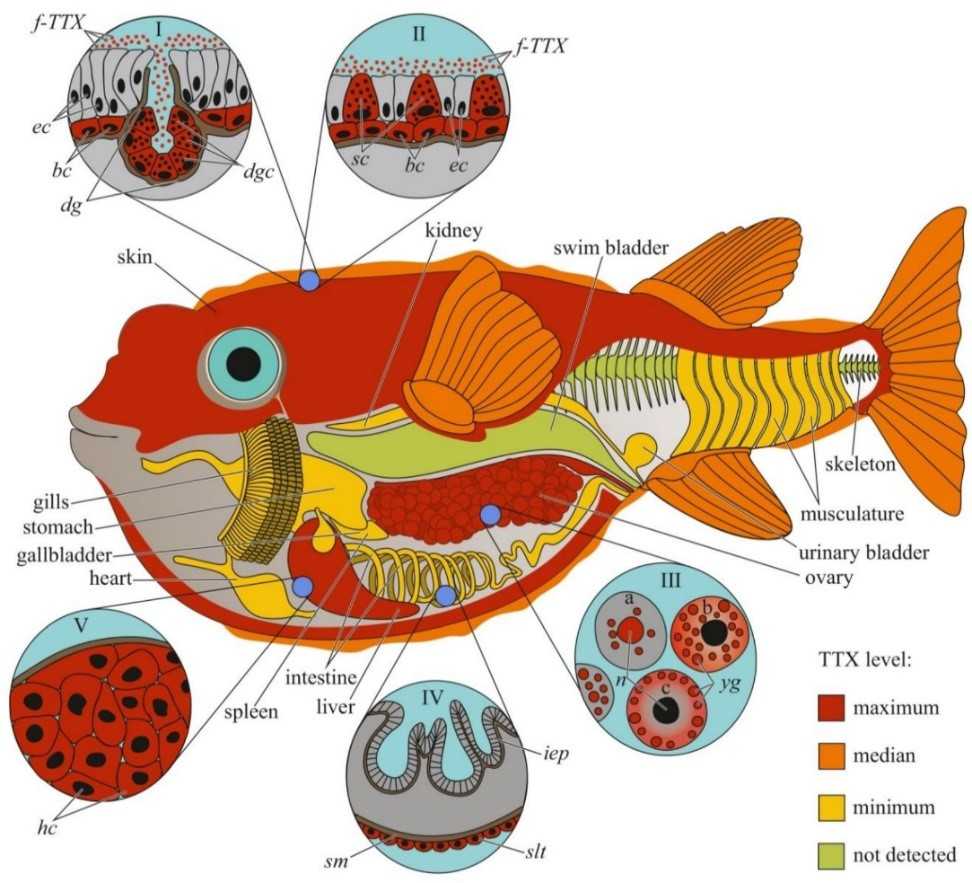 Figure 1. Schematic illustration of the levels and intra-organismal distribution of tetrodotoxin (TTX) in the adult pufferfish (family Tetraodontidae). (Sources: Melnikova DI, et al. 2022)
Farm-raised pufferfish developed in controlled environments usually do not develop TTX if they consume uncontaminated food sources. The toxin demonstrates its ecological reliance on symbiotic relationships with bacteria. TTX exists beyond pufferfish across multiple species with poisonous newts using it defensively and blue-ringed octopuses utilizing it in their venom. The extensive distribution of TTX highlights its dual function within marine environments as both a defensive agent and hidden danger.
The lethal nature of TTX comes from its accurate targeting capability against nerve cells. When this compound attaches itself to sodium channels it stops essential sodium ion movement needed to produce electrical impulses. Muscle contraction stops because nerves cannot send signals and vital systems fail without these signals. Symptoms progress rapidly: The first signs of numbness in the lips and fingertips advance quickly to full-body paralysis followed by respiratory failure and cardiac arrest.
The toxin only targets sodium channels which accounts for its lack of interference with other cell functions. The precise targeting ability of TTX makes it a highly useful instrument for scientific investigation. Neuroscientists study nerve signaling through its application while pharmacologists investigate its use for pain management despite its dangerously tight therapeutic margin.
TTX poisoning unfolds in predictable, terrifying stages. Within 30 minutes of ingestion, victims experience gastrointestinal distress: vomiting, diarrhea, and abdominal pain. A brief period later neurological symptoms become apparent starting with tingling sensations followed by slurred speech and muscle weakness. When paralysis begins to develop breathing strains while blood pressure drops and consciousness diminishes. Death from respiratory failure will occur within 4–6 hours if no medical treatment is provided.
Immediate treatment is critical. Prioritize decontamination: Doctor start detoxifying the patient by inducing vomiting followed by giving activated charcoal and performing gastric lavage to eliminate unabsorbed toxins. Advanced treatment involves using mechanical ventilation to support breathing functions and intravenous fluids to maintain normal blood pressure. Hemodialysis can lower toxin concentrations but experts have differing opinions about its effectiveness. Atropine and other anticholinergic drugs can mitigate some neurological consequences but there is no known antidote available. Patients need fast hospitalization and rigorous supportive treatment to survive.
Preventing TTX poisoning requires vigilance. Japanese chefs receive intensive training before they can earn a license to prepare fugu by meticulously removing its toxic organs. Global regulatory bodies enforce a ban on untreated pufferfish sales but unauthorized markets continue to operate. People should stay away from pufferfish meals prepared at home and from marine species that have not been identified.
Public education campaigns teach people how to detect poisoning symptoms at an initial stage. Scientists perform studies on how bacterial management in aquaculture systems can interrupt the build-up of TTX. New developments in toxin detection methods including immunoassays and chromatography play a crucial role in maintaining seafood safety.
Tetrodotoxin exemplifies nature's paradox: a substance both beautiful and lethal. Research on this substance has revealed fundamental neurobiological mechanisms and led to biomedical breakthroughs while emphasizing food safety protocols. TTX reminds everyday people about the necessity to appreciate both marine environments and traditional food practices. Despite TTX's lethal nature its understanding enables human safety through knowledge of this remarkable Earth toxin which might save lives.
Tetrodotoxin causes death because it blocks essential voltage-gated sodium channels on nerve cells that enable electric signal transmission in the nervous system. TTX permanently attaches its guanidinium group to voltage-gated sodium channels which blocks the movement of sodium ions into cells. The toxin stops nerve signals from transmitting which causes muscles to quickly become paralyzed including essential muscles that operate breathing and cardiac functions.
The substance proves deadly because of its high potency which requires as little as 0.5 mg to cause death alongside its enduring resilience. TTX stands apart from protein-based toxins because it remains stable as an alkaloid and shows resistance to both heat and acidic conditions as well as cooking techniques like boiling or frying. Systemic collapse occurs within a few hours when trace levels of toxin remain in pufferfish dishes that are not properly prepared. People usually die from respiratory failure as the diaphragm becomes paralyzed or because of cardiac arrest which happens when electrical signals in the heart get disrupted.
No. The chemical robustness of TTX allows it to withstand the majority of standard cooking techniques. Extended boiling at 100°C or frying at high temperatures does not destroy the toxin. Freezing also preserves its toxicity. The toxin's resistance to degradation explains why countries like Japan restrict pufferfish preparation to certified chefs only. Licensed experts carefully eliminate poisonous organs including the liver and ovaries. The chefs remove the poisonous organs and lower TTX levels to "safe" thresholds, although traces of the toxin may persist.
Research demonstrates TTX maintains 90% of its toxic properties even after being subjected to extended periods of heat. Home cooking methods cannot ensure absolute safety. The FDA and WHO strongly advise against eating wild-caught pufferfish except when it has undergone professional processing.
No antidote approved by the FDA exists yet immediate medical treatment remains effective for survival. Treatment focuses on decontamination and supportive care:
Gastric lavage and activated charcoal: To remove unabsorbed toxin medical professionals administer treatment within 1–2 hours after ingestion.
Mechanical ventilation: Mechanical ventilation becomes necessary to treat respiratory paralysis that lasts between 24 and 72 hours.
Intravenous fluids and vasopressors: To stabilize blood pressure and counteract shock.
Hemodialysis: Despite being controversial some medical professionals use hemodialysis to remove TTX from the patient's blood.
Animal research demonstrates potential benefits from experimental treatments like monoclonal antibodies aimed at TTX and potassium channel activators such as 4-aminopyridine. However, these remain unproven in humans. Immediate hospitalization is critical for survival because mortality rates surpass 50% if patients do not receive ventilator support.
Genetically modified sodium channels in pufferfish provide resistance to TTX. The VGSCs of these fish contain amino acid changes at the toxin-binding site which stop TTX from binding. Through evolutionary development pufferfish can store tetrodotoxin in their organs without harm to use as a defensive weapon against predators.
TTX-resistant mutations occur in multiple marine species beyond just pufferfish. Sharks and sea snakes have developed identical sodium channel changes which allow them to hunt animals that produce TTX. The ongoing biological arms race demonstrates how TTX functions to influence the structure of marine ecosystems.
TTX maintains remarkable biomedical potential even though it functions as a potent toxin.
Neuroscience research: Tetrodotoxin allows researchers to examine sodium channel subtypes and improve knowledge about how nerves signal and transmit pain.
Pain management: Scientists are evaluating low-dose TTX derivatives for treating chronic pain conditions such as neuropathic pain from cancer because these derivatives can block nerves that transmit pain signals.
Drug addiction therapy: Research studies on animals show that TTX has the ability to reduce opioid withdrawal symptoms through its effects on neuronal hyperexcitability.
Dive into the enigmatic realm of tetrodotoxin, a molecule as intriguing as it is lethal. With a potency 1,250 times deadlier than cyanide, TTX's unique carbon-ring structure and sodium-channel-blocking prowess have captivated researchers for decades. At Creative Diagnostics, we harness this natural marvel to fuel groundbreaking toxicology and pharmacology studies. Our premium TTX-based reagents and detection tools empower scientists to unravel its mysteries—from ecological symbiosis to nerve-signaling mechanisms—while advancing food safety and biomedical innovation. Whether you're studying marine toxins or developing novel therapeutics, discover how our meticulously curated products can elevate your research. Explore our TTX portfolio today and unlock nature's deadliest secrets with precision.
References
| Target | Cat. No. | Product Name | Host | Application | |
| TTX | DMABA-0215 | Anti-TTX monoclonal antibody, clone psc214778 [FITC] | Mouse | IA | Inquiry |
| TTX | CABT-L3089 | Mouse Anti-Tetrodotoxin monoclonal antibody, clone TTX | Mouse | ELISA, LFIA | Inquiry |
| TTX | DPAB-DC4815 | Anti-Tetrodotoxin polyclonal antibody | Rabbit | ELISA | Inquiry |
| Target | Cat. No. | Product Name | Type | Host | Conjugate | Application | |
| TTX | DAG034S | Tetrodotoxin [HRP] | Synthetic | N/A | HRP | ELISA, LF | Inquiry |
| Target | Cat. No. | Product Name | Size | Species Reactivity | Application | |
| TTX | DEIANJ48 | Tetrodotoxin ELISA Kit | 96T | N/A | Quantitative | Inquiry |
| TTX | DEIANJ48NS | Tetrodotoxin ELISA Kit | 96T | N/A | Quantitative | Inquiry |
Loading ......
