
Inquiry Basket
 Loading ......
Middle East Respiratory Syndrome Coronavirus (MERS-CoV) is a serious respiratory pathogen that has garnered global attention since it was first identified in Saudi Arabia in 2012. MERS-CoV is a member of the β-coronavirus genus and shares a high degree of genetic similarity with other human coronaviruses such as SARS-CoV (Severe Acute Respiratory Syndrome Coronavirus) and SARS-CoV-2 (the novel coronavirus). However, MERS-CoV differs in its transmission routes, host range, and disease severity.
MERS-CoV is a positive-sense, single-stranded RNA virus with a genome of approximately 30kb. The genome encodes four structural proteins: spike protein (S), membrane protein (M), envelope protein (E), and nucleocapsid protein (N). Since it helps the virus to bind and enter host cells, the S protein is absolutely essential for viral infection. The S protein has two subunits, S1 and S2. The receptor-binding domain (RBD) within the S1 subunit binds to the dipeptidyl peptidase 4 (DPP4), also known as CD26, on the surface of host cells, allowing the virus to invade.
Compared to other coronaviruses, the MERS-CoV genome has a higher mutation and recombination rate, which enhances its adaptability during interspecies transmission. Research has shown that MERS-CoV can infect not only humans but also animals such as bats and camels, with camels considered the main intermediate host for human infections. This broad host adaptability complicates MERS-CoV outbreaks and presents challenges in designing effective control measures.
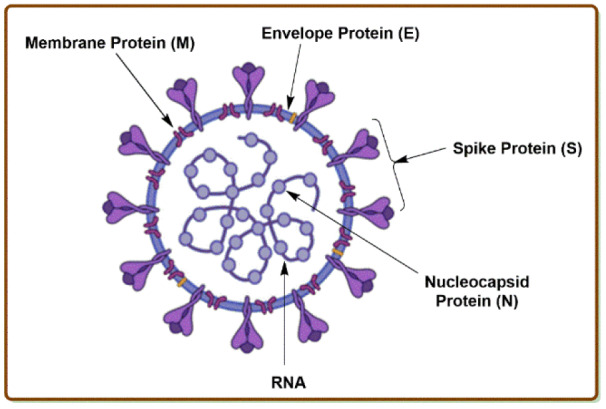 Figure 1. The structure of coronavirus.
(Source: Goyal R, et al., 2022)
MERS-CoV is primarily transmitted to humans through direct contact with infected camels or indirect contact with camel secretions. Limited evidence suggests that human-to-human transmission can also occur, but compared to SARS-CoV and SARS-CoV-2, its human transmission capability is relatively weak. After human infection, transmission can occur via droplets, particularly in confined environments such as healthcare settings, where nosocomial transmission has been documented. It is noteworthy that immunocompromised individuals, the elderly, and those with underlying health conditions experience more severe symptoms, and the fatality rate reaches up to 35%.
The MERS-CoV infection cycle can be divided into several key stages: first, the virus binds to the receptor on the host cell surface, after which it enters the cytoplasm via membrane fusion or receptor-mediated endocytosis. The viral RNA is then replicated, transcribed, and assembled into new viral particles, which are eventually released by budding. Within the host cell, viral RNA replication and protein synthesis depend on viral-encoded non-structural and accessory proteins, which play critical roles in regulating viral replication and the host immune response.
Compared to the infection cycle of SARS-CoV and SARS-CoV-2, the MERS-CoV cell entry mechanism demonstrates high specificity in receptor binding, which contributes to its lower infection efficiency during interspecies transmission. However, once infection occurs, MERS-CoV causes severe ARDS due to excessive inflammatory responses and immune dysregulation, similar to the pathogenic mechanisms of SARS-CoV and SARS-CoV-2.
 Figure 2. Different Cell Types Infected by Human Coronaviruses
(Source: Liang Y, et al., 2020)
Since its first report in 2012, MERS-CoV has triggered several outbreaks globally. According to data from the World Health Organization (WHO), by 2023, there have been approximately 2,600 confirmed cases worldwide, with over 850 deaths, leading to a fatality rate of about 35%. The majority of MERS-CoV outbreaks have been concentrated in the Middle East, particularly in Saudi Arabia, where over 80% of the cases originated. However, the globalization of international travel and trade has led to sporadic cases in other countries, including South Korea, the United States, the United Kingdom, and France. The most severe regional outbreak occurred in South Korea in 2015, where inadequate infection control measures in hospitals led to large-scale nosocomial transmission.
MERS-CoV's primary transmission route to humans is through infected camels and their secretions, with direct contact with camels posing the main risk for human infection. Camels are considered the principal intermediate host for MERS-CoV, while bats are its likely natural reservoir. Although human-to-human transmission is limited, MERS-CoV can spread through droplets and close contact in confined spaces, such as hospitals, leading to nosocomial outbreaks. Multiple large-scale nosocomial infections involving healthcare workers and patients have occurred, making infection control in healthcare settings a major public health focus.
High-risk populations for MERS-CoV infection include the elderly, individuals with weakened immune systems, and those with underlying chronic diseases such as diabetes, chronic lung disease, or cardiovascular conditions. These populations are at significantly increased risk of developing severe symptoms and have a higher mortality rate. Based on recorded case data, severe acute respiratory distress syndrome (ARDS) and multiple organ failure are the primary causes of death in MERS-CoV patients.
In response to MERS-CoV outbreaks, Middle Eastern countries, especially Saudi Arabia, have implemented multiple public health measures, including tighter regulation of camel markets, enhanced hospital infection control standards, and improved community surveillance and early diagnosis capabilities. Following the 2015 outbreak in South Korea, global awareness and preparedness for MERS-CoV were further strengthened. WHO and other international health organizations have proposed guidelines emphasizing early isolation, rapid detection, and the importance of international cooperation. Although global transmission has been relatively limited, the high fatality rate and potential for cross-border transmission make MERS-CoV a key concern in global public health.
While MERS-CoV and SARS-CoV-2 both belong to the coronavirus family, they differ significantly in their infection pathways, transmission capacity, and host range. SARS-CoV-2 primarily uses bats as its natural reservoir, with potential intermediate hosts such as civet cats and pangolins transmitting the virus to humans, while camels serve as the intermediate host for MERS-CoV. Additionally, MERS-CoV has a broader host range, including various mammals.
SARS-CoV-2 uses angiotensin-converting enzyme 2 (ACE2) as its receptor, whereas MERS-CoV enters host cells by binding to DPP4. These different receptor-binding mechanisms affect the viruses' transmission pathways and host ranges, explaining why MERS-CoV has a lower transmission capability but a higher fatality rate once infection occurs.
Since the discovery of MERS-CoV, scientists have been exploring effective vaccines to prevent its spread. The development of vaccines targeting the S protein has been the most common strategy, as the S protein plays a critical role in viral infection, making it an ideal antigen target. To date, several types of candidate vaccines have been developed, including viral vector vaccines, DNA vaccines, mRNA vaccines, and subunit vaccines. In animal studies, many vaccines have demonstrated effective immune responses and protective effects, particularly viral vector vaccines and mRNA vaccines, which have shown promising immune responses in mice and camel models.
In addition to vaccine development, MERS-CoV research has provided valuable insights into understanding other coronaviruses. During the early stages of the SARS-CoV-2 pandemic, the scientific community leveraged the research foundation established by MERS-CoV and SARS-CoV to accelerate the development of COVID-19 vaccines. Similarly, MERS-CoV research has contributed to the development of antiviral drugs and antibody therapies. In the future, coronavirus research will continue to be a significant focus in the fields of virology and immunology. Particularly in the development of broad-spectrum coronavirus vaccines and therapeutics, MERS-CoV research will offer valuable support in addressing potential coronavirus outbreaks.
 Figure 3. MERS-CoV Viral Cycle and Antiviral Drug Targets in Development
(Source: Bleibtreu A, et al., 2020
References
| Target | Cat. No. | Product Name | Size | Species Reactivity | Application | Detection Sample | |
| MERS-CoV Spike Protein S1 | DEIASL186 | Human Anti-MERS-CoV S1 IgG ELISA Kit | 96T | Human | Quantitative | serum, plasma or other qualified biological samples | Inquiry |
| MERS-CoV Spike Protein S2 | DEIASL187 | Human Anti-MERS-CoV S2 IgG ELISA Kit | 96T | Human | Quantitative | serum, plasma or other qualified biological samples | Inquiry |
| DEIASL188 | Human Anti-MERS-CoV RBD IgG ELISA Kit | 96T | Quantitative | Serum, plasma or other biological samples | Inquiry |
Loading ......
