
Inquiry Basket
 Loading ......
PIVKA-II is an abnormal prothrombin containing some glutamic acid (Glu) residues. When prothrombin is generated by liver cells under conditions of reduced vitamin K or in the presence of a vitamin K antagonist, the Glu residue at the N-terminal of the prothrombin precursor is not completely converted to γcarboxyglutamic acid (Gla) by γ-carboxylase. In patients with hepatocellular carcinoma (HCC), γ-carboxylation of prothrombin is impaired so that PIVKA-II is formed instead of prothrombin.
Creative Diagnostics provides recombinant PIVKA-II antigen and highly sensitive and specific antibodies against PIVKA-II protein. These antigen & antibodies are suitable for common immunoassays such as ELISA, IHC, and Western blotting.
Table 1 DAGC579 QC Results
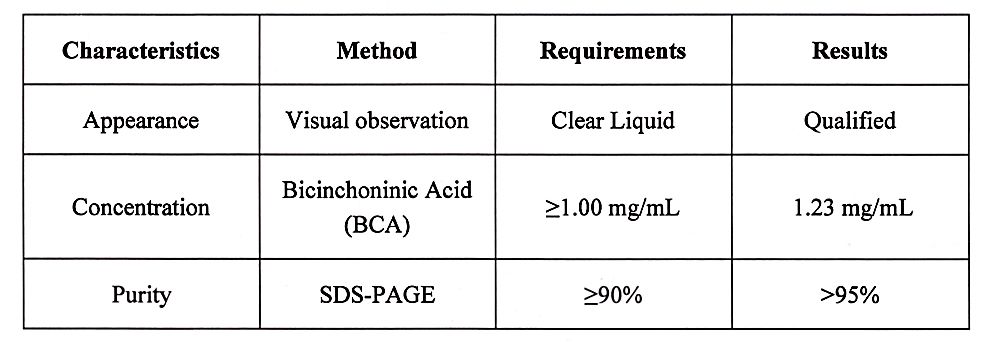
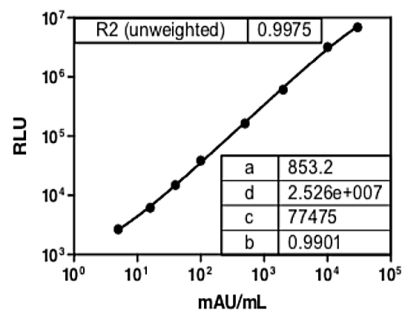
Fig. 1 Standard curve of PIVKA-II antibody pair
(CABT-B9009-CABT-L2604)
In 2020 it was reported that the sixth most diagnosed cancer is primary liver cancer which was also the third leading cause of cancer death around the world. Hepatocellular carcinoma (HCC) accounts for 85%-90% of primary liver cancers and it can be caused by a variety of factors, including hepatitis B virus (HBV) and hepatitis C virus (HCV) infection and excessive alcohol consumption. The detection of convenient, inexpensive, non-invasive and repeatable serum biomarkers has played an important role in the HCC diagnosis. PIVKA-II has been identified as a highly specific marker for HCC and a predictor of the prognosis of HCC patients.
The study of PVIKA-II in liver cancer was first reported in 1986 by the Japanese scholar Fujiyama. The results of plasma PIVKA-II assay performed by the monoclonal antibody-based ELISA indicated that patients with PIVKA-II values exceeding 0.5 AU/ml were strongly suspected to have HCC. Plasma PIVKA-II levels in HCC patients increased with tumor size. Normal levels were observed in patients with tumors 2 cm or less in diameter, and higher PIVKA-II concentrations were detected in patients with tumors larger than 3 cm.
Nakamura first reported elevated PIVKA-II levels in a patient diagnosed with gastric cancer by gastroscopy in 1991. The patient's PIVKA-II level returned to normal after surgery. This is the first case of PIVKA-II used in the diagnosis of gastric cancer. Since then, a number of reports have suggested that PIVKA-II levels are increased in gastric cancer patients with liver metastasis. These studies established the value of PIVK-II in the diagnosis of gastric cancer.
The data of some investigations confirm that PIVKA-II is a serum biomarker increased in PDAC patients. PIVKA-II may be useful to monitor surgical outcomes in this cancer patients and the information derived from serum and tissue PIVKA-II can represent an accurate tool for the oncologists in PDAC cancer management. However, further prospective studies on larger cohorts of patients are needed to confirm the findings of the present investigation.
References
| Cat. No | Product Name | Expression system/Host | Application | |
| DAGC579 | Recombinant Human PIVKA-II Protein [His] | Mammalian cells | ELISA, WB, IHC | Inquiry |
| CABT-B9009 | Mouse Anti-Human PIVKA-II monoclonal antibody, clone N12455N | Mouse | ELISA | Inquiry |
| CABT-L2604 | Mouse Anti-Human PIVKA-II monoclonal antibody, clone N12454N | Mouse | ELISA | Inquiry |
Loading ......
