
Inquiry Basket
 Loading ......
Histones are proteins that package DNA into chromosomes, and their modifications have various impacts on the cell, including gene expression regulation, chromosome packaging, DNA damage, and repair. Histone modification is a key mechanism that regulates gene expression by altering the accessibility of DNA to the transcription machinery.
Histones are subject to various post-translational modifications, including acetylation, methylation, phosphorylation, ubiquitination, and sumoylation. These modifications can promote or repress gene expression, depending on the specific modification and its location on the histone.
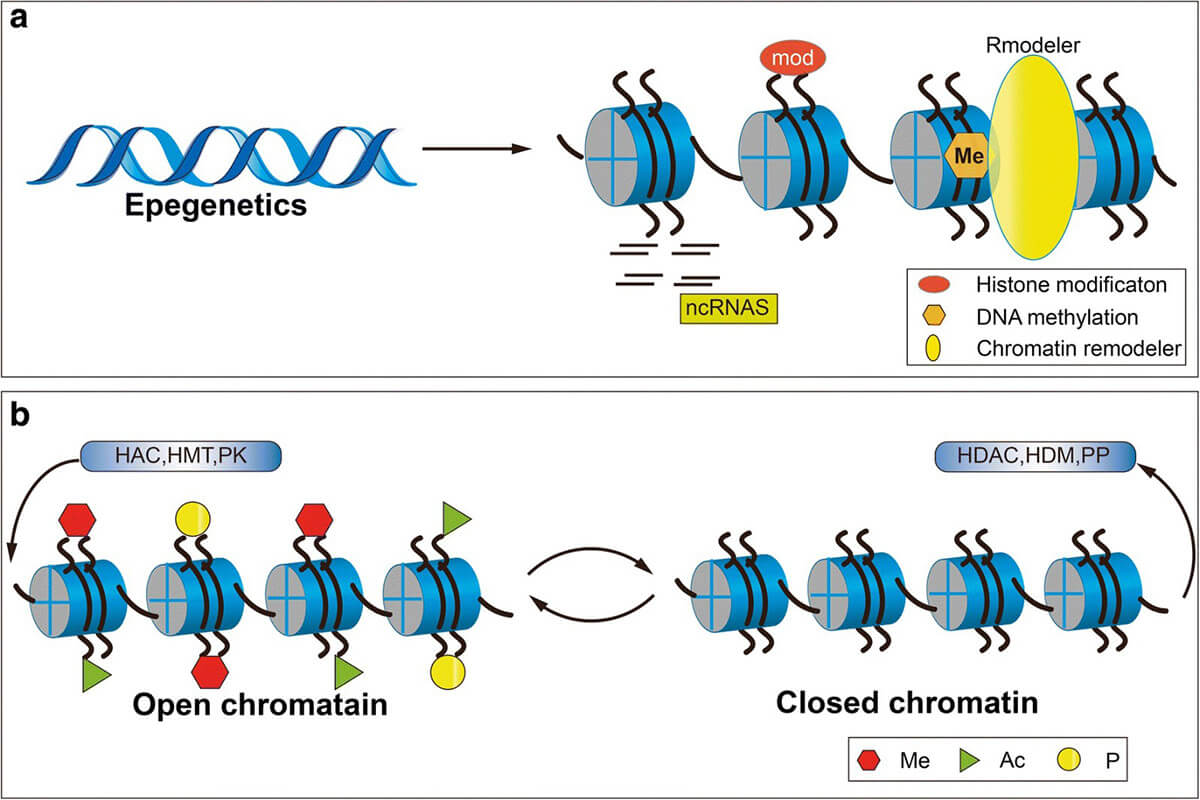 Fig. 1 Major histone modifications that have been studied in the setting of colorectal cancer.
(Qin J, et al., 2020)
Acetylation is the most extensively studied histone modification and is generally associated with gene activation. This modification occurs at the lysine residues of the histone tail and neutralizes their positive charge, thereby decreasing the affinity of histones for DNA. Acetylation is catalyzed by histone acetyltransferases (HATs) and is reversed by histone deacetylases (HDACs). The balance between these two enzymes determines the level of acetylation and, consequently, the level of gene expression.
Methylation is another common histone modification and usually occurs at arginine (R) and lysine (K) residues. Lysine residues can be monomethylated, demethylated, or trimethylated, and arginine residues can be monomethylated or dimethylated. Histone methylation modification is associated with both transcriptional repression and transcriptional activation of genes, depending on the different sites of modification. Such as H3K4, K36, K79 related to transcriptional activation; H3K9, K27, H4K20 related to transcriptional silencing.
Phosphorylation is a dynamic histone modification that regulates various cellular processes, including gene expression. Phosphorylation of serine 10 on histone H3 (H3S10ph) is associated with gene activation, whereas phosphorylation of serine 28 on histone H3 (H3S28ph) is associated with gene repression. Phosphorylation is catalyzed by protein kinases and is reversed by protein phosphatases.
Ubiquitination is a process in which ubiquitin molecules specifically modify target proteins under the action of a series of enzymes such as activating enzymes, binding enzymes, ligating enzymes, and degrading enzymes. Ubiquitination of histones plays a role in changing the conformation of chromosomes, recruiting and activating downstream proteins, and degrading proteins as degradation signals. At present, the most studied is the monoubiquitination of histone H2A and H2B. Monoubiquitinated H2A mostly occurs in heterochromatin and is related to gene silencing. However, monoubiquitinated H2B mostly exists in active euchromatin and is related to transcriptional activation.
There are two main approaches to genome-wide studies of histone modification sites.
ChIP-seq is a method that combines ChIP (chromatin immunoprecipitation) and NGS (next-generation sequencing), which can separate target modifications of histones and their binding by immunoprecipitation of specific histone modification antibodies, and fragment and sequence the associated DNA to determine the location and abundance of histone modifications on the genome. This technique is the gold standard for studying histone modifications localization across the genome.
CUT&Tag is a novel method developed in 2019 to study protein-DNA interactions. The method starts with incubation with a histone-modified specific antibody (primary antibody), which allows the antibody to enter the cell and bind to the target protein. To amplify the signal, incubation with a pAG-Tn5 transposon (secondary antibody) allows the transposon to enter the cell and attach to the antibody, thus indirectly anchoring the transposon to the target protein, followed by the addition of Mg2+, which activates the Tn5 enzyme's cleavage activity and cuts the target protein-bound DNA region. Since Tn5 cleaves DNA with sequencing junctions attached during the process, the junctions are added directly to the fragmented DNA while cutting it off, followed by DNA extraction and PCR amplification for library construction.
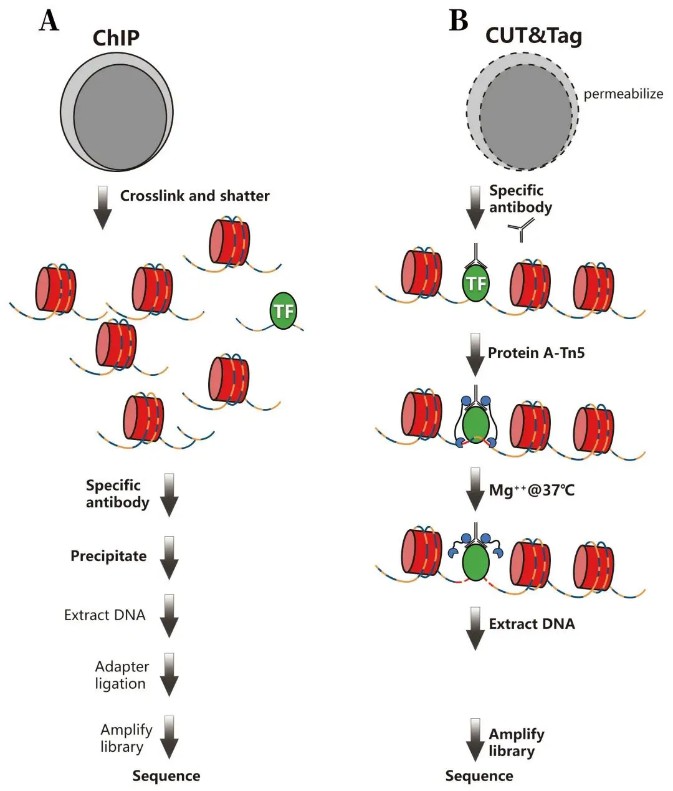 Fig. 2 Differences between immunoprecipitation and antibody-targeted chromatin profiling strategies.
(Zheng Y, et al., 2020)
Histone modifications are added and removed by specific enzymes, which control the expression of genetic programs and cellular processes. By identifying the modification pathways and the specific writers and erasers involved, we can gain insights into relevant cellular pathways, genetic programs, and physiological effects. For example, histone acetyltransferase (HAT) is the writer that adds acetyl groups to histones, while histone deacetylase (HDAC) is the eraser that removes them. They function in the differentiation and proliferation and immune developmental pathways, respectively.
When there is an imbalance between writers and erasers, it can alter genetic programming and contribute to diseases such as cancer and autoimmune disorders. Identifying these imbalances and the specific enzymes involved can provide valuable insights into the underlying mechanisms of various diseases. This understanding also leads to the development of new drug targets and therapeutic strategies. Compounds can be screened for their impact on writer and eraser activity, leading to the development of novel drugs against various diseases.
Creative Diagnostics offers a wide range of research tools and services for studying histone modification and histone-modifying enzymes. Our products include antibodies specific to different histone modifications, as well as recombinant histone-modifying enzymes for use in biochemical assays. We also offer customs for ChIP and high-throughput sequencing-based analysis of histone modifications.
References
Loading ......
