
Inquiry Basket
 Loading ......
With the increasing maturity of biotechnology and peptide synthesis technology, more and more peptide drugs are being developed and applied in clinical practice. Because of its wide indications, high safety and remarkable efficacy, polypeptide drugs have been widely used in the prevention, diagnosis and treatment of tumors, hepatitis, diabetes, AIDS and other diseases, with broad development prospects. The ELISA kit for peptide drug detection provides a reliable and sensitive solution for researchers and clinicians to overcome the analytical challenges unique to peptide therapy throughout drug development and clinical use.
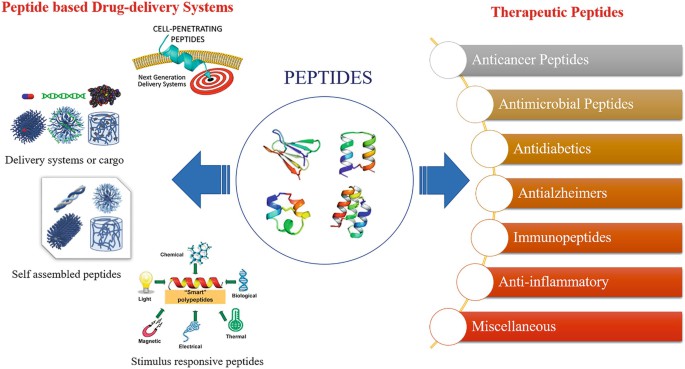 Figure 1. Peptide Drugs.( Mahto, Aman Kumar, et al., 2023)
The early marketed peptide drugs mainly include some peptide hormones, such as salmon calcitonin, somatostatin, human glucagon, oxytocin, etc. With the continuous deepening of new drug research and development, the development of peptide drugs has developed into various fields of disease prevention and treatment, such as anti-tumor peptides, antiviral peptides, peptide vaccines, cytokine mimetic peptides, antibacterial active peptides, diagnostic peptides, weight loss peptides, etc

Peptides are Easy to Synthesize and Modify, and Optimize Combinations
Due to its inherent characteristics, peptides require much less time from clinical trials to FDA approval than small molecule drugs, averaging around 10 years. The probability of peptides passing clinical trials is twice as high as that of small molecule compounds. The specific advantages of peptides make them exhibit specific advantages and have clinical application value in drug development.

Peptide Half-Life is Generally Short and Unstable
Peptide drugs are easily degraded rapidly in the body, and peptide preparations need to be stored at low temperatures. However, stability can be improved by modifying or forming stable complexes with other materials. Compared to large molecule proteins or antibodies, peptides are more stable at room temperature, require less dosage, and have higher unit activity.
Peptide Chemical Synthesis Technology is Mature
Peptides are easily separated from impurities or by-products and have high purity. However, the quality, purity, and yield of recombinant proteins are difficult to guarantee. Recombinant proteins cannot introduce non natural amino acids, cannot undergo terminal amidation, and have long production cycles and high costs.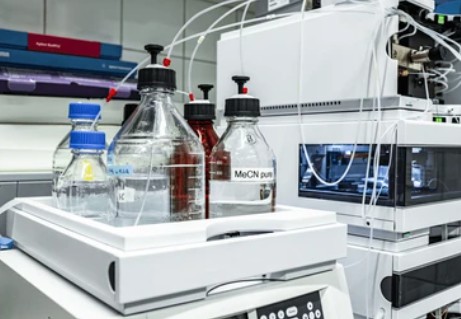
Reverse Phase High-Performance Liquid Chromatography
High performance liquid chromatography has become the most commonly used method in drug quality analysis, with the characteristics of sensitivity, accuracy, and speed. Peptide substances are composed of multiple amino acids connected by peptide bonds, with a certain degree of hydrophobicity and retention on the reverse phase chromatography column. They can be effectively separated in reverse phase high performance liquid chromatography. Nowadays, the analysis of related substances in peptide drugs mostly adopts high performance liquid chromatography.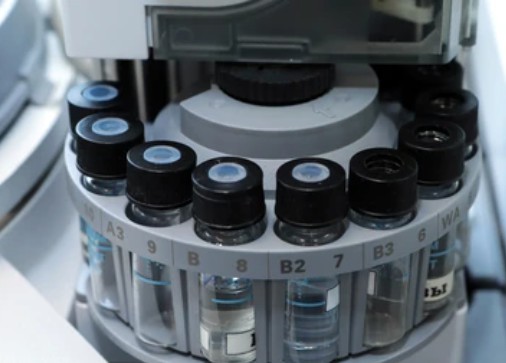
High Performance Liquid Chromatography-Mass Spectrometry
Liquid chromatography-mass spectrometry (LC-MS) has become an important means of separating and identifying various compounds. MS is a powerful structural analysis tool that can provide a lot of information for structural characterization. As an ideal chromatographic detector, it not only has strong specificity, but also has extremely high detection sensitivity. When using liquid chromatography-mass spectrometry, it is possible to provide first-order or even multilevel mass spectrometry information of impurities without obtaining pure impurities, thereby obtaining the molecular weight and sequence information of the impurity peptide.
ELISA Kit Detection Method
In addition to the above-mentioned main methods, reagent kit monitoring methods can also be used for the detection of peptide drugs. The monitoring method of reagent kit usually includes preset detection conditions and standard curves, which are suitable for rapid and simple detection. For example, when detecting acetyl hexapeptide-8, acetyl tetrapeptide-2, and snake venom tripeptides, preset mobile phase and detection conditions can be used to quickly obtain detection results. The advantages of the reagent kit monitoring method lie in its easy operation, low cost, and suitability for rapid testing in laboratories and production sites.The basic principle of ELISA technology is to use antigen antibody specific binding reactions to detect target antigens through enzyme labeled secondary antibodies or chromogenic substrates. In peptide drug detection, sandwich ELISA or competitive ELISA are usually used.
In the sandwich method, a known concentration of antibody is first immobilized on a solid carrier, and then a sample containing the target antigen is added to bind the antigen to the antibody. Next, enzyme labeled secondary antibodies are added to bind with the antigen bound to the solid-phase carrier, and finally the signal intensity is detected by colorimetric reaction. This method is suitable for detecting high molecular weight peptide drugs.
In competition law, antibodies of known concentration are first immobilized on a solid-phase carrier, followed by the addition of a sample containing the target antigen and a labeled antigen of known concentration. If the target antigen is present in the sample, it will bind to the antibody on the solid-phase carrier, thereby reducing the binding amount of the labeled antigen. Finally, the signal intensity is detected through colorimetric reaction. This method is suitable for detecting small molecular weight peptide drugs.
At the core of our peptide ELISA technology are highly specific antibodies engineered to overcome common analytical challenges:
| ELISA Kit | Application |
| Semaglutide ELISA Kit | Distinguishes from endogenous GLP-1 |
| Liraglutide High Sensitivity Elisa Kit | Detects both subcutaneous and oral formulations |
| Exendin-4 ADA ELISA kit | Includes ADA detection capability |
| SN38 ADC ELISA Kit | Peptide ADC Development Pack |
With the continuous development of biotechnology, ELISA kits for peptide drug detection are expected to achieve greater breakthroughs in the future. Firstly, with the development of high-throughput screening technology, the detection range of ELISA kits will be further expanded, enabling the detection of more types of peptide drugs and biomarkers. Secondly, with the application of artificial intelligence and big data technology, the data analysis and result interpretation of ELISA kits will become more intelligent and accurate. In addition, with the development of personalized medicine, ELISA kits will play an increasingly important role in the formulation of individualized treatment plans.
Reference
Loading ......
