
Inquiry Basket
 Loading ......
Double-stranded RNA (dsRNA) is composed of two complementary RNA strands that create a double helix shape. It is closely related to the majority of viral infections, either as genetic material in dsRNA viruses or as a byproduct of viral replication cycles. It serves a vital role in immunological control, as practically all species can recognize and respond to dsRNA.
dsRNA is one of the key components of RNA interference (RNAi). RNAi is a gene-silencing mechanism mediated by dsRNA or microRNA (miRNA). After a series of reactions, these molecules bind to specific messenger RNA (mRNA) targets in the host cell, inhibiting their translation or inducing mRNA degradation, thereby preventing normal gene expression. As a naturally occurring and highly conserved mechanism, RNAi has important applications in biological research, biotechnology, and therapeutic studies.
Upon viral infection or artificial introduction into cells, long dsRNA is recognized and cleaved by an endonuclease called Dicer, producing small fragments known as small interfering RNA (siRNA). siRNA typically consists of 19-25 nucleotide sequences and activates the RNA-induced silencing complex (RISC). Within RISC, the sense strand of siRNA is cleaved, while the antisense strand guides RISC to bind complementarily with the target mRNA. Exogenous siRNA is usually designed to perfectly complement a single mRNA's coding sequence, thereby conservatively and stably achieving cleavage and degradation of the target mRNA. In research, a complementary short RNA sequence of 19-22 nucleotides, known as short hairpin RNA (shRNA), can replace long dsRNA to achieve the same effect, but its expression requires viral vectors, which may introduce safety concerns.
On the other side, miRNA mediates gene silence in a slightly different mechanism to dsRNA, but they involve similar enzymes and pathways. miRNA production requires numerous precursor stages. Following the transcription of miRNA genes in the nucleus, primary miRNA (pri-miRNA) is generated. The microprocessor complex subsequently cleaves this miRNA to make precursor microRNA (pre-miRNA). Pre-miRNA is delivered to the cytoplasm, where Dicer converts it into mature miRNA. MiRNA creates a complex with RISC in which the sense strand is discarded rather than cleaved, while the antisense strand directs the complex's target mRNA binding and control. Endogenous miRNA and mRNA sequence match can range from partial to virtually perfect, allowing for control of target mRNA expression by cleavage, degradation, and/or protein translation inhibition.
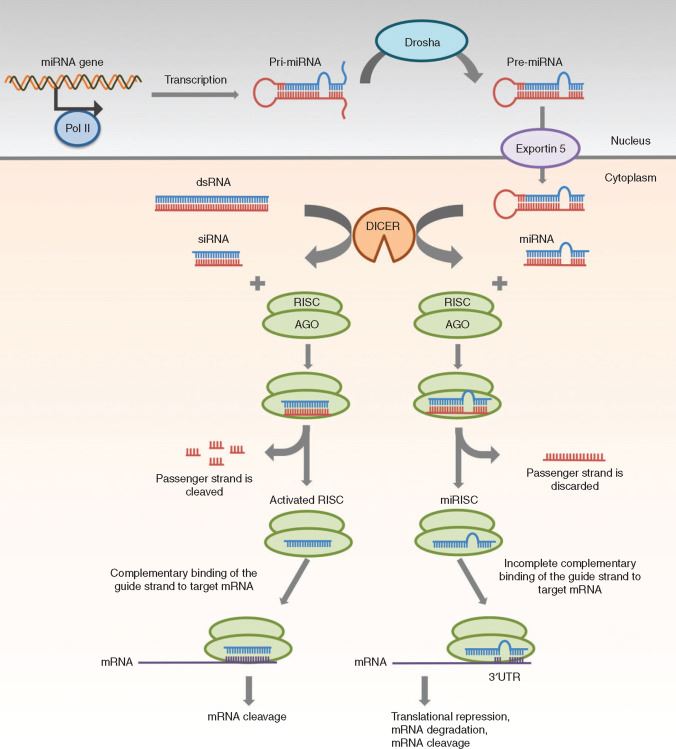 Figure 1. The Mechanisms of Gene Silencing by siRNA and miRNA
(Source: Lam JKW, et al. 2015)
The precise targeting and gene knockout properties of dsRNA make it a powerful tool in life science research. In functional genomics studies, key genes can be screened across the entire genome by using the gene silencing mechanism to determine which genes play a critical role in specific biological processes. In addition, dsRNA can be used to silence disease-associated genes in cell or animal models, which mimics human disease. For example, studying the role of specific genes in cancer cells in the onset and development of cancer, or investigating the pathological mechanisms of neurodegenerative diseases such as Alzheimer's or Parkinson's. dsRNA can also be used to develop new experimental research tools and techniques such as establishing the genome-wide siRNA library for large-scale gene screening.
In the past two decades, dsRNA and its mediated RNAi have received widespread attention for their potential applications in agricultural production. The precise manipulation of target gene expression by dsRNA allows it to be used for protecting crops and as a species-specific insecticide to control field pests, without affecting beneficial insects. Furthermore, dsRNA has a half-life of less than 3 days and degrades easily in the environment, without persisting in aquatic systems, making it a safe, non-toxic, and environmentally friendly pest control solution.
Introducing dsRNA into crops and ensuring its correct expression can improve crop traits, enhance the production efficiency of natural products, prolong flowering duration, increase disease resistance, and cultivate flowers and fruits with longer shelf life and higher nutritional value. Achieving these goals does not necessarily require complete gene knockout and can substitute traditional genetic modification methods.
As an efficient insecticide, dsRNA has been or is about to be applied to control common field pests such as aphids, red fire ants, leafhoppers (one of the rice pests), fruit flies, and moths. Typically, critical genes involved in pest development and reproduction are selected as optimal target genes. Silencing these genes can lead to developmental stagnation, significantly reduce egg-hatching rates, or directly kill the insects. It is important to note that the configuration and length of introduced dsRNA/shRNA and their target mRNA can affect the efficacy of gene silencing and off-target effects, resulting in varying RNAi effects among different insect species and potentially within the same species. The efficacy of RNAi is also influenced by the physiological stage and gender of insects, with larvae often exhibiting high sensitivity to RNAi.
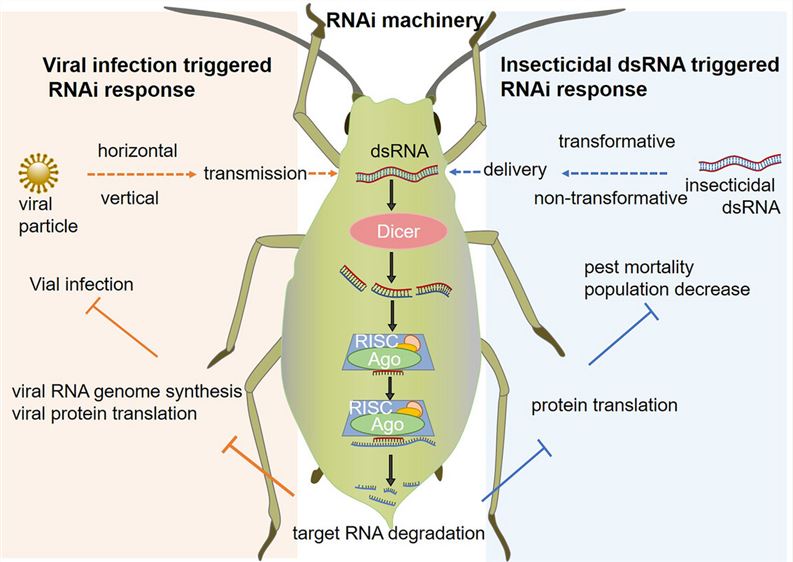 Figure 2. The connection between RNAi in antiviral defense and as a pest control strategy
(Source: Niu J, et al. 2023)
Methods for applying dsRNA include soaking larvae in solutions, spraying, feeding adults with sugar solutions or microorganisms expressing iRNA, and microinjection. Spraying may not penetrate the insect's cuticle layer, and naked dsRNA in the environment degrades quickly, so oral ingestion of sufficient dsRNA is the preferred method for production applications. Complexing dsRNA with lipid nanoparticles is also a primary technique currently used, enhancing dsRNA stability in the environment and enabling effective penetration through various barriers to reach insect cells.
It has been over 25 years since RNAi was discovered, showcasing unprecedented specificity and efficiency in gene regulation. As a foundational tool, dsRNA holds enormous potential in developing new therapeutic drugs, that differ chemically and pharmacologically from traditional protein and molecular therapies. In the past 6 years alone, 6 siRNA drugs targeting liver-related conditions such as acute hepatic porphyria, hepatic amyloidosis, primary hyperoxaluria, familial hypercholesterolemia, and clinical atherosclerotic cardiovascular diseases have been granted market approval. Figure 3 shows the RNAi Mechanisms and Molecular Pharmacology of 6 approved siRNA therapies. (A) shows the mechanism of endogenous miRNA and exogenous RNAi agents derived from the genome; (B) summarizes the molecular pharmacology of the 6 approved siRNA therapies (blue represents the antisense strand, red represents the sense strand). These therapies incorporate extensive chemical modifications on the ribose backbone of individual nucleotides while employing techniques such as encapsulating siRNA in lipid nanoparticles or conjugating with N-acetyl galactosamine ligands to enhance delivery efficiency to liver cells.
 Figure 3. The RNAi Mechanisms and Molecular Pharmacology of Six Approved RNAi Therapies
(Source: Traber G.M., et al. 2024)
Of interest is that among these 6 so-called siRNA drugs, only one (givosiran) follows the typical siRNA mechanism, which pairs with the coding sequence (CDS) of the target mRNA but may exhibit mismatches. The other 5 were found to act on the 3'UTR region of the target mRNA, inducing its degradation, which aligns with the typical mechanism of miRNA. Among these, 3 drugs involve complete complementary pairing. This raises questions about whether the distinction between siRNA and miRNA mechanisms is as previously defined. Further exploration is needed to correctly classify, name, and apply RNAi mechanisms. Expanding the scope of RNAi therapy applications to encompass a broader range of diseases is the future direction. Currently, siRNA drugs are being developed for infectious diseases, metabolic disorders, and eye and skin conditions, among others. Additionally, the first miRNA candidate drug is in clinical trials.
In conclusion, dsRNA and its mediated gene silencing have a wide-ranging impact, from fundamental biology studies to new medicinal techniques and sustainable agriculture practices. As we explore more about its complex mechanisms and capacity, dsRNA has the potential to revolutionize gene regulation, disease therapy, and pest management. With continual advances and expanding applications in science and industry, dsRNA is at the forefront of novel technologies that promise a healthier, more resilient future.
If your laboratory is planning or conducting dsRNA-related detection and research, Creative Diagnostics offers a range of high-quality dsRNA monoclonal antibodies and ELISA kits. Our antibodies exhibit high affinity and specificity, allowing flexible detection of dsRNA with different labels simultaneously. All products undergo thorough validation with rich quality control data to support your experiments reliably. Please visit our product page to place orders, and they will swiftly and safely arrive at your lab bench.
References
| Target | Cat. No. | Product Name | Size | Species Reactivity | Application | Detection Sample | |
| dsRNA | DEIA1681 | dsDNA Antibody ELISA Kit | 96T | Human | Quantitative | Human Serum or Plasma | Inquiry |
| DEIA-NS2306 | Double-stranded RNA (dsRNA) ELISA kit | 96T | N/A | Inquiry | |||
| DEIA-BZ002 | Double-stranded RNA (dsRNA, modified) ELISA kit | 96T | NA | Quantitative | Universal | Inquiry |
| Target | Cat. No. | Product Name | Host | Isotype | Application | |
| dsRNA | CABT-B212P | Mouse Anti-dsRNA Monoclonal antibody, clone sK3 | Mouse | IgG2a, κ | IP, ELISA, EM, IF, IHC | Inquiry |
| CPBT-LL016 | Mouse Anti-double-stranded RNA monoclonal antibody, clone J2 | Mouse | IgG2a, κ | Dot, ELISA, ICC, IHC, IC | Inquiry | |
| CPBT-LL017 | Mouse Anti-double-stranded RNA monoclonal antibody, clone J5 | Mouse | IgG2b | Dot, ELISA, ICC, IHC, IC | Inquiry | |
| CPBT-LL018 | Mouse Anti-double-stranded RNA monoclonal antibody, clone K1 | Mouse | IgG2a | Dot, ELISA, ICC, IHC, IC | Inquiry | |
| CABT-CS603 | Mouse Anti-dsRNA Monoclonal antibody, clone K2 | Mouse | IgM | ELISA, IHC, DB | Inquiry |
Loading ......
