
Inquiry Basket
 Loading ......
mRNA has gained significant worldwide attention as a novel active ingredient in vaccines and gene therapies. The increasing demand for mRNA molecules has compelled mRNA manufacturers to quickly scale up production capacity while maintaining high mRNA quality. In vitro transcription by T7 polymerase is the standard procedure to synthesize mRNA. However, this procedure may introduce double-stranded RNA (dsRNA) contaminants from random priming of abortive transcripts, turn-around transcription, and antisense transcription.[1]
dsRNA can induce innate immunity, leading to the production of interferon (IFN) alpha and beta, which activate hundreds of IFN-stimulated genes that confer viral resistance[2]. dsRNAs over 30 bp in length have been reported to be key activators of the innate immune response against viral infection. Host cell interactions with dsRNA can occur in a number of ways. Primarily, specific receptors activate the synthesis of IFN alpha and beta, antiviral proteins, and dsRNA-activating enzymes that block viral replication. dsRNA replication of all dsRNA viruses is shown to occur in the cytoplasm[3].
dsRNA can be recognized by endosomal membrane-bound Toll-like receptor-3 (TLR-3) and cytosolic RNA sensors such as melanoma differentiation-associated protein 5 (MDA5) and retinoic acid-inducible gene I (RIG-I). dsRNA immune activation results in the up-regulation of various pro-inflammatory cytokines, and cell death, which can lead to patient morbidity. Therefore, to improve the quality of mRNA translation, and minimize adverse effects, it is critical to carefully monitor in vitro-transcribed (IVT) mRNA products and confirm the removal of dsRNA after purification.[4]
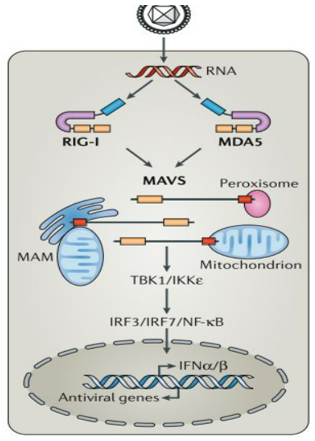 Fig 1. dsRNA activates antiviral innate immune signaling through intracellular receptors
dsRNA antibodies have been used extensively to detect and characterize plant and animal viruses with dsRNA genomes or intermediates, and are efficient tools for the detection of dsRNA in cell culture and tissues such as in vitro transcribed mRNA preparations and for the quality control of mRNA preparation.
Creative Diagnostics provides products against double-stranded RNA that can be used for the in-vitro detection of the dsRNA in transcribed mRNA preparation and diagnosis research of viral infection.
| DEIA-BZ002 | DEIA-NS2306 | |
| Target | UTP dsRNA, pUTP dsRNA, N1-Me-pUTP dsRNA | UTP dsRNA, pUTP dsRNA, N1-Me-pUTP dsRNA, 5-OMe-UTP dsRNA |
| Sensitivity | LOD: <10 pg/mL LOQ: 47 pg/mL | LOD: ≤ 0.001pg/μL (for 5-OMe-UTP dsRNA ≤0.01pg/μL) LOQ: 0.0156 pg/μL (for 5-OMe-UTP dsRNA 0.0312 pg/μL) |
| Precision | CV of Intra-Assay ≤8% CV of Inter-Assay ≤10% | CV of Intra-Assay ≤10% CV of Inter-Assay ≤10% |
| Recovery | 80%~120% | 80%~120% |
| Linearity | 0.046-1.5 ng/mL | 0.0312-1 pg/μL |
References
| Cat No. | Product Name | Compatible Samples | |
| DEIA-BZ002 | Double-stranded RNA (dsRNA, modified) ELISA kit | synthetic mRNA solution | Inquiry |
| DEIA-NS2306 | Double-stranded RNA (dsRNA) ELISA kit | synthetic mRNA solution | Inquiry |
| Cat No. | Product name | Application | |
| CPBT-LL018 | Anti-dsRNA Monoclonal antibody, clone K1 [Mouse IgG2a] | ELISA, IHC, dsRNA-Immunoblotting, Immunoaffinity Chromatography | Inquiry |
| CPBT-LL018 shows higher affinity to poly(I).poly(C) than to the other dsRNA antigens. Recommended for Poly I:C detection J2 alternative in case of cross reactions. | |||
| CABT-CS603 | Anti-dsRNA Monoclonal antibody, clone K2 [Mouse IgM] | ELISA, IHC, DB | Inquiry |
| Isotype alternative to CPBT-LL016 & CPBT-LL018. CABT-CS603 is recommended for ELISA. | |||
| CPBT-LL016 | Anti-dsRNA Monoclonal antibody, clone J2 [Mouse IgG2a] | ELISA, IHC, dsRNA-Immunoblotting, Immunoaffinity Chromatography | Inquiry |
| Recognize all naturally occurring dsRNAs. Gold standard for dsRNA detection. Recommended for quality control of in vitro transcribed (m)RNA. | |||
| CPBT-LL017 | Anti-dsRNA Monoclonal antibody, clone J5 [Mouse IgG2b] | ELISA, IHC, dsRNA-Immunoblotting, Immunoaffinity Chromatography | Inquiry |
| Recognize all naturally occurring dsRNAs. | |||
Loading ......
