
Inquiry Basket
 Loading ......
The enzyme-linked immunosorbent assay (ELISA) is a technique based on an enzyme-labeled antibody capable of detecting an antigen immobilized to a solid surface, most commonly 96-well or 384-well polystyrene plates. This high-throughput assay relies on unbound materials to be washed off between steps, allowing detection of the enzyme-labeled antibody attached to the antigen. The most commonly used enzymes are alkaline phosphatase (AP) and horseradish peroxidase (HRP). HRP is generally preferred for its lower detection limit. As the technique advances, ELISA has been adopted to other platforms for multiplexing, and the term ELISA has evolved to loosely refer to assays involving antibody detection of analyte. As with any immunoassay, the key to ELISA is the antibody. Antibody affinity and avidity determine the sensitivity and specificity of the assay. Antibody can be employed in several ways in an ELISA assay. It can be directly conjugated to an enzyme to detect plate-immobilized antigen, a form known as direct ELISA. Alternately, a secondary antibody can be used to amplify the signal of the primary antibody bound to the antigen, also known as indirect ELISA. A third method immobilizes antibody onto a plate to capture an antigen in solution followed by detecting with another enzyme-conjugated antibody recognizing a different epitope of the same antigen. This popular method, also known as sandwich ELISA, gives the greatest sensitivity for detecting a specific antigen in a complex sample. A fourth format, also known as competitive ELISA, utilizes a mixture of antibody- antigen and free antibody in liquid phase to interact with plate- immobilized antigens.
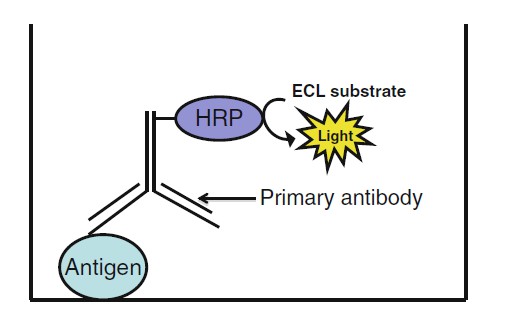 Figure 1. Schematic diagram to illustrate the principle of direct ELISA.
This chapter provides the methodology for performing direct ELISA and optimizing performance by chessboard titration. In the direct ELISA, the antigen of interest in fluid phase is immobilized to a microtiter plate through passive absorption. A blocking buffer is added to saturate all unbound sites followed by the binding of enzyme-labeled antibody. Antibody in direct ELISA can be monoclonal or polyclonal. A substrate is added to generate a color change or emit light indicating the presence of antigen. Direct ELISA is useful for qualitative or quantitative antigen detection in a sample, antibody screening, and epitope mapping. Since only one antibody is involved, there is no crossreactivity with secondary antibody, and the assay can be performed in less amount of time compared to other ELISA methods.
(a) Binding solution: 0.2 M carbonate-bicarbonate, pH 9.4.
(b) Wash solution: Tris-buffered saline (pH 7.4) with 0.1 % (v/v) Tween 20 (TBST).
(c) Blocking solution: 10 % nonfat dry milk in TBST.
(d) Dilution buffer: 1 % nonfat dry milk in TBST.
(a) Antigen of interest partially purified or purified.
(b) Primary antibody, monoclonal or polyclonal, conjugated to horseradish peroxidase (HRP). Antibody can be purchased in the HRP-conjugated form or self-conjugate with Lightning- Link™ HRP Conjugation Kit.
(c) Substrate: enhanced chemiluminescent (ECL) HRP substrate (see Note 2).
(a) White 96-well plates (see Note 3).
(b) 96-well plate cover or adhesive seal.
(c) 96-well plate reader: PerkinElmer VICTOR ™ X3 Multilabel Plate Reader (PerkinElmer, Waltham, MA).
(d) ELISA plate washer (optional).
(e) Titer plate shaker.
(a) Prepare 1 M solution of guanidine-HCl.
(b) Add 100μl to each well and incubate for 1 h.
(c) Aspirate off the denaturant and wash four times with 200 μl of wash solution either by hand or ELISA plate washer.
A common phenomenon observed in ELISA is the prozone or hook effect. This occurs when either the antigen or the antibody is used at high concentration but gives false low signal. A simple method of optimizing antigen and antibody concentrations is by chessboard titration.
Titration of Antigen
Titration of Antibody
Loading ......
