

Inquiry Basket
 Loading ......
As a third-generation gene editing tool, the core principle of the CRISPR-Cas9 system is derived from the adaptive immune mechanism of bacteria. Through the precise pairing of sgRNA and target DNA sequence, Cas9 nuclease can achieve single-base gene cutting, which makes it a "molecular scalpel" for drug target verification. Compared with traditional gene editing technologies (such as ZFN and TALEN), CRISPR technology reduces the cost of gene editing by more than 90%, and shortens the operation cycle to 1/3 of traditional methods. In the field of tumor immunotherapy, CRISPR technology has successfully constructed CAR-T cells with knockout of PD-1/PD-L1 signaling pathway, significantly improving the killing efficiency of tumor cells.
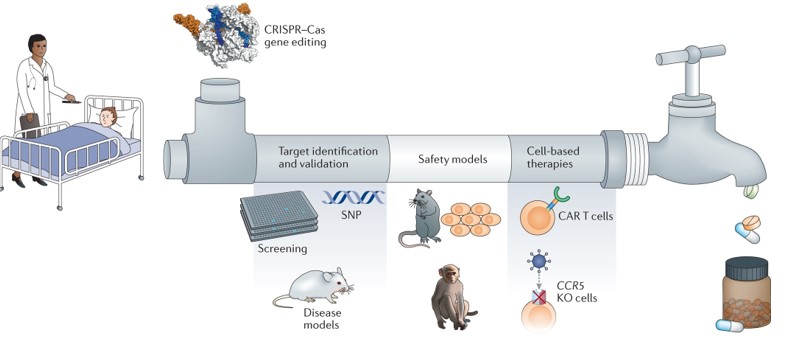 Figure 1. Pipeline of CRISPR–Cas-assisted drug discovery. (Sources: Fellmann C, et al. 2017)
Because of its high efficiency and low cost, CRISPR technology is widely used in the field of small molecule drug development, as follows:
1. Collaborative Innovation of Whole Genome and High-Throughput Screening
CRISPR library technology can complete genome-wide functional gene scanning in a single experiment by constructing a screening system containing tens of thousands of sgRNAs. For example, the GeCKO library developed by the Broad Institute successfully identified 12 core regulatory genes related to breast cancer metastasis through dual-mode screening of CRISPR-KO (gene knockout) and CRISPRi (gene inhibition). Compared with RNAi technology, the false positive rate of CRISPR screening is reduced by 40%, and the signal-to-noise ratio is increased by 3.2 times.
2. Technical Iteration of Disease Model Construction
Using the CRISPR-Cas12f micro-editor (only 529 amino acids), researchers can achieve multi-gene simultaneous editing in organoid models. The pancreatic cancer organoid model constructed by the Stanford University team through this technology successfully simulated the KRAS/p53 double mutation phenotype, increasing the accuracy of drug testing to 92%. In the field of neurodegenerative diseases, CRISPRa (gene activation) technology has been used to restore normal expression of the HTT gene in Huntington's disease models.
3. In-depth Expansion of Multi-Omics Integrated Analysis
Combined with single-cell sequencing technology, CRISPR screening data can construct a gene function regulatory network. For example, the MIT team integrated CRISPR-KO and single-cell transcriptome data to draw a dynamic regulatory map of the MAPK-ERK pathway related to lung cancer cell resistance and discovered 5 new drug resistance targets. At the epigenetic level, the dCas9-SunTag system can achieve directional regulation of histone modifications, providing new ideas for epigenetic drug development.
1. Intelligent Upgrade of Targeted Drugability Assessment
AI prediction models (such as DeepDTA) built based on CRISPR validation data can reduce the prediction error of small molecule binding affinity to 0.38 kcal/mol. In the optimization of physicochemical properties, CRISPR screening-guided molecular skeleton modification increased oral bioavailability by 2.3 times.
2. Paradigm Change in Preclinical Research
The "reverse translational medicine" model driven by CRISPR technology is emerging. The research company completed the entire process from target discovery to preclinical candidate compound (PCC) determination in just 14 months through CRISPR screening of patient-derived tumor cells. In safety assessment, the CRISPR-Cas13a system can achieve real-time monitoring of drug hepatotoxicity-related miRNAs.
1. Commercial Breakthroughs in Synthetic Lethal Therapy
IDE397 (MAT2A inhibitor) developed by a research company was found to have a synthetic lethal effect on MTAP-deficient tumors through CRISPR screening, and has currently demonstrated a 67% disease control rate in Phase II clinical trials. Another research company developed a SHP2 allosteric inhibitor based on CRISPR screening data, which successfully overcame the drug resistance problem of KRAS mutant tumors.
2. Technological Integration of Gene Therapy Products
The CRISPR-DD (DNA delivery) system combines gene editing with PROTAC technology, and the developed BRD4 degrader can simultaneously achieve target gene knockout and protein degradation, with a complete remission rate of 83% in diffuse large B-cell lymphoma models.
CRISPR technology is driving drug development into the "precision programmable" era, but the release of its technological dividends requires a balance between innovation speed and risk control. With the development of derivative technologies such as single-base editing and epigenetic regulation, it is predicted that drugs developed based on CRISPR technology will account for an increasing share of new drugs under development worldwide. This gene editing revolution is not only reshaping the paradigm of drug development, but also redefining the strategic dimension of human fight against disease.
CRISPR-Cas9 enables researchers to achieve a panoramic analysis of gene function in complex models such as human cells and organoids through the precise pairing of sgRNA and target DNA sequences (single-base level cutting accuracy). Its efficiency improvement is reflected in:
Whole genome screening innovation: Tools such as GeCKO library can scan tens of thousands of genes in a single experiment, such as the discovery of 12 core regulatory genes related to breast cancer metastasis;
Dynamic functional simulation: Through the dual modes of CRISPRa (activation) and CRISPRi (inhibition), simulate the gene dosage effect and reveal the temporal role of the target in disease progression;
Drug resistance reverse engineering: construct cell models carrying clinical mutations (such as EGFR T790M), predict drug failure mechanisms and design allosteric inhibitors.
CRISPR technology deeply affects the evaluation criteria from molecular mechanism to clinical transformation:
Target biological verification: distinguish the functional differences of targets in normal tissues and lesions through conditional gene knockout (such as Cre-loxP system) to reduce the risk of toxicity;
Multi-omics data fusion: integrate single-cell sequencing and protein interaction network to identify the "functional hotspot area" of the target and guide the design of small molecule binding pockets;
Quantification of synthetic lethal effect: use CRISPR double gene knockout library to calculate the target synergy index (CSI) and screen highly selective drug combinations.
Case 1: Development of KRAS G12C inhibitors
CRISPR screening found that SHP2 protein is a key synergistic factor of KRAS mutants, which promoted the combination therapy of SHP2 inhibitors (such as RMC-4630) and KRAS inhibitors into clinical phase II;
Case 2: BCL-2 anti-apoptotic protein inhibitors
CRISPR gain-of-function mutations revealed the phosphorylation site resistance mechanism of BCL-2, guiding the design of an optimized version of the allosteric inhibitor Venetoclax;
Case 3: Epigenetic target EZH2
CRISPR-Cas9-mediated histone methylation dynamic tracking technology verifies the epigenetic dependence of the EZH2 inhibitor Tazemetostat in lymphoma.
Current technical bottlenecks:
Delivery efficiency issues: The delivery efficiency of lipid nanoparticle (LNP) carriers in tissues outside the liver is less than 5%, which limits its application in solid tumor models;
Homology-directed repair (HDR) barriers: The HDR efficiency in mammalian cells is only 0.1%-5%, resulting in a low success rate of precise editing.
Innovative solutions:
Prime Editing technology: Through the fusion of reverse transcriptase and Cas9 protein, precise editing without DNA double-strand breaks is achieved, and the HDR efficiency is increased to 30%;
AAV capsid modification: Directed evolution screens AAV9 variants targeting neural cells to break through the blood-brain barrier delivery limitations.
Cross-dimensional integration strategy:
Virtual screening optimization: Based on the target conformational change data obtained by CRISPR, molecular dynamics models (such as Gaussian accelerated MD) are trained to predict changes in small molecule binding energy;
Organoid drug sensitivity testing: CRISPR-edited colon cancer organoids are tested in parallel with patient-derived xenograft models (PDX) to verify the tissue-specific toxicity of drugs;
AI-driven iteration: Using the massive functional genomic data generated by CRISPR screening, deep learning algorithms are trained to predict the multi-target effects of small molecules.
Reference
| Target | Cat. No. | Product Name | Type | Host | Conjugate | Application | |
| Aconitine | DAG002S | Aconitine [HRP] | Synthetic | N/A | HRP | ELISA, LFIA | Inquiry |
| DAG003S | Aconitine [KLH] | Synthetic | N/A | KLH | ELISA, LFIA | Inquiry | |
| Bifenthrin | DAG004S | Bifenthrin [BSA] | Synthetic | N/A | BSA | ELISA, LFIA | Inquiry |
| DAG005S | Bifenthrin [HRP] | Synthetic | N/A | HRP | ELISA, LFIA | Inquiry | |
| DAG006S | Bifenthrin [KLH] | Synthetic | N/A | KLH | ELISA, LFIA | Inquiry | |
| Citreoviridin | DAG007S | Citreoviridin [BSA] | Synthetic | N/A | BSA | ELISA, LFIA | Inquiry |
| DAG008S | Citreoviridin [HRP] | Synthetic | N/A | HRP | ELISA, LFIA | Inquiry | |
| DAG009S | Citreoviridin [KLH] | Synthetic | N/A | KLH | ELISA, LFIA | Inquiry | |
| Clopidol | DAG010S | Clopidol [BSA] | Synthetic | N/A | BSA | ELISA, LFIA | Inquiry |
| DAG011S | Clopidol [HRP] | Synthetic | N/A | HRP | ELISA, LFIA | Inquiry | |
| DAG012S | Clopidol [KLH] | Synthetic | N/A | KLH | ELISA, LFIA | Inquiry | |
| Diacetoxyscirpenol | DAG013S | Diacetoxyscirpenol [BSA] | Synthetic | N/A | BSA | ELISA, LFIA | Inquiry |
| DAG014S | Diacetoxyscirpenol [HRP] | Synthetic | N/A | HRP | ELISA, LFIA | Inquiry | |
| DAG015S | Diacetoxyscirpenol [KLH] | Synthetic | N/A | KLH | ELISA, LFIA | Inquiry | |
| Fenitrothion | DAG016S | Fenitrothion [BSA] | Synthetic | N/A | BSA | ELISA, LFIA | Inquiry |
| DAG017S | Fenitrothion [HRP] | Synthetic | N/A | HRP | ELISA, LFIA | Inquiry | |
| DAG018S | Fenitrothion [KLH] | Synthetic | N/A | KLH | ELISA, LFIA | Inquiry | |
| Isocarbophos | DAG019S | Isocarbophos [BSA] | Synthetic | N/A | BSA | ELISA, LFIA | Inquiry |
| DAG020S | Isocarbophos [HRP] | Synthetic | N/A | HRP | ELISA, LFIA | Inquiry | |
| DAG021S | Isocarbophos [KLH] | Synthetic | N/A | KLH | ELISA, LFIA | Inquiry | |
| Levamisole | DAG022S | Levamisole [BSA] | Synthetic | N/A | BSA | ELISA, LFIA | Inquiry |
| DAG023S | Levamisole [HRP] | Synthetic | N/A | HRP | ELISA, LFIA | Inquiry | |
| DAG024S | Levamisole [KLH] | Synthetic | N/A | KLH | ELISA, LFIA | Inquiry |
Loading ......
