
Inquiry Basket
 Loading ......
We are engaged in developing novel vaccines against bovine tuberculosis which is caused by infection with Mycobacterium bovis. In this disease, Th1 responses, and in particular IFN-γ production, are considered to be major contributors to protective immunity. Therefore, this chapter describes ELISPOT assays detecting bovine IFN-γ. An example of ELISPOT results observed in cattle after subunit vaccination with a mycobacterial antigen, delivered as DNA vaccine or as pool of synthetic peptides. The same assay principles apply to the detection of other cytokines or chemokines. However, due to the lack of bovine specific reagents, important cytokines assessed in human systems, like interleukin-2 (IL-2), cannot be probed by ELISPOT in cattle at present. Cytokine ELISPOT assays in their basic form detect effector T-cell responses since assays are initiated directly using ex vivo peripheral blood mononuclear cells (PBMCs). However, assessment of memory responses is also a vital parameter to be assessed following vaccination. This can also be addressed using a modification of the ex vivo ELISPOT, the so-called cultured ELISPOT system. The principle of the cultured ELISPOT is that the IFN-γ ELISPOT is not performed on ex vivo PBMC, but on cells that have been expanded and differentiated in vivo for around 2 weeks by initial stimulation with antigen and then regular feeds of IL-2. The majority of effector cells that are initially stimulated by this approach die of IFN-γ -induced cell apoptosis during this culture and expansion step, whereas memory cells differentiate into secondary effector cells that can be enumerated at the end of this culture step by IFN-γ ELISPOT. This assay was first applied in the human system and applied to diseases, such as malaria. A study by Godkin et al. has demonstrated that the CD4+ T-cell memory population probed with this assays consisted mainly of central memory cells expressing the chemokine receptor CCR7. We have adapted this system for use in cattle, and its protocol is also described in this chapter. Interestingly, in our hands, cultured ELISPOT responses were a direct predictor of vaccine efficacy against M. bovis challenge in cattle.
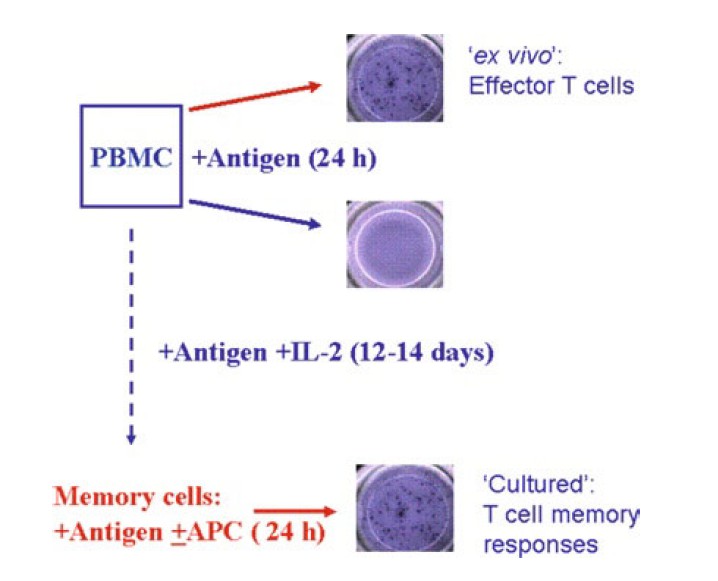 Figure 1. Flow chart of ex vivo and cultured ELISPOT assay.
Note: Steps 1–4 need to be performed in class 2 biosafety cabinet.
Reference
Loading ......
