
Inquiry Basket
 Loading ......
In the field of biological research and diagnostics, the Enzyme-Linked Immunosorbent Assay (ELISA) has emerged as a powerful tool for the detection and quantification of various biological molecules. ELISA assays provide valuable information about the presence and concentration of analytes such as proteins, antibodies, and antigens in a given sample. Analyzing and interpreting ELISA data accurately is crucial for researchers and scientists to draw meaningful conclusions and make informed decisions.
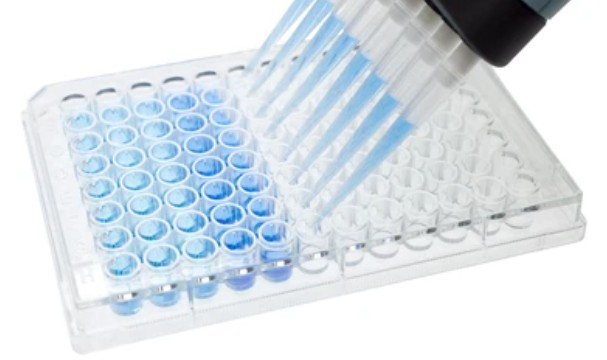
Certain practices must be followed before and after conducting measurements to ensure accurate and consistent data analysis. The following are some key factors to consider:
The calculation of ELISA results involves several important steps to ensure accuracy and reproducibility.
A standard curve is a plot of known concentrations of a target analyte against corresponding optical density (OD) values. It serves as a reference to determine the concentration of the unknown samples. To create a standard curve, a series of standards with known concentrations of the analyte are prepared and measured using the ELISA assay. The OD values obtained from these standards are plotted against their respective concentrations to generate a linear or non-linear curve.
After obtaining the standard curve, the absorbance of the unknown samples is measured using a spectrophotometer or a microplate reader. The absorbance values reflect the amount of the target analyte present in the samples. These values are then used to interpolate the concentration of the unknown samples from the standard curve.
The CV is a crucial statistical measure in ELISA data analysis. It is the ratio of the standard deviation σ to the mean µ.

The CV provides insights into the variability and consistency of results. By comparing the CV of duplicates, researchers can identify any inconsistencies or inaccuracies in their ELISA data.
Spike recovery helps determine the impact of sample constituents on the detection of antigens by antibodies in an ELISA assay. It assesses how various components in the sample matrix can interfere with antibody binding and affect the accuracy of results. In spike recovery evaluation, known concentrations of a protein are added (spiked) to both the sample matrix and a standard diluent. The quantification of spiked protein is then compared between the sample matrix and the standard diluent. If the results are identical, it indicates that the sample matrix is suitable for the assay. Otherwise, the sample matrix contains interference components that affect antigen detection.
For the latter scenario, we have two solutions:
At Creative Diagnostics, we are committed to providing high-quality ELISA kits and comprehensive support to researchers worldwide. By combining our expertise, state-of-the-art products, and optimized protocols, we aim to empower scientists in their pursuit of groundbreaking discoveries. Trust Creative Diagnostics for reliable ELISA solutions and unlock the full potential of your research.
Loading ......
