
Inquiry Basket
 Loading ......
The beans, tea leaves, cocoa beans all had caffeine in them. It is an alkaloid of nature, methylxanthine. And it's one of the most common medicines, and for many uses.
Bean to bean, brew to brew. Caffeine in coffee is a mystery. In an average Arabica bean coffee you'll get between 1.2% and 1.6% caffeine, Robusta up to 2.8%. Caffeine in the standard 240 millilitres of coffee ranges from 95 to 200 milligrams, depending on how you make it and the size of the beans. And tea has caffeine levels, a matter of type, date of harvest and brewing method. 30-50 mg caffeine per cup of green tea; 40-70 mg caffeine per cup of black tea; 45-70 mg caffeine per cup of dark tea; 15-20 mg in white tea. Tea is better in the case of being hot and quite poor when it's cold.
 Figure 1. Average reported content of caffeine in coffee obtained by different preparation methods (mg/100 ml)
(Source: dePaula J, et al. 2019)
The digestive tract absorbs caffeine quickly after ingestion and bioavailability of almost 100%. It is at its most concentrated in plasma about 15 to 120 minutes after ingestion. The greater the dose, the faster it goes into your body without much first-pass effect. It's so well soluble in water that caffeine quickly spreads to tissues within the body, from the brain and heart to muscles.
Though it gets used up quickly, caffeine stays on the body's shelves for a very long time (perhaps during pregnancy). That's how caffeine is metabolized, mostly in the liver via the pathway of the cytochrome P450 enzymes and the enzyme named CYP1A2. A good 70-80% of caffeine is demethylated to the main active compound, paraxanthine (N-3). It's caffeine's principal metabolic waste in the body. The rest is turned into theobromine and theophylline. These three metabolites have different effects on the body; paraxanthine shares similar biological activity with caffeine and can enhance fat oxidation, leading to increased levels of glycerol and free fatty acids in plasma. Theobromine and theophylline have physiologic effects too, including vasodilation and diuresis, though in much less potent ways. Coffee and its metabolites are most of all excreted by the kidneys.
Each of us breaks down coffee differently, based on age, sex, liver, smoking, diet, genes and CYP450 inducers or inhibitors. Adults have 2.5–4.5 hour half life; babies don't have caffeine metabolism, so their half life is 80 hours. The rate of clearance of caffeine from the bloodstream at 5–6 months is 1-3 mL/(kg·min). If you are taking oral contraceptives, caffeine can have a half-life of 5-10 hours, in pregnancy it can go up to 10-20 hours.
 Figure 2. Main pathways and enzymes involved in caffeine degradation
(Source: Nehlig A. 2018)
Caffeine in medical research had demonstrated a number of clinical uses. They've shown it can be neurostimulating, and it's even anti-inflammatory against some neurodegenerative conditions such as Alzheimer's. And, as the science has developed on caffeine, they've learned of other health advantages, like vasodilation, liver defences, and anti-autoimmune defences. Also, moderate caffeine can improve endurance and strength training when you do long-term aerobic exercises. Various studies have found that caffeine will increase endurance during exercise by 6–15 per cent and help decrease fatigue and muscle pain. Caffeine is therefore a popular athlete's supplement.
Caffeine is no new candidate for neuroprotection in neurodegenerative conditions, particularly Parkinson's disease (PD). Evidence from epidemiological research suggests that coffee use lowers your risk of Parkinson's. Caffeine prevents the loss of dopaminergic neurons by antagonistizing adenosine A2A receptors, decreasing neuroinflammation and excitotoxicity. Second, in animals, caffeine ameliorates MPTP-induced toxicity in dopaminergic neurons, and continues to offer protection long after neurodegeneration has started. This suggests some elasticity in when it's used as a therapy.
Early research had shown that caffeine induces fatty acid oxidation and influences the body's metabolism of lipids. Past pathological and mechanistic studies also found that caffeine could prevent obesity. Several studies suggested that moderate amounts of caffeine lower your risk for type 2 diabetes due to caffeine's enhancement of insulin sensitivity and fat metabolism. Caffeine decreases norepinephrine, by disrupting adenosine receptors, inhibiting phosphodiesterase and boosting cyclic AMP-dependent protein kinase. This causes a reaction to upregulate sympathetic nervous system, hormone-sensitive lipase and uncoupling proteins and, eventually, increases the amount of energy used and fat burned.
In in vitro experiments, some tumor cells treated with a certain concentration of caffeine showed a trend of decreased proliferation and apoptosis levels, suggesting that caffeine may have direct anti-cancer effects. Caffeine appears to also act on peritumoral cells, which may help inhibit tumor occurrence and development. Moreover, there has been evidence that caffeine treatment of breast stromal fibroblasts blocked their proliferation, migration and invasion activity, and they released pro-proliferative differentiation factors. The inhibitory effect was retained after a caffeine withdrawal, which indicates that caffeine is also indirect anti-tumor. Tissue-associated protein kinase B (Akt), mitogen-activated protein kinase and cyclic AMP-dependent protein kinase are the pathways by which caffeine signals to tumour cells. And they're also suspected to be involved in the ways caffeine impacts on cancer cells.
There's also caffeine in medicine, for example, to treat apnea of prematurity (AOP) in premature infants. AOP is a common pathology in premature infants, and results from sleep stops of breath for over 20 seconds or more. The primary reason for this is that the central nervous system of premature babies is still developing too rapidly and respiratory control systems are unsteady. Caffeine increases respiratory motivation by suppressing adenosine A1 and A2A receptors and thus, increases the function of breathing muscles. It can raise respiratory rate and tidal volume and reduce the number of apneas. Further, caffeine is an anaesthetic that boosts the overall physiological status of preterm infants. The caffeine usually comes in within 24 hours of birth for maximum effect. Studies show that early caffeine consumption will substantially decrease apnea and require fewer mechanical ventilations. Its recommended dosage is 20 mg/kg as a loading dose followed by 5 mg/kg as a maintenance dose per day. Apart from decreasing apnea, caffeine also seems to help with lung function in premature infants and prevent bronchopulmonary dysplasia (BPD).
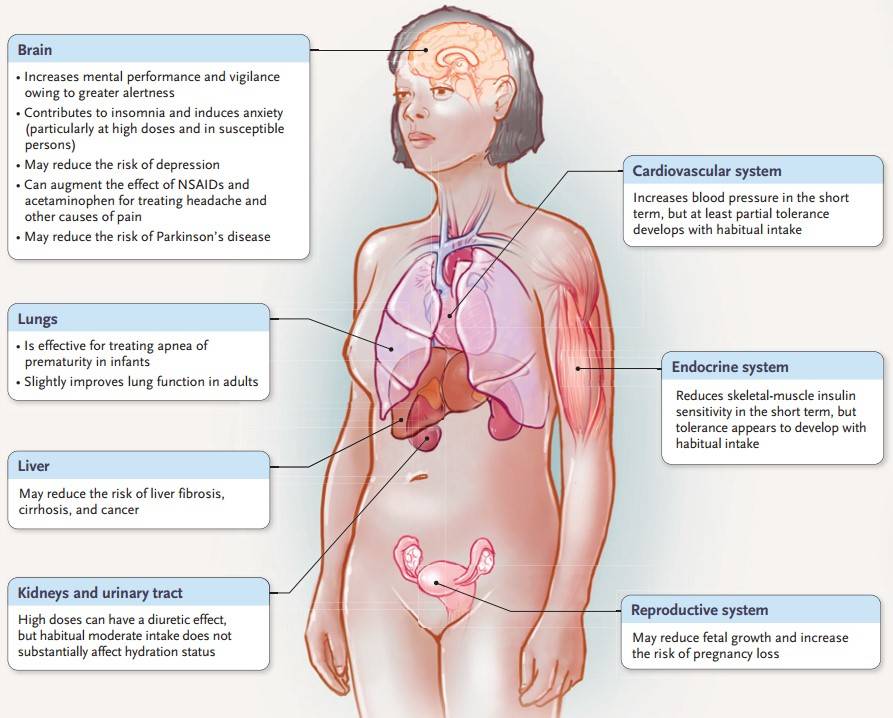 Figure 3. Effects of caffeine intake on health, according to organ system
(Source: van Dam RM, et al. 2020)
If you drink a little caffeine, most people will be OK, but overdose, and you will suffer from every imaginable side effect from anxiety to sleeplessness and heart palpitations. It can even induce caffeine toxicity, or overstimulation of the nervous system to the point of death. The most common side-effects involve the nervous system, the heart, and the gut: stress, agitation, sleeplessness, arrhythmias, digestive discomfort. Caffeine toxicity usually comes about when it is taken beyond acceptable levels. Normal toxic symptoms include altered mental state (hallucinations and agitation), physical manifestations (heavy breathing, fast heart rate, nausea and vomiting). If it is severe enough, it can trigger seizures, heart arrhythmias or cardiac arrest. Healthy adults could easily tolerate as much as 400 mg of caffeine a day without toxic complications, but blood caffeine levels of 15 mg/L and above may cause severe toxic reactions such as seizures and arrhythmias. Concentrations of 80-100 mg/L are life-threatening; the main mechanism of death from caffeine toxicity is ventricular fibrillation. Some people are just sensitive to caffeine. Pregnancy high doses of caffeine, for instance, have been linked to miscarriage, premature birth and foetal abnormalities, so pregnant women should be limited in daily dosages. Because the body evolves much slower as a result of the caffeine, kids and teenagers will be much less well-tolerated, making them more susceptible to lethal overdose. Moreover, anyone with an existing medical condition like heart disease, high blood pressure, or epilepsy should take caffeine very wisely to prevent it from making their condition worse.
A handful of studies suggest that caffeine also produces arrhythmias by inhibiting phosphodiesterase, spiking intracellular calcium, and expending more catecholamines. Caffeine is an agonist of ryanodine receptors on the sarcoplasmic reticulum, which inhibits excitation-contraction coupling by stimulating these receptors and excreting more calcium ions from the sarcoplasmic reticulum. This leads to less calcium reuptake and more intracellular calcium, which may make atrial pacemaker cells more automatic and induce atrial arrhythmias. Some of the very powerful parasympathetic effects that caffeine produces need extreme doses (that can hardly be produced in regular caffeinated food), and become intolerable very quickly. Additionally, long-term caffeine consumption does not necessarily lead to changes in heart rate, electrocardiogram readings, or cardiac output.
Table 1. Benefits and risks of exposure to caffeine
| System | Benefit | Risk | Lack of Effect |
| Central nervous system | Increased alertness | Sleep disturbances | |
| Better attention | Nervousness | ||
| Increased concentration | Jitteriness | ||
| Increased focus | Irritability | ||
| Increased energy | Anxiety | ||
| Improved cognition | |||
| Reduction of cognitive failures (improvement of driving performance, reduction of accidents at work) | |||
| Improved productivity at work | |||
| Cardiovascular system | Protection against stroke | Slight blood pressure increases among regular drinkers | No increased risk of total cardiovascular disease |
| No effect on arrhythmias even in patients at risk | |||
| No increased risk of atrial fibrillation | |||
| No increased risk of heart failure | |||
| No hypertension among regular drinkers in baseline populations | |||
| Sports activities | Improvement in team and power-based sports, sustained maximal endurance, resistance and time-trial performance | No effect in short-term sports activities | |
| Retardation of exhaustion feeling |
(Source: Nehlig A. 2018)
References
| Target | Cat. No. | Product Name | Size | Species Reactivity | Application | Detection Sample | |
| Caffeine | DEIAPYC4558 | Caffeine ELISA Kit | 96T | N/A | Quantitative | Serum, urine and saliva | Inquiry |
| Pentoxifylline | DEIA-H030 | Caffeine/Pentoxifylline ELISA Kit | 96T | Qualitative | Urine, blood, oral fluid | Inquiry |
| Target | Cat. No. | Product Name | Expression System | Tag/Conjugate | Application | |
| Caffeine | DAG2971 | Caffeine [BSA] | N/A | BSA | N/A | Inquiry |
| DAG2972 | Caffeine [HRP] | N/A | HRP | N/A | Inquiry | |
| DAG2973 | Caffeine [HSA] | N/A | HAS | N/A | Inquiry | |
| DAGS048 | Caffeine standard | N/A | N/A | ELISA | Inquiry | |
| DAG-WZ3079O | Caffeine [OVA] | OVA | IA | Inquiry |
| Target | Cat. No. | Product Name | Host | Isotype | Application | |
| Caffeine | DMABT-Z59342 | Anti-Caffeine monoclonal antibody, clone H3-R4D3I3 | Mouse | IgG2b | IP, ELISA, RIA | Inquiry |
| CABT-B9001 | Anti-Caffeine monoclonal antibody, clone IN576 | Mouse | IgG1, κ | ELISA, Lateral Flow | Inquiry | |
| DMAB3079 | Anti-Caffeine monoclonal antibody | Mouse | IgG2b | RIA, EIA | Inquiry | |
| DMAB6135 | Anti-Caffeine monoclonal antibody, clone N94129 | Mouse | IgG1 | sELISA | Inquiry | |
| DPAB-WZ0012 | Anti-Caffeine polyclonal antibody | Sheep | IgG | IA | Inquiry |
Loading ......
