
Inquiry Basket
 Loading ......
Tacrolimus (or FK506) is a fermentation product isolated from Streptomyces spp. As a macrolide antibiotic with potent immunosuppressive properties, it is mainly used clinically as an immunosuppressant for the treatment of rejection after organ transplantation. Tacrolimus has been widely used in the treatment of acute and chronic rejection of liver, kidney and bone marrow transplants since its introduction to the market, and has become the first-line drug for the treatment of rejection after liver and kidney transplantation in clinical practice. The drug is colourless crystal at room temperature, soluble in methanol, ethanol, acetone, ethyl acetate, chloroform or ether, insoluble in hexane or petroleum ether, insoluble in water, with high stability under different storage conditions.
 Figure 1. Tacrolimus chemical structure
(Source: Iannitti T, et al. 2010)
Tacrolimus is mainly absorbed through the small intestine and there is high individual variability in absorption. Eating affects its blood levels, but its absorption is not affected by bile. It has a half-life in the body of 3.5h -40.5h with an average of 8.7h. Many factors can influence the in vivo blood levels of tacrolimus, such as gender, age, race, genetic differences, and pathophysiological status, with genetic differences being the main influencing factor in the disparity of blood levels between individuals. Tacrolimus in the body is mainly metabolised by the liver and the activity of the relevant metabolising enzymes in the body highly influences its blood concentration. CYP3A enzymes are an important subfamily of CYP450 enzymes and exist as a major enzyme family for drug metabolism and first pass effects of orally administered drugs. The CYP3A enzymes include four isoenzymes: CYP3A4, CYP3A5, CYP3A7, and CYP3A43. Involved in the metabolism of tacrolimus are mainly CYP3A4 and CYP3A5, whose increased enzyme activity increases the inactive metabolites of tacrolimus and thus reduces blood levels. Among them, genetic polymorphisms in CYP3A5 are highly correlated with genetic differences, and the population can be classified into fast, intermediate, and slow metabolizers based on their phenotypes. Because the pharmacokinetics of tacrolimus varies significantly between individuals, and the blood concentration of tacrolimus may vary several-fold between individuals at the same dosage, different starting doses of tacrolimus based on the CYP3A5 genotype have been recommended in national dosing guidelines, which provide a reference for the rational and safe use of tacrolimus in the clinical setting.
 Figure 2. Intestinal absorption mechanism of tacrolimus in relation to P‐gp and CYP3A 4/5
(Source: Bentata Y. 2020)
Tacrolimus usually causes profound suppression of T cells. Its immunosuppressive effects are mediated by binding to its receptor, the immunophilin FK506-binding protein-12 (FKBP-12). The tacrolimus-FKBP-12 complex in turn inhibits the Ca2+/calmodulin-activated protein phosphatase calcineurin in T-cells, hence the classification of tacrolimus as a calcineurin inhibitor (CNI).
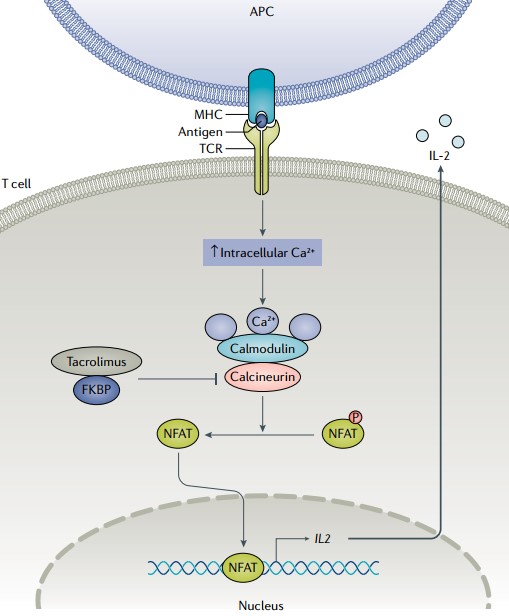 Figure 3. Inhibition of T cells by tacrolimus
(Source: Broen JCA, et al. 2020)
When tacrolimus acts as a CNI, the mechanism is very similar to that of cyclosporin A (CsA). The calmodulin-dependent serine/threonine phosphatase activity of calcineurin is inhibited when tacrolimus interacts with its cytosolic receptor. During an active immune response and under physiological conditions, calcineurin dephosphorylates a transcription factor called nuclear factor of activated T cells (NFAT). In turn, dephosphorylated NFAT is translocated to the nucleus and initiates gene transcription through interactions with other transcription factors, leading to T-cell proliferation and production of cytokines such as interleukin (IL)-2. The dephosphorylation of NFAT is inhibited by tacrolimus, which prevents T cells from obtaining key cytokines such as IL-2, leading to severe suppression of T cells. This mechanism is conserved in human T cells and fungal cells such as yeast, so tacrolimus also has antifungal activity.
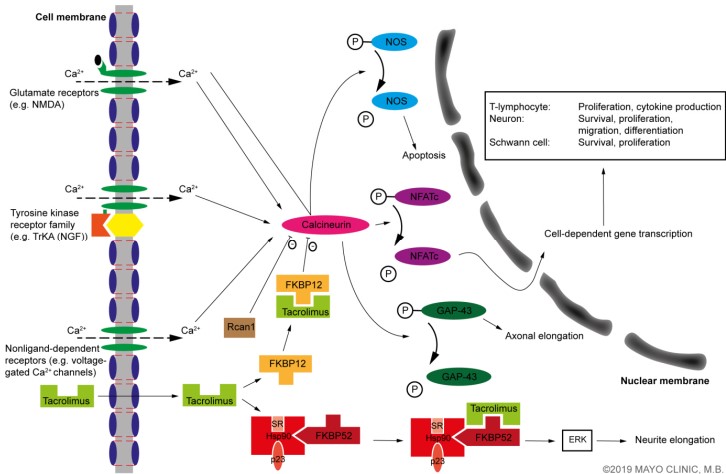 Figure 4. Involvement of tacrolimus in the Calcineurin/Nuclear factor of T cells signaling pathway
(Source: Saffari TM, et al. 2019)
In addition to its role in immunity, the calcineurin/NFAT signaling pathway plays a key role in a variety of vertebrate developmental systems, including the nervous system. This signaling pathway plays an important role in several processes in the adult nervous system, including myelin formation, synaptic plasticity, neuronal cell survival, proliferation, migration and differentiation. Tacrolimus is a potent neuroprotective agent in the central nervous system. Neuronal damage due to cerebral ischaemia triggers N-methyl-D-aspartate (NMDA) receptor overactivation in response to glutamate stimulation, which leads to calcineurin-mediated dephosphorylation of nitric oxide synthase (NOS). Elevated NOS activity plays a role in excitotoxic neuronal death. Thus, the neuroprotective effect of tacrolimus may be to reduce NOS-mediated neurotoxicity by inhibiting calcineurin. It has also been suggested that the prophylactic effect of tacrolimus on ischaemic brain damage is achieved by de novo synthesis of anti-apoptotic protein synthesis rather than inhibition of calcineurin.
The efficacy of tacrolimus in the treatment of renal organ transplant rejection was remarkable, and before the discovery of tacrolimus, CsA was commonly used clinically as an immunosuppressant for the treatment of rejection after organ transplantation. Tacrolimus has better graft survival, lower incidence of post-transplant rejection, improved drug tolerance and fewer side effects than CsA. Results from an 8-year prospective study of kidney transplant patients showed that the incidence of biopsy-proven acute rejection was significantly lower in the tacrolimus-treated group than in the cyclosporin-treated group, while the patients were also less likely to develop hypercholesterolaemia. In another study, renal biopsy tests were performed on renal transplant patients treated with CsA and tacrolimus, and it was found that there were fewer CD68-positive cells in the renal tubular interstitium in the tacrolimus-treated group than in the CsA-treated group, and that the number of CD68-positive cells was correlated with the patient's graft survival, with the higher the number being associated with a lower survival rate. In addition, the number of macrophages was higher in patients in the CsA-treated group, and there was a significant correlation between renal tubulointerstitial macrophage invasion and NF-κB activation, which, in turn, was significantly associated with the development of rejection. Thus, tacrolimus is more efficacious than cyclosporin in resisting macrophage invasion and in preventing and treating rejection. Tacrolimus inhibits both the expression of the T-cell positive co-stimulatory molecule leukocyte surface differentiation antigen (CD28) and inducible co-stimulatory molecule (ICOS) and promotes the expression of the T-cell negative regulatory molecule-associated antigen (CD152). In contrast, the immunosuppressive effect of CsA on T cells is mainly mediated by promoting the high expression of CD152 molecules, which explains another aspect of the stronger efficacy of tacrolimus than CsA.
Tacrolimus has a narrow therapeutic window, low concentrations are prone to graft rejection, high concentrations can cause toxic reactions, and serious adverse reactions will directly affect its clinical use. In addition, tacrolimus has been shown to cause hypertension, hyperkalaemia and an increased risk of tumours and infections. Neutropenia and acute haematopoietic arrest have been observed with tacrolimus use, and regular doses may also lead to hyperimmunosuppression, gingival hyperplasia, and haemolytic urotoxic syndrome. The exact mechanisms that lead to these adverse reactions require further study.
Long-term use of tacrolimus can lead to tacrolimus-induced chronic nephrotoxicity (TICN), which manifests itself as structural, progressive, and irreversible renal injury, severely affecting organ function and long-term survival in transplant recipient patients. The risk of TICN increases as the duration of medication increases. Tacrolimus can cause damage to all three important components of the kidney, with specific pathologies such as small arteriolar vitrification, tubular atrophy, tubulointerstitial fibrosis and glomerulosclerosis.
Clinical therapeutic monitoring of tacrolimus is essential in view of its potent secondary effects, including nephrotoxicity, neurotoxicity, diabetic effects, infections and risk of malignancy. The purpose of this therapeutic drug monitoring (TDM) is to avoid an increased risk of rejection due to underexposure or an increased risk of toxicity due to overexposure. By closely monitoring the patient's blood concentration, blood creatinine, urine output and liver function, and paying attention to the timing of tacrolimus administration and dosage adjustment, thus reducing the occurrence of adverse reactions.
References
| Target | Cat. No. | Product Name | Size | Species Reactivity | Application | Detection Sample | |
| Tacrolimus | DEIAPY-O0115 | Tacrolimus ELISA Kit | 96T | Quantitative | Serum, plasma, tissue homogenates, cell culture supernatants and other biological fluids | Inquiry | |
| DEIA3464 | FK-506 ELISA Kit | 96T | Human | Quantitative | Plasma, Serum | Inquiry |
| Target | Cat. No. | Product Name | Expression System | Tag/Conjugate | Application | |
| Tacrolimus 32 | DAGA-190B | Tacrolimus [BSA] | N/A | BSA | LFIA | Inquiry |
| DAGA-190K | Tacrolimus [KLH] | N/A | KLH | Immunogen | Inquiry | |
| Tacrolimus 22 | DAGB304 | Tacrolimus 22 [HRP] | N/A | HRP | IA | Inquiry |
| Tacrolimus | DWT95 | Tacrolimus Standard solution | N/A | N/A | Inquiry | |
| DAG-WZ4350O | Tacrolimus [OVA] | OVA | IA | Inquiry |
| Target | Cat. No. | Product Name | Host | Isotype | Application | |
| Tacrolimus 22 | DMAB4350 | Anti-FK-506 monoclonal antibody, clone C247M | Mouse | IgM | ELISA | Inquiry |
| CABT-L330M | Mouse Anti-FK-506 monoclonal antibody, clone TRL | Mouse | IgG | IA | Inquiry | |
| DPABY-986 | Anti-FK-506 polyclonal antibody | Sheep | ELISA, Pr* | Inquiry | ||
| Tacrolimus 32 | DPABY-987 | Anti-FK-506 polyclonal antibody | Sheep | ELISA, Pr* | Inquiry | |
| DPABH-29477 | Anti-Tacrolimus 32 polyclonal antibody | Sheep | IgG | ELISA | Inquiry | |
| Tacrolimus | DPAB-DC4807 | Anti-Tacrolimus polyclonal antibody | Sheep | EIA | Inquiry |
Loading ......
