
Inquiry Basket
 Loading ......
Cysteine is a polar alpha-amino acid. It is converted from methionine in the body, and Hcy is a non-essential sulfur-containing amino acid in the human body. It is named because it has similar chemical properties to cysteine. Hcy is produced in the metabolism of methionine and cysteine. Research has found that Hcy and hydrogen sulfide (H2S) levels are related. When both Hcy and cysteine are at physiological concentrations, approximately 70% of H2S is produced from cysteine. However, when Hcy is excessively elevated, Hcy replaces cysteine and becomes an important source of H2S in hyperhomocysteinemia (HHcy).
Synthesis of Hcy: Methionine carries S-CH3 and participates in the transfer of methyl groups. Under the catalysis of adenosyltransferase, methionine reacts with adenosine triphosphate (ATP) to generate S-adenosylmethionine (SAM). After SAM is demethylated, it is converted into S-adenosylhomocysteine (SAH), which is then hydrolyzed to remove adenosine to generate Hcy.
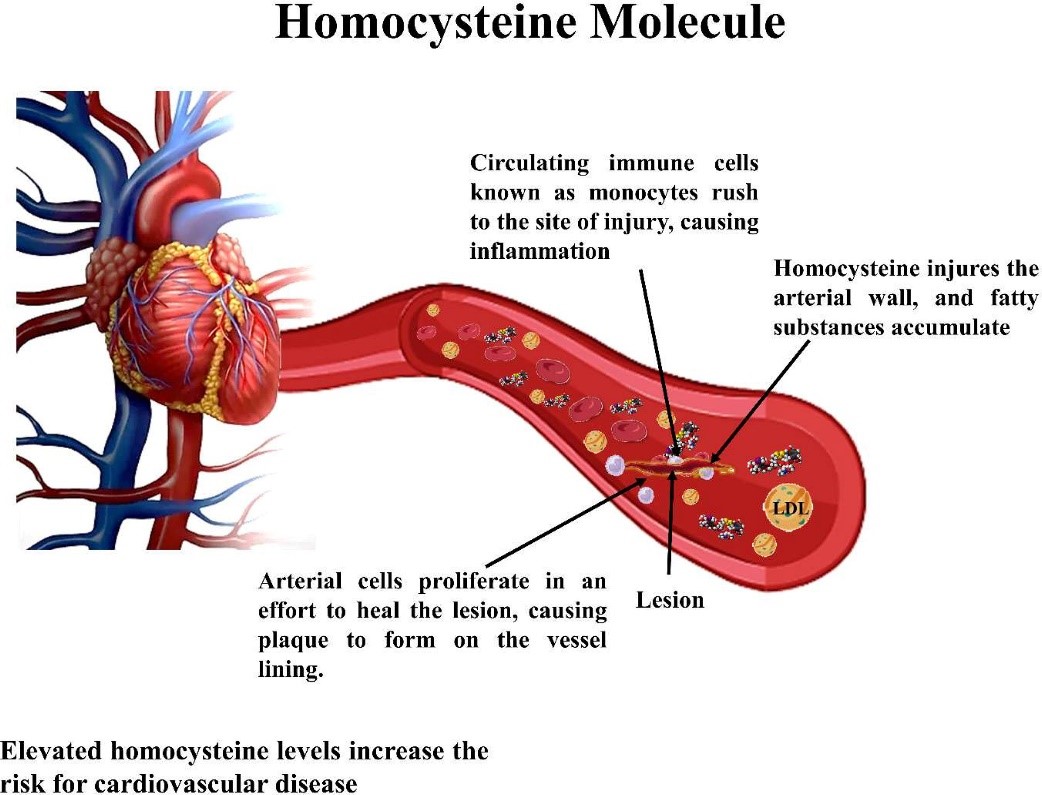 Figure 1. Schematic of the homocysteine effect on cardiovascular disease development.(Source: Sara Ranjbari, et al. 2023)
Metabolism of Hcy: Hcy is metabolized mainly through two pathways. (1) Transmethylation pathway (methionine deficiency): A part of Hcy is transmethylated to synthesize methionine under the catalysis of folic acid, vitamin B12 and methionine synthase; (2) Transsulfurization Pathway (methionine rich): Additional Hcy is catalyzed by cystathionine beta synthase to irreversibly generate cysteine and alpha-ketobutyrate. The H2S produced by enzymatic reactions mainly comes from the metabolism of sulfur-containing amino acids, especially cysteine and Hcy. Hcy is the precursor of endogenous H2S production, and more and more studies have shown that the production and metabolism of endogenous H2S are closely related to Hcy.
Hcy is an amino acid whose elevated plasma concentrations cause endothelial cell damage. Endothelial dysfunction can be defined as a disruption in the homeostatic balance between vasodilation and contraction. On the vascular endothelial surface, procoagulant factors and anticoagulant factors are maintained in a relatively balanced state. Increased Hcy levels can break this balance, causing the vascular endothelial surface to change from an anticoagulant to a procoagulant state, ultimately causing damage to endothelial cells. Studies have found that the expression of nitric oxide (NO) synthase can be inhibited by Hcy, resulting in reduced NO production, thereby triggering endothelial cell damage and affecting vasodilation. At the same time, researchers found that increased Hcy would activate the expression of different subtypes of NADPH oxidase, leading to an increase in the content of superoxide anion free radicals, which in turn would lead to a decrease in the bioavailability of NO. Studies have found that HHcy reduces NO bioavailability, causing damage to cell integrity, thereby causing endothelial dysfunction, leading to impaired endothelium-dependent relaxation and promoting inflammatory responses.
Oxidative stress is due to the disruption of the balance of the oxidative and antioxidant systems in the body. The oxidation level exceeds the rate of oxidative clearance, eventually causing tissue damage. Studies have shown that HHcy exerts direct adverse effects on myocardium through pro-oxidative mechanisms. HHcy can induce oxidative stress through various molecular mechanisms such as generating reactive oxygen species (ROS) or damaging related antioxidant systems. When Hcy is combined with plasma proteins (mainly albumin), other low-molecular-weight plasma thiols, or a second Hcy molecule through disulfide bonds, ROS reactive oxygen species are generated during the oxidation of Hcy free sulfhydryl groups. The sulfhydryl group of Hcy increases oxidative stress, mainly by participating in the reaction as a pro-oxidant molecule. In addition, the sulfhydryl group of Hcy impairs protein function and causes stress in the endoplasmic reticulum during the formation of disulfide bonds. Oxidative stress can lead to the activation of inflammatory pathways, thereby releasing a variety of inflammatory factors and causing internal damage to blood vessels. HHcy can also affect the methylation process in the body, thereby inhibiting the production of H2S. H2S has multiple effects and exerts its effects through multiple pathways, but its main pathways are related to oxidative stress and NO. In a clinical study, the overall DNA methylation status of patients with coronary artery disease associated with HHcy was significantly positive, and overall hypermethylation was significantly positively correlated with plasma Hcy levels. Hcy affects the methylation process in the body, thereby reducing the H2S content and causing damage to blood vessels. Various studies have shown that Hcy can induce disruption of redox homeostasis.
When myocardial function is severely damaged, a series of changes will occur in myocardial cells or extracellular matrix and collagen fiber connective tissue. This process is called myocardial remodeling. In an animal experiment, HHcy can inhibit the TGF-β1/Smad pathway and the production of H2S, weaken the inhibitory effect of H2S on the proliferation of vascular smooth muscle cells, and then cause myocardial fibrosis in spontaneously hypertensive rats. This shows that HHcy can Cause myocardial fibrosis. Hcy is an intermediate product of protein conversion and metabolism. It acts on endothelial cells, causing abnormal vascular function, thereby initiating inflammatory responses, enhancing oxidative stress, causing myocardial hypertrophy and interstitial fibrosis, and ultimately inducing ventricular remodeling.
References
| Target | Cat. No. | Product Name | Host | Isotype | Application | |
| Homocysteine | CABT-JX102 | Rabbit Anti-Homocysteine Polyclonal Antibody | Rabbit | IgG | ELISA, ICC, IHC, WB | Inquiry |
| DPAB-DC4378 | Anti-Homocysteine polyclonal antibody | Rabbit | IgG | IHC, ELISA | Inquiry | |
| S-Adenosyl Homocysteine | DMABT-Z59137 | Anti-Adenosyl Homocysteine monoclonal antibody, clone GPU5600 | Rabbit | IgG | cELISA | Inquiry |
| CABT-RM305 | Chicken Anti-SAH Polyclonal antibody | Chicken | IgY | N/A | Inquiry | |
| DPAB0499 | Anti-S-Adenosyl-Homocysteine polyclonal antibody | Rabbit | IgG | ELISA | Inquiry | |
| DPBT-65936RS | Anti-S-Adenosyl-Homocysteine polyclonal antibody | Rabbit | IgG | ELISA | Inquiry | |
| CABT-ZB088 | Mouse Anti-S-Adenosyl Homocysteine monoclonal antibody, clone SAH | Mouse | IgG | ELISA, LFIA | Inquiry |
| Target | Cat. No. | Product Name | Expression System | Tag/Conjugate | Application | |
| S-Adenosyl Homocysteine | DAG-WT855O | S-Adenosyl Homocysteine [OVA] | N/A | OVA | ELISA, LFIA | Inquiry |
| Homocysteine | DAG3334 | Homocysteine [G-BSA] | N/A | G-BSA | IHC, ICC | Inquiry |
| Target | Cat. No. | Product Name | Size | Species Reactivity | Application | Detection Sample | |
| S-Adenosyl Homocysteine | DEIA-FN1319 | SAH (s-adenosylhomocysteine) ELISA Kit | 96T | Quantitative | serum, plasma, cell culture supernatants, tissue homogenate | Inquiry | |
| Homocysteine | DEIABL3 | Homocysteine ELISA kit | 96T | Human | Quantitative | plasma, serum | Inquiry |
| DEIA1724 | Human HCY(Homocysteine) ELISA Kit | 96T | Human | Quantitative | serum, plasma, tissue homogenates, other biological fluids | Inquiry | |
| DEIA3576 | HCY(Homocysteine) ELISA Kit | 96T | Universal | Quantitative | Serum, plasma, tissue homogenates and other biological fluids. | Inquiry | |
| DEIABL3-2 | Homocysteic acid ELISA Kit | 96T | Quantitative | Serum, plasma, tissue homogenates, urine | Inquiry |
Loading ......
