Filter By Product Search for
PRKCD
 Loading...
PRKCD Full Name
protein kinase C, delta
PRKCD Introduction
Protein kinase C delta (PRKCD, or PKCδ) is a prominent member of the "novel" protein kinase C (nPKC) subfamily. Unlike conventional PKCs, the enzymatic activation of PRKCD is strictly dependent on the presence of diacylglycerol (DAG) and membrane phospholipids, but it is entirely calcium-independent. Ubiquitously expressed across diverse mammalian tissues, PRKCD serves as a critical intracellular signaling node regulating fundamental cellular functions, including proliferation, differentiation, and most notably, apoptosis. A highly distinctive structural and functional feature of PRKCD is its unique response to apoptotic stimuli: during programmed cell death, PRKCD is specifically cleaved by caspase-3 at its hinge region. This proteolytic event liberates a constitutively active, free catalytic fragment that rapidly translocates to cellular compartments like the nucleus and mitochondria, profoundly amplifying the apoptotic cascade.
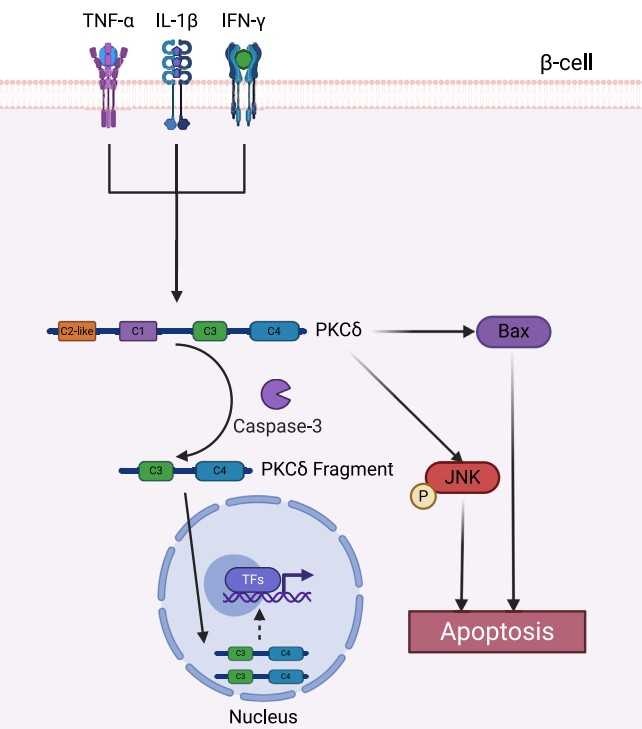 Figure 1. Proposed mechanism for PKCd regulation of cytokine-induced b-cell death. (Source: 1. Collins J, et al. 2024)
Physiologically, PRKCD is absolutely essential for maintaining immune homeostasis and self-tolerance, particularly within the B-cell compartment. It acts as a critical negative regulator of B-cell receptor (BCR) signaling and is required for the proper deletion of autoreactive B cells. Consequently, genetic disruptions of PRKCD have profound pathological consequences. In humans, rare loss-of-function mutations in the PRKCD gene lead to a severe primary immunodeficiency coupled with profound autoimmune lymphoproliferative syndrome (ALPS)-like manifestations. Patients often present with systemic lupus erythematosus (SLE)-like symptoms, autoantibody production, and uncontrolled B-cell expansion due to defective apoptosis.
Beyond immunology, the role of PRKCD in oncology is highly complex and strictly tissue-context dependent. While its potent pro-apoptotic properties allow it to function as a vital tumor suppressor in many environments—such as in skin and colon cancers—aberrant PRKCD signaling can paradoxically promote tumor cell survival, migration, and chemoresistance in other malignancies, including pancreatic and specific breast carcinomas. Additionally, excessive PRKCD activation during ischemia-reperfusion injury is a well-documented driver of tissue damage in the heart and brain. Because of its multifaceted roles in dictating life-and-death cellular decisions, achieving precise pharmacological modulation of PRKCD remains a sophisticated yet highly promising avenue in both autoimmune disease management and targeted cancer therapy.
Alternate Names for PRKCD
PRKCD
protein kinase C, delta
MAY1
PKCD
CVID9
nPKC-delta
protein kinase C delta type
protein kinase C delta VIII
tyrosine-protein kinase PRKCD



 Antibody_1.gif)


 Cell Signaling