Filter By Product Search for
FGA
 Loading...
FGA Full Name
fibrinogen alpha chain
FGA Introduction
FGA encodes the fibrinogen alpha chain, a core structural component of fibrinogen that is essential for blood clot formation, wound healing, and vascular integrity. Clinically, fibrinogen sits at the heart of coagulation testing, yet its upstream molecular regulation—particularly at the RNA and genetic level—has long been underutilized in precision diagnostics. This gap has driven growing interest in FGA as a target for non-invasive biomarker discovery, especially in diseases where traditional protein markers lack sensitivity or fail to detect early pathological changes. As a liver-synthesized gene with measurable circulating RNA, FGA provides a biologically plausible bridge between hepatic function, systemic inflammation, and disease-specific coagulation abnormalities.
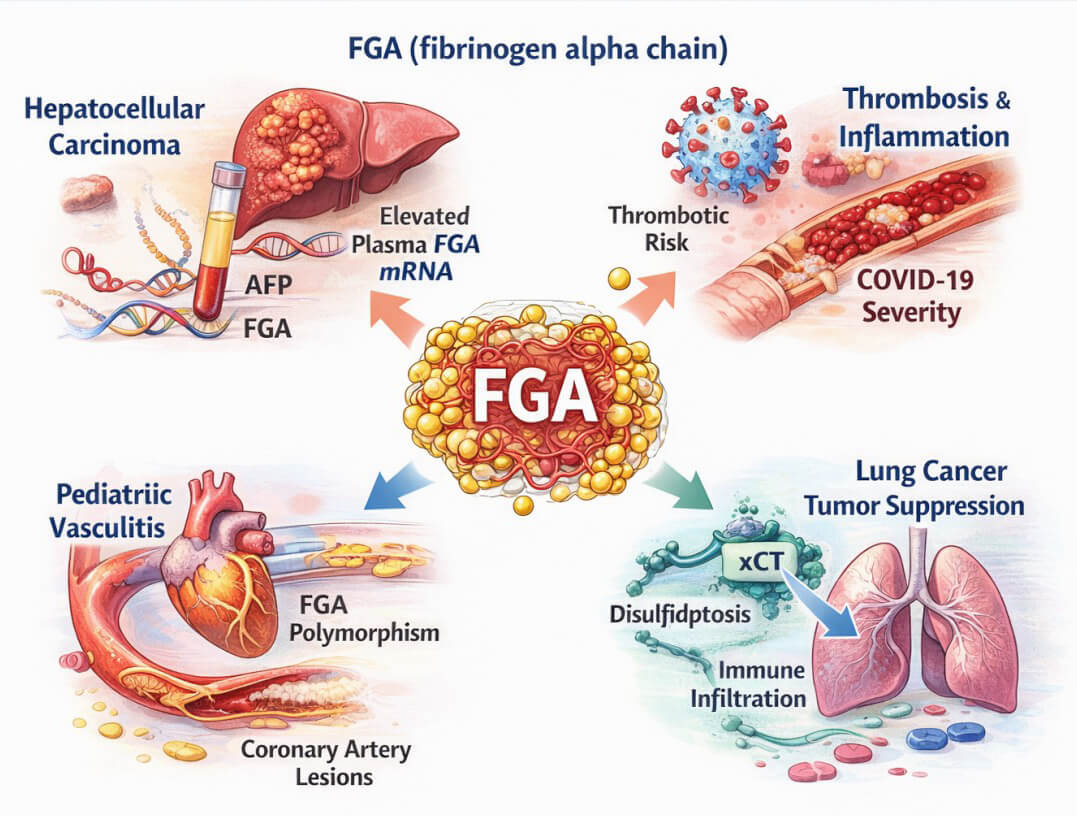
Functionally, the fibrinogen alpha chain not only contributes to fibrin polymerization and clot stability but also actively participates in inflammatory signaling, extracellular matrix interactions, and immune modulation. Variations in FGA expression or sequence can alter fibrin structure, susceptibility to fibrinolysis, and cross-talk with immune cells. These effects become particularly relevant in conditions characterized by hypercoagulability and chronic inflammation. Genetic studies have shown that specific FGA polymorphisms influence D-dimer levels, disease severity, and vascular injury, underscoring how subtle molecular changes in FGA can translate into clinically meaningful differences in thrombotic risk, endothelial damage, and inflammatory burden—key challenges for risk stratification and patient management.
Disease-focused research has positioned FGA as a multifaceted biomarker and functional regulator across oncology, infectious disease, and pediatric vasculitis. In hepatocellular carcinoma, elevated plasma FGA mRNA has demonstrated strong discriminatory power when combined with AFP, significantly improving early detection rates, particularly in AFP-negative patients where diagnostic options are limited. In COVID-19, FGA gene mutations have been linked to heightened thrombotic risk and disease severity, highlighting its role at the intersection of coagulation and inflammation. Pediatric studies in Kawasaki disease further associate FGA polymorphisms with coronary artery lesions, suggesting a genetic contribution to vascular complications. More recently, in lung adenocarcinoma, FGA has emerged as an unexpected tumor suppressor, modulating redox balance, immune infiltration, and a newly described cell death pathway via xCT-dependent disulfidptosis. Collectively, these findings elevate FGA from a classical coagulation factor to a disease-spanning target with growing relevance for early diagnosis, prognosis evaluation, and mechanism-driven therapeutic research.
Alternate Names for FGA
FGA
fibrinogen alpha chain
Fib2
fibrinogen, A alpha polypeptide