
Inquiry Basket
 Loading ......
Monkey immunodeficiency virus, also known as African Green Monkey virus, is a retrovirus that can affect at least 33 species of African primates. After analyzing the virus strains found in four monkeys on Oco Island (an island isolated from the mainland due to rising sea levels about 11000 years ago), scientists have concluded that SIV has existed in monkeys and apes for at least 32000 years, and its actual existence time may be much longer.
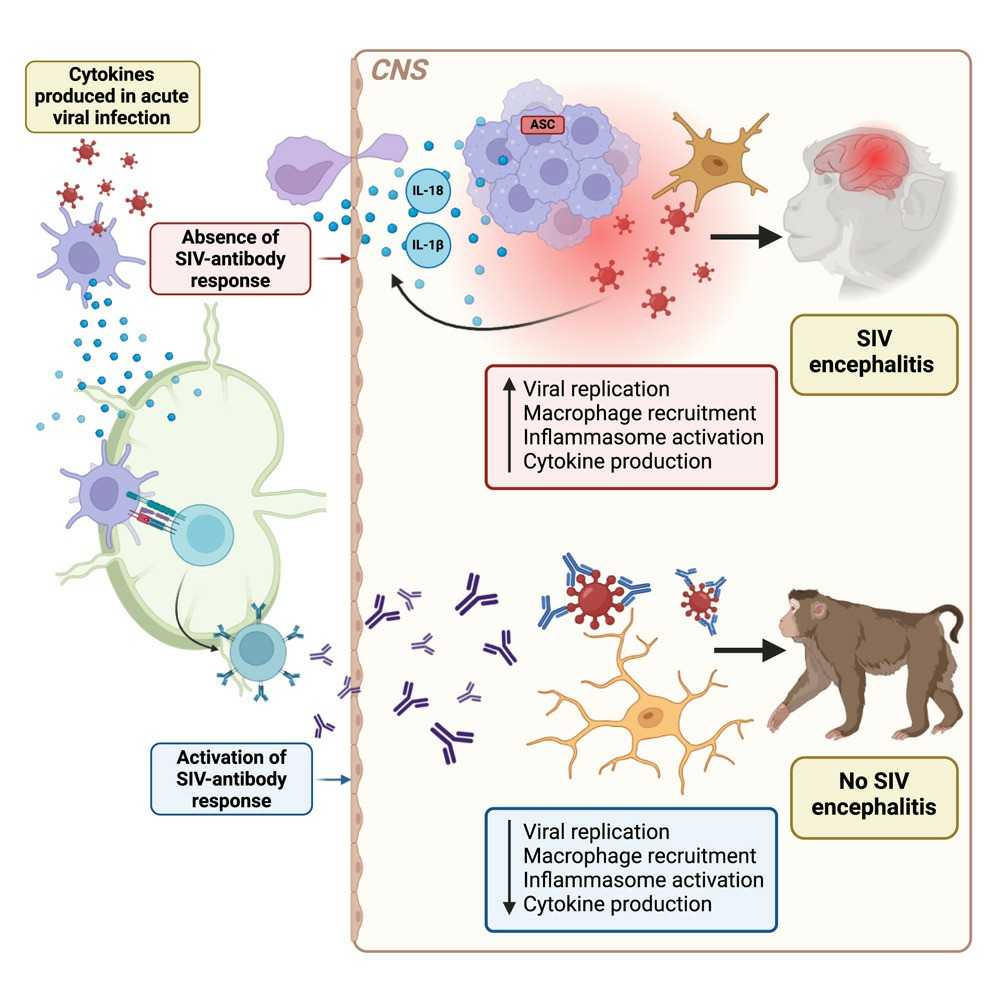 Figure 1. SIV-specific antibodies protect against inflammasome-driven encephalitis in untreated macaques.
The virus strains present in two species of primates, namely SIVsmm in white crowned white browed monkeys and SIVcpz in chimpanzees, are believed to have crossed the interspecies barrier and entered the human body, eventually becoming the two subtypes of HIV, HIV-2 and HIV-1. One of the most likely pathways for HIV-1 to transfer to the human body is through contact with the blood of chimpanzees (often hunted as a source of "bushmeat" in Africa). Unlike HIV-1 and HIV-2, SIV infection of its natural host is not pathogenic in many cases. Extensive research on white crowned white browed monkeys has confirmed that even if SIVsmm virus infects these animals and the circulating viral load is high, it will not cause them to contract any diseases. However, if the virus infects ordinary macaques in Asia or India, it will develop into monkey AIDS (SAIDS) in the later stage of infection. A recent study shows that if wild chimpanzees are infected with SIVcpz virus, they will also suffer from a disease similar to AIDS, just like people infected with HIV-1
The differences in species specificity between SIV and related retroviruses may be partially explained by the different variants of the protein TRIM5 α in human and non-human primate species. This intracellular protein recognizes the capsids of different retroviruses and blocks their reproduction. Other proteins such as APOBEC3G/3F may also play an important role in limiting cross species transmission.
| Target | Type | Role/Therapeutic Significance |
| CD4 Receptor | Host Cellular Receptor | Primary attachment site for viral SU glycoprotein; key entry target |
| CCR5/CXCR4 | Host Co-receptor | Secondary attachment site; essential for fusion; CCR5 blockade is a validated therapeutic strategy |
| TRIM5α | Host Restriction Factor | Recognizes viral capsid, mediating species-specific restriction of replication |
| APOBEC3G | Host Restriction Factor | Induces hypermutations in viral DNA |
| TLR7 | Host Innate Immune Sensor | Explored as a latency-reversing agent, though with variable success |
About 100000 cells from rhesus monkeys, grouped by similarity. Red blood cells come from monkeys infected with simian human immunodeficiency virus, while blue blood cells come from uninfected monkeys. The pathogenesis of SIV includes pathogenic and non pathogenic SIV infections. SIV infection in non-human primates always leads to persistent infection, but rarely results in acute disease. The typical characteristic of pathogenic infection is that rhesus monkeys are infected with SIV strains from black and white browed monkeys. According to the SIV strain used, the time for the disease to progress to AIDS is months to years. A typical representative of non pathogenic infections is African NHP naturally infected with SIV. Although these animals maintain the same viral load as SIV virus load in pathogenic infection, they rarely progress to AIDS. It is speculated that the AIDS like disease in the health plan of African countries represents the horizontal transmission of the virus from one or more homologous species in the recent evolutionary history before the common adaptation reached balance.
African green monkeys in the African population have been severely infected with SIVagm, while the original isolated velvet population in the Caribbean did not have this virus. The SIV infection rate in the African population is 78-90% in adult females and 36-57% in adult males, while SIV infection is rare in immature individuals. Velvet infected with wild SIV does not undergo chronic immune activation or microbial translocation. During natural SIV infection, the gut microbiome showed a significant increase in microbial diversity, with a decrease in Proteobacter/Vibrio succinate, an increase in Weissella, a decrease in genes involved in microbial invasion pathways, and partial reversibility of acute infection related changes in microbial abundance. The natural selection pattern of genes related to HIV response in the monkey genome and genes that respond to experimental SIV infection in monkeys (rather than macaques) suggests that Chlorococcus monkeys in Africa have a natural adaptation to SIV
The rhesus monkey infected with SIV is the most widely used and valuable preclinical animal model in HIV/AIDS research. It summarizes the key features of the pathogenesis of HIV, including the persistent presence of the virus, the decline of CD4+T cells, and the development of immunodeficiency. This model is indispensable for the following aspects:
| Applications | Details |
| Vaccine development | The SIV model is used to test novel candidate vaccines and understand their protective relevance. For example, recent research has led to the isolation of broadly neutralizing antibodies (bNAbs) targeting conserved regions such as the proximal outer region (MPER) of Env glycoprotein membrane. These bNAbs can effectively neutralize the virus and are currently being explored for prevention and treatment. |
| Healing research | The SIV model is crucial for studying strategies for eradicating or inducing long-term remission of viral reservoirs. The study investigated the use of latency reversal agents and immunotherapy in the "electrocution" method. |
| Pathogenesis and comorbidities | This model allows for detailed studies of specific disease complications such as viral dynamics, host establishment, and neurocognitive decline. Multiple omics methods, such as mononuclear transcriptomics, are revealing how SIV infection alters gene expression and cell populations in tissues such as the brain during early infection. |
| Antiretroviral drug testing | Prior to human trials, the efficacy and toxicity of new antiretroviral drugs are often evaluated in SIV/macaque models. |
Simian immunodeficiency virus is a key virus in the fields of virology and public health. It is the evolutionary precursor of HIV and the gold standard preclinical model for HIV research. Its diverse strains, different pathogenic patterns in natural and non natural hosts, and high genetic homology with HIV reveal key insights into lentiviral biology, immune evasion, and therapeutic targets. Although SIV causes asymptomatic infection in its natural primate host, its cross species transmission to humans has led to the prevalence of HIV/AIDS, which highlights the importance of studying SIV against HIV. The continuous research on SIV genomics, pathogenesis and host interaction will promote the progress of HIV diagnosis, treatment and prevention, and ultimately commit to ending the AIDS epidemic.
Reference
| Target | Cat. No. | Product Name | Host | Isotype | |
| Simian immunodeficiency virus type2Nef | DMAB12215 | Anti-Simian immunodeficiency Virus type 1 Nef monoclonal antibody, clone 28 | Mouse | IgG1 | Inquiry |
Loading ......
